Potato Progress

4 Comments
Potato Planting Map

April 1, 2011 Planning out the Planting Chart for Test Bed #1

The Great Rare Potato Grow Out Project begins!

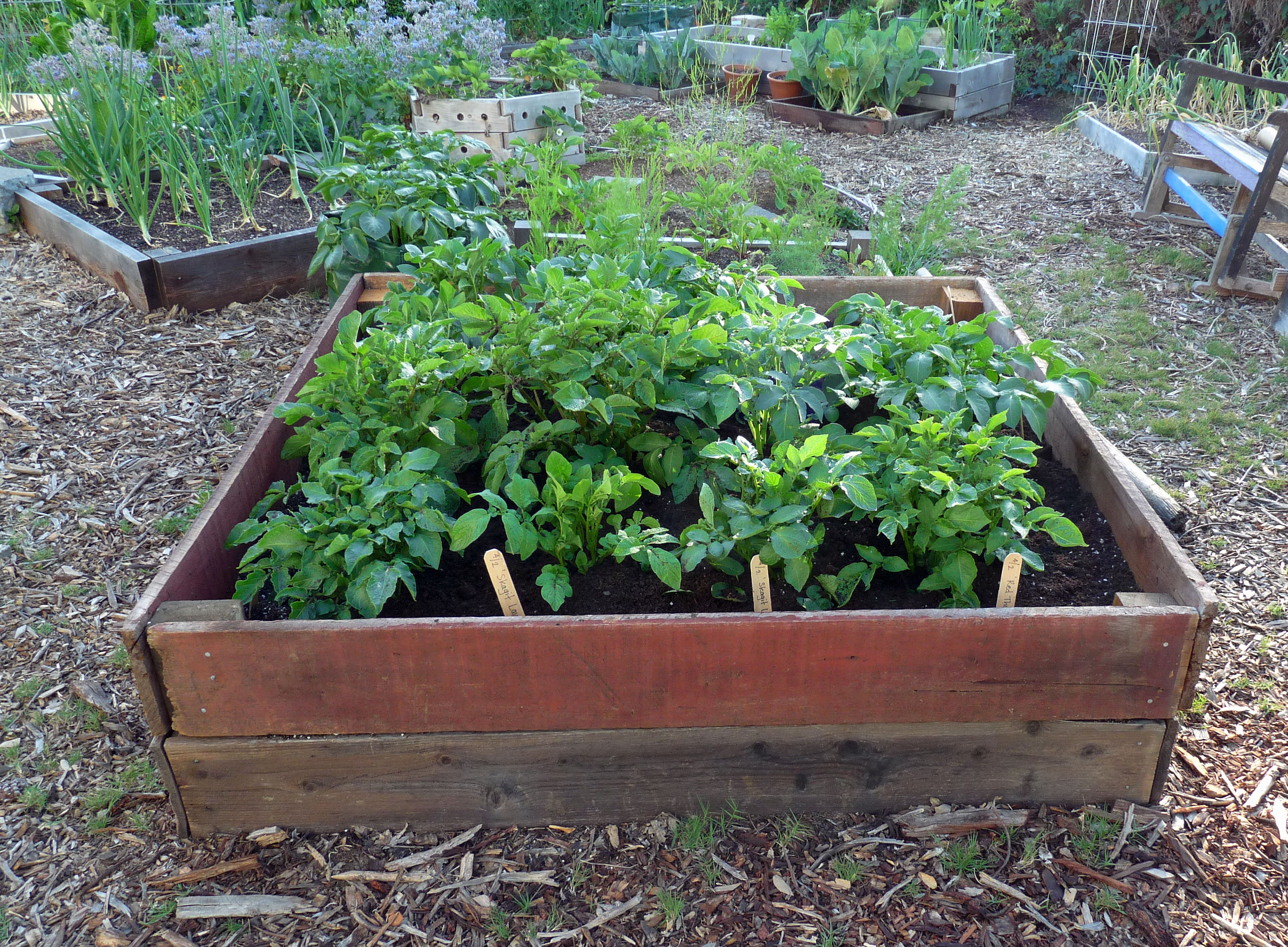
Raised bed potato planting

April 2, 2011 Planting the potatoes in Test Bed #1

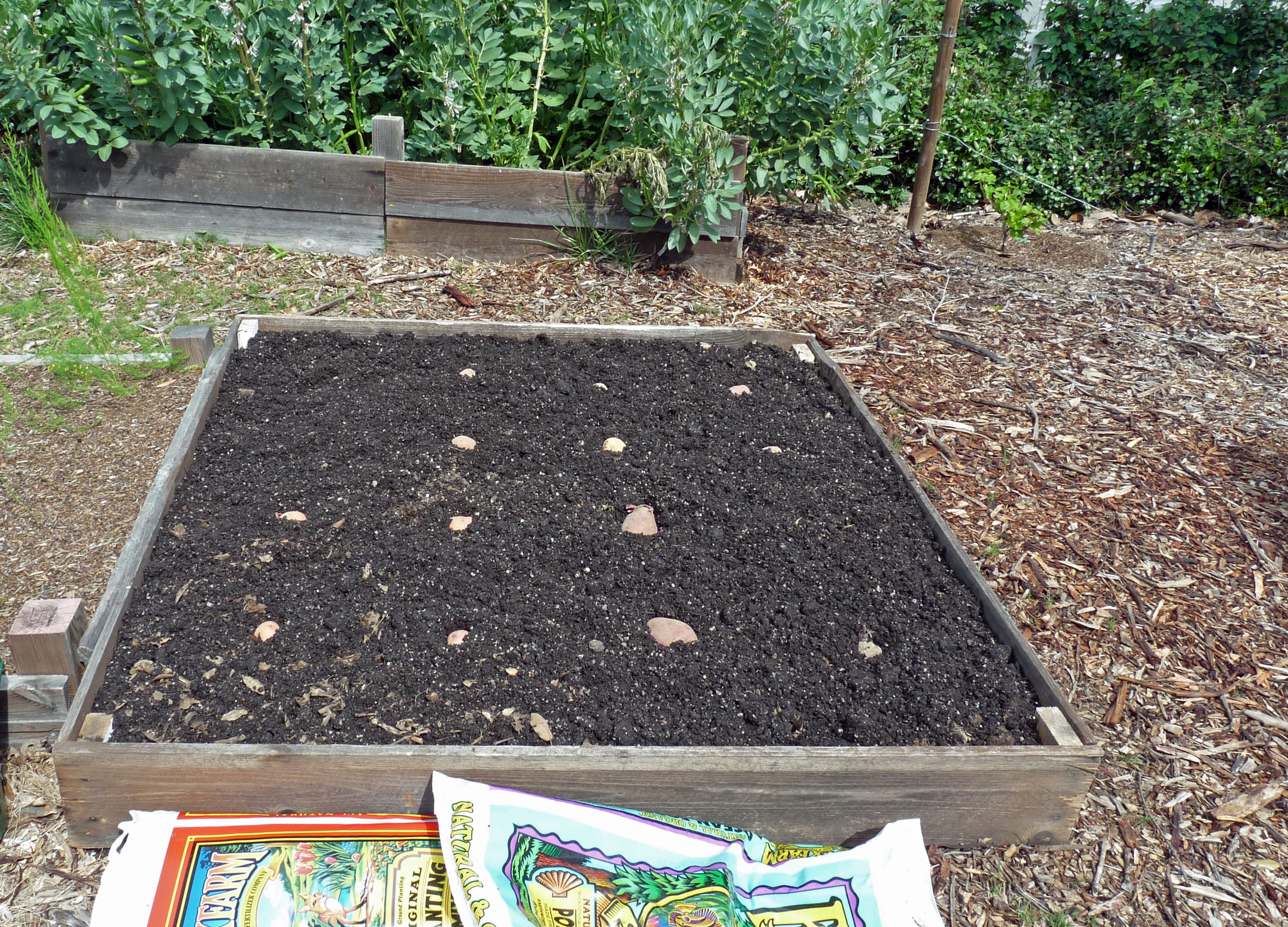
The first Test Bed of potatoes is planted under 4″ of Happy Frog planting mixes.

Potato Test Patch #1

April 24, 2011 All the potatoes in Test Bed #1 have sprouted

It took three weeks before we had all the different varieties sprouting in Test Bed #1.

Raising the potatoes raised bed

May 9, 2011 A second 8" tall frame is added to the Test Bed #1

A second frame was added to the Test Bed and filled in with more planting mix.

Raised bed potatoes growing

May 19, 2011 3rd 8" frame is added and potatoes are hilled again

The tallest variety so far is called ‘Toro Dude’ at ~28″ and the ‘Satina’ variety is close behind.

Potato Flowers

May 19, 2011 'Toro Dude' is preparing to flower

Flowering may indicate the end of setting stolons to form potatoes. We will continue to hill the potatoes until the first flowers bloom.

Tallest potato variety

Guisi Potatoes Topped out at 4' 8" tall

My charming 6-ft even husband volunteered as the human yardstick. The tallest variety in Test Bed #1, as measured on June 29th, was one of the four the white-flowered ‘Guisi’ plants. We will try to get more precise when we dig the vines, but for now we are calling it 4′ 8″.

Life Beyond Potatoes?

Leave a comment

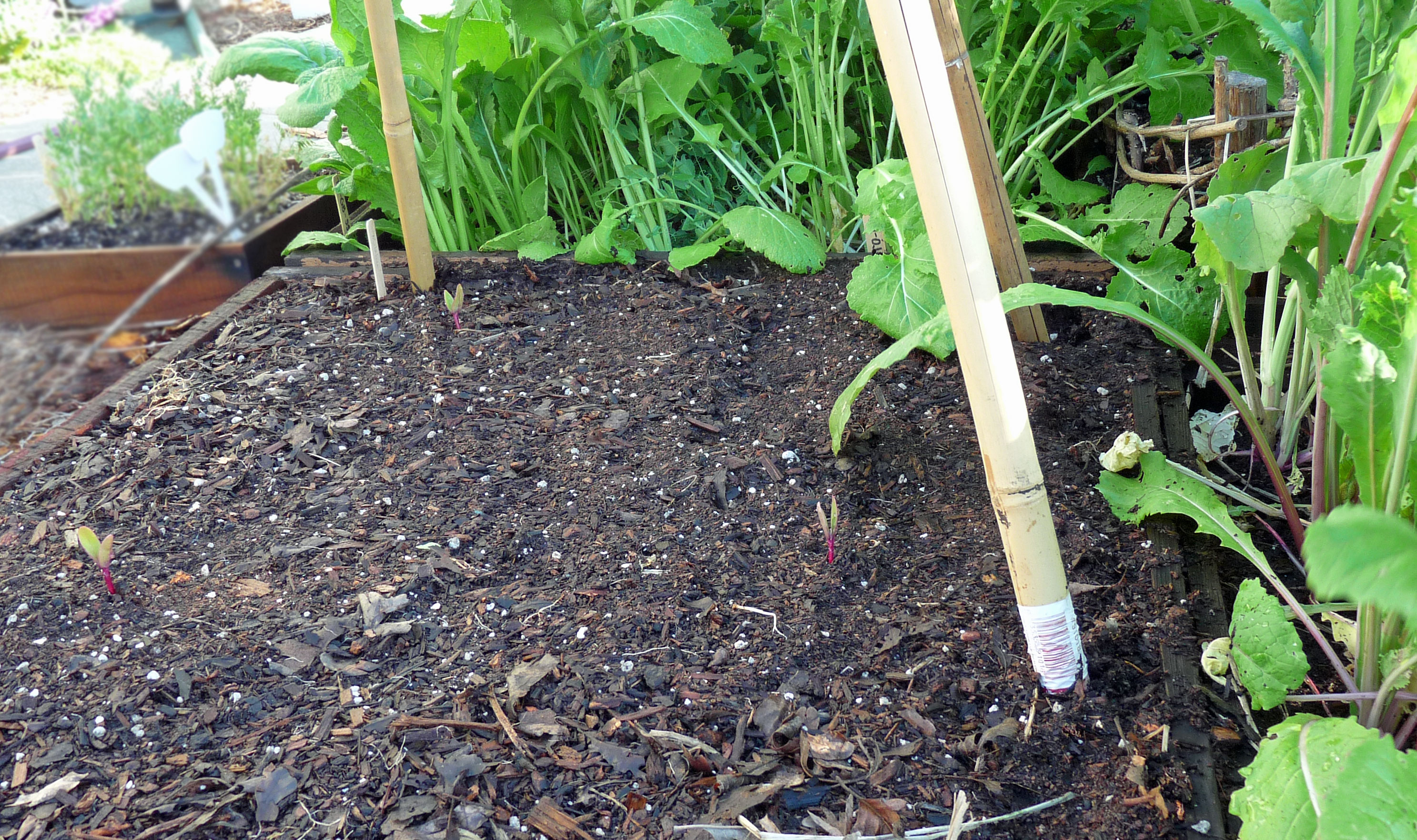
Malabar Spinach seedlingsJust for the record, we do grow things other than potatoes in the Dirt to Dinner garden. The fact that we’ve harvested over 10 pounds of potatoes in the last two days doesn’t mean anything. We had to move them out of the way to make room for other things to grow, that’s all. ;-)

If you look closely you can see that these little beauties are Malabar Spinach.  (Click the photo to enlarge.) The kind with the purple stems. Which I hope are going to climb these 8 foot tall bamboo poles and mingle with the ‘Scarlet Runner’ beans I planted at the base of the fourth pole. In my imagination it’s a beautiful combination.

Borage FlowerWe also added three types of basil. Some, called ‘Pestu’, from seed that’s been in the family for over a hundred years, ‘African Blue’ basil which I bought at Common Ground and ‘Amethyst’ basil, just because I thought it would look nice mixed in with all the tomatoes and the green basil plants.

Our beneficials are doing the trick. We have more insect, reptile and bird life in the garden this year than ever before. The ‘Blue Borage’ is covered with flowers and bees. They love it! And it’s a good thing I didn’t ever get a chance to plant the full dozen borage I had planned for the front garden this year. It turns out that ‘Blue Borage’ is huge! And it just keeps on growing, flowering, spreading out in all directions.

Cherokee Purple Tomato TrialThe ‘Cherokee Purple’ trial patch is in, salmon heads, egg shells, bone meal and all. We planted the best seedling from each of four different seed houses ‘Cherokee Purple’ seeds to compare. And there are ‘Cherokee Chocolate’, ‘Rosso Sicilian’ and ‘Pruden’s Purple’ all out there keeping them company. Last year was a terrible tomato year here, so this year we are doing everything we can to make them happy. I waited until May to plant them, even though it nearly killed me and it was probably warm enough a week before that. I amended with biodynamic compost and plan to water once a week with fish emulsion or liquid kelp. The ‘Cherokee Purple’ plants are spaced three feet apart to give them growing room and air circulation. It looks like a lot of space right now, but I’m hoping I don’t feel that way in September.

Our next project is finding room for squash, another dozen tomatoes, and lots more beans for drying. Good thing I’m reading Derek Fell’s Vertical Gardening. We’re going to need every square foot we can find this year!

How Much Do Seeds Really Matter?

3 Comments

When I grab a ‘Cherokee Purple’ tomato seedling from the nursery, I look to see if it’s been grown organically but I have no idea where the seed used to grow that seedling came from. And I never gave it a thought—until this year. This year, seeds and where they come from has felt a lot more urgent. And I’ve tried to make sure that all the Dirt to Dinner seeds came from companies not involved with GMOs, the more local and more independent the better. In order to support the Safe Seed growers I have found, I bought seed of my favorite varieties from more than one source. I have ‘Cherokee Purple’ seeds from four different companies growing. I think I ended up with ‘Lemon’ cucumbers from at least five different places.

Which got me thinking, “How much does it really matter where my seeds come from?” Of course it matters in terms of voting with your seed dollars for the kind of practices you want to see in the seed industry, supporting local economies where possible and to the folks who grow and distribute safe seed. But does it matter in my garden? Does it matter on my table?

Turns out, I think it matters a whole lot more than I ever imagined. In late February, I started seeds of ‘Principe Borghese’ tomatoes for drying from Tomato FlowerBountiful Gardens and Victory Seeds. I planted them under the same conditions in the same flat. All the BG seed was sprouted a week later, with less than half the VS seeds up. Final germination was BG 100% and VS 75%. I eventually thinned to the best four plants from each seed house and on April 16th I planted them in the same warm and cozy growing bed. The tallest, strongest, plant, which is already flowering, is one of the Victory seeds. And the only seedling that didn’t do well in the transplant process? It’s also from Victory. Though maybe I should have more thoroughly thawed the salmon heads before I stuffed them in the bottom of the tomato holes. If that poor seedlings roots were scrunched up against frozen salmon eyeballs the first day or two, that’s hardly the seed’s fault! I plan to measure the amount and weight of tomatoes produced and to dry each batch separately in case there is a difference in taste. If it doesn’t eventually taste good, who cares which day it germinates?

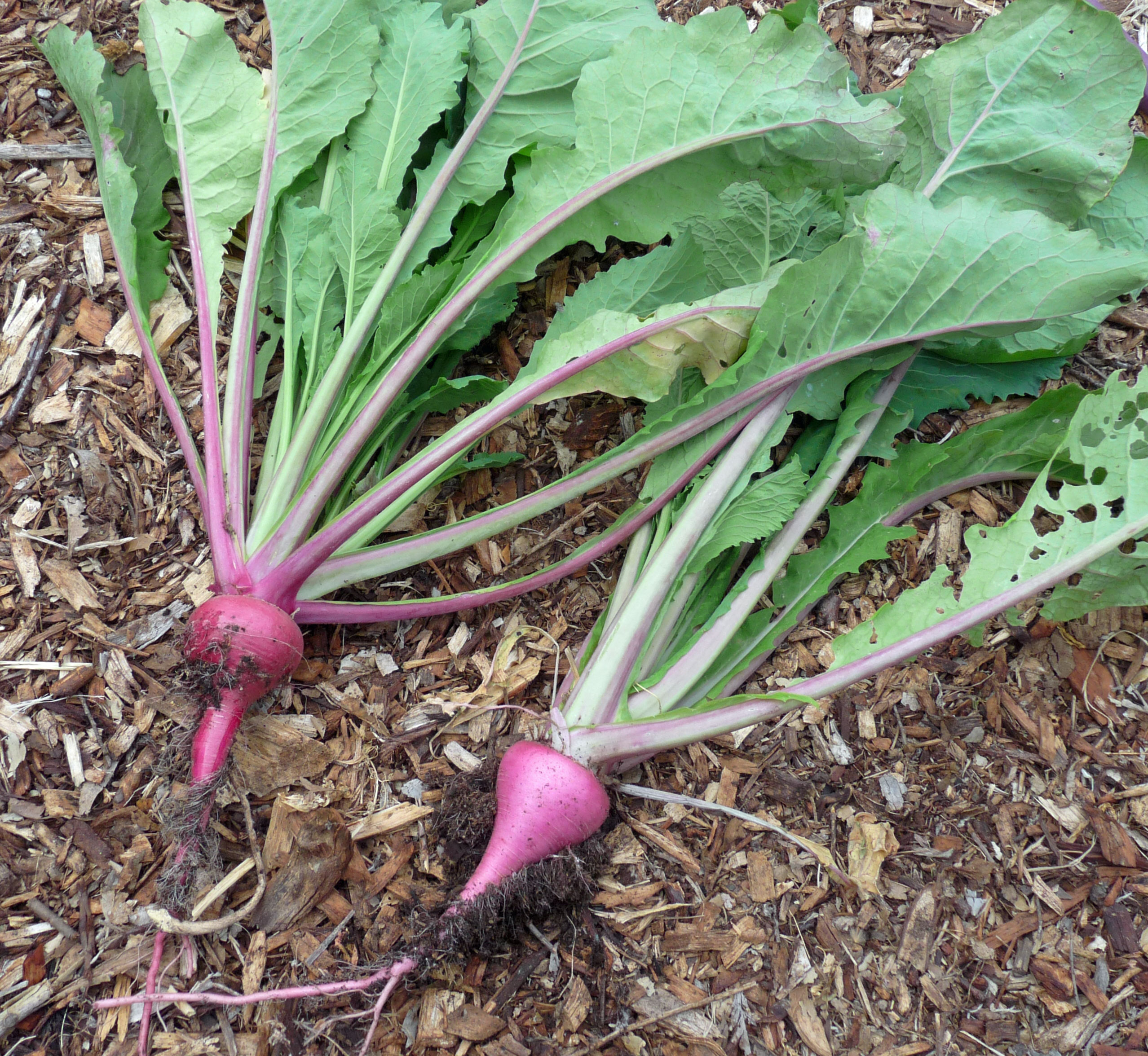
The day after I started the tomatoes, I planted ‘Scarlet Ohno’ turnips from High Mowing and Bountiful Gardens. The BG tops are taller and earlier, Scarlet Ohno Turnipswhich, if you are growing for turnip greens, could make a big difference. But the roots are different as well. The Bountiful Gardens ‘Scarlet Ohno’ is a vibrant, almost-beet red. The High Mowing root, though the same size, is clearly more pink even though the two turnip rows are growing in the same bed, with the same soil, water, everything.

I’ve been surprised by the amount of variation in some of the varieties. I tried ‘Canellini’ beans from three different sources and one variety didn’t even come up at all!

I don’t actually understand enough about the seed industry or plant genetics to fully get why this would be. I’m heading back to Carol Deppe’s Breeding Your Own Vegetable Varieties to see what I can figure out. And I’m going to keep experimenting with side-by-side trials like these to see what else I can learn with the kids in the garden this summer.

When the Garden Gets Ahead of You

4 Comments

Cauliflower Bigger Than Your HeadSooner or later something growing in the garden gets away from me. The lettuce plants go to seed one hot afternoon, the peas fatten up way beyond sweetness, that nice round cabbage turns oblong and splits. But how I managed to miss this monster in development, I will never know.

Just the other day I made a video of the back garden calling this plant collard greens. I almost cooked the leaves! Wonder what that would have tasted like? As it was, I caught this cauliflower at the perfect moment and sent it straight into the curry pot. I simmered it with some newly dug fresh potatoes, onions, green garlic (my new favorite food) and peas.  It took no time at all and will be delicious for days.

When the arugula went nuts this winter and sprouted up faster than we could eat, even with friends pitching in, I cut big batches of it to process into pesto. I simply washed the leaves and stuffed the food processor full of them, drizzled in olive oil, a pinch of salt and a squeeze of lemon juice. Then I tossed this sauce with crushed up walnuts or good Parmesan, or both, and served it over pasta, crackers, spaghetti squash or bruschetta. As the plants got closer to flowering the peppery taste got intense so I added balsamic vinegar to the pesto to cut the spiciness. Delicious!

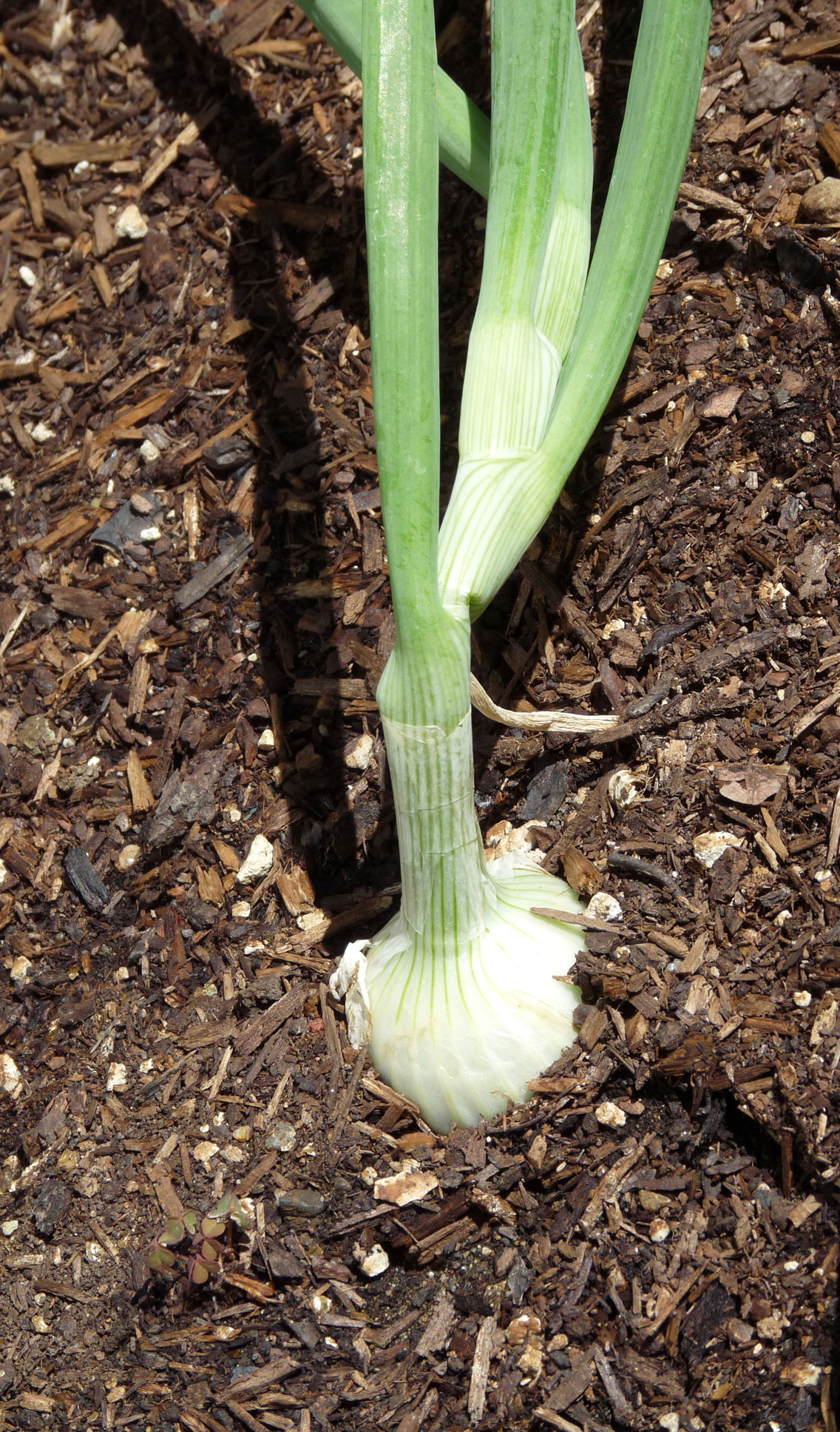
Onion growing in the groundLast winter there were way more onion plants that there was room, so many of them got tucked into odd spaces in bunches to be scallions or green onions this spring. When those got thick and bushy, I cut the stems, sliced them into rounds on the thin side and put them in the dehydrator. Not too long though! The first batch didn’t hold color and flavor as well as I wanted because I must have dried them too hot or too long. The rest came out a beautiful green, with good onion flavor that will keep the rest of the year.

When I don’t pick the peas as regularly as I should, I let the pods that are now too big to eat fatten on the plant until they dry. The best ones I save for seed. The rest I store like my dried beans and toss them into soups over the winter. I do essentially the same with hot peppers. Grinding up the whole peppers once they are thoroughly dried. Though this year I plan to ferment many of them into homemade Tabasco sauce.

Any fava beans and ready-to-bolt cold weather crops I didn’t keep up with are about to become compost, which is also a worthy goal. If your vegetable plant gets past you as food this time, you can always turn it into something delicious next season by thinking of the plant as much-needed biomass and adding it to the compost pile. Toss it in there with the coffee grounds and dried leaves and fertilize next season’s dinners with whatever gets ahead of you now.

18 Kids and 42 Kinds of Potatoes – Now That’s an Earth Day Project!

3 Comments

Yukon Gold Potato Grow Over-winter by Traditional MethodsPerhaps you’ve already noticed we can get a little intense here at Dirt to Dinner.  Our Great Potato Grow Out for Spring 2011 is  no exception. What started out as a personal interest in growing a few of the potato varieties Carol Deppe mentions in The Resilient Gardener, has turned into a full blown research project searching for the ultimate urban gardening potato varieties staffed by no less than 18 (and still counting) smart and curious kids. And the project now involves testing at least 42 different potato varieties.

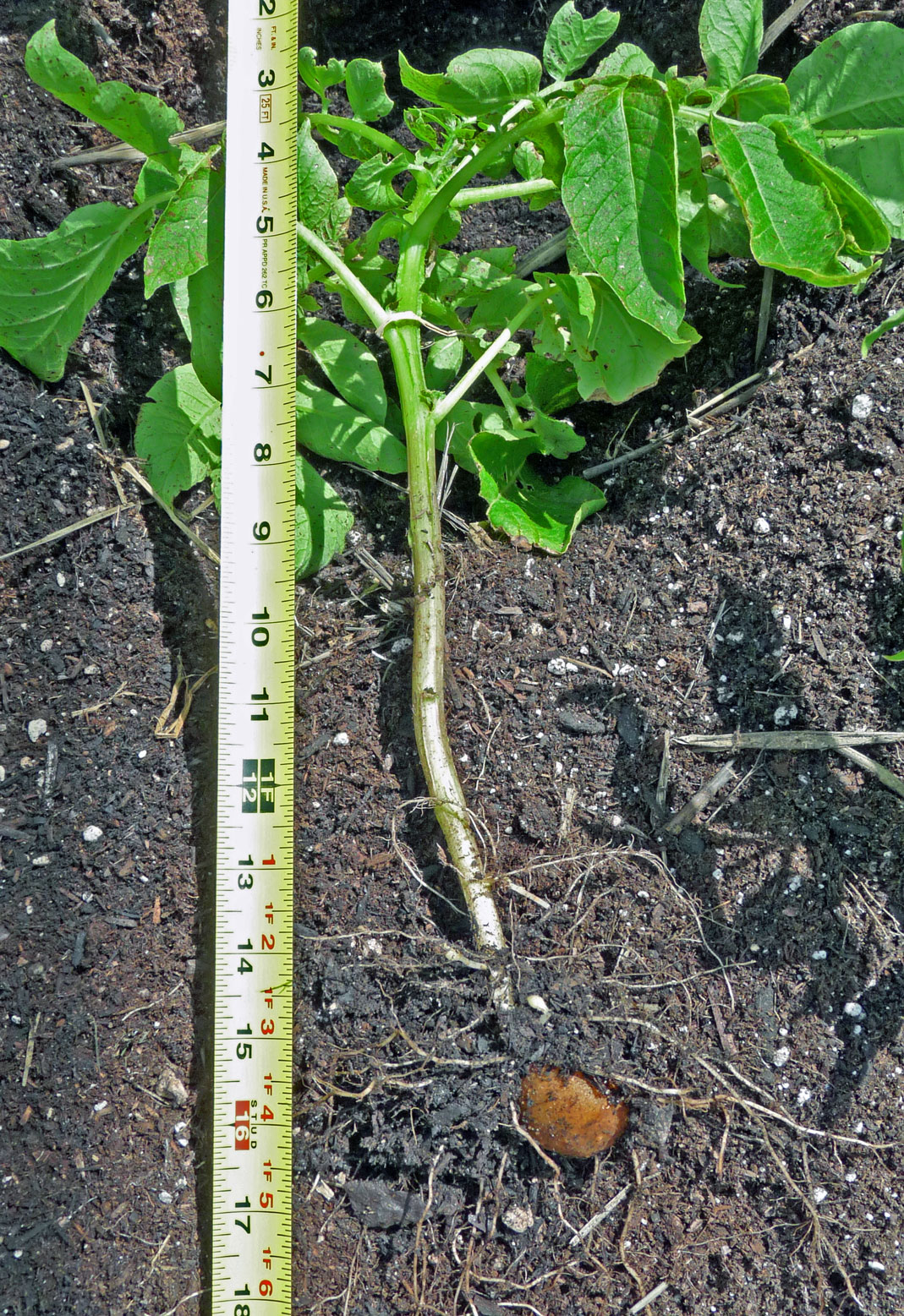
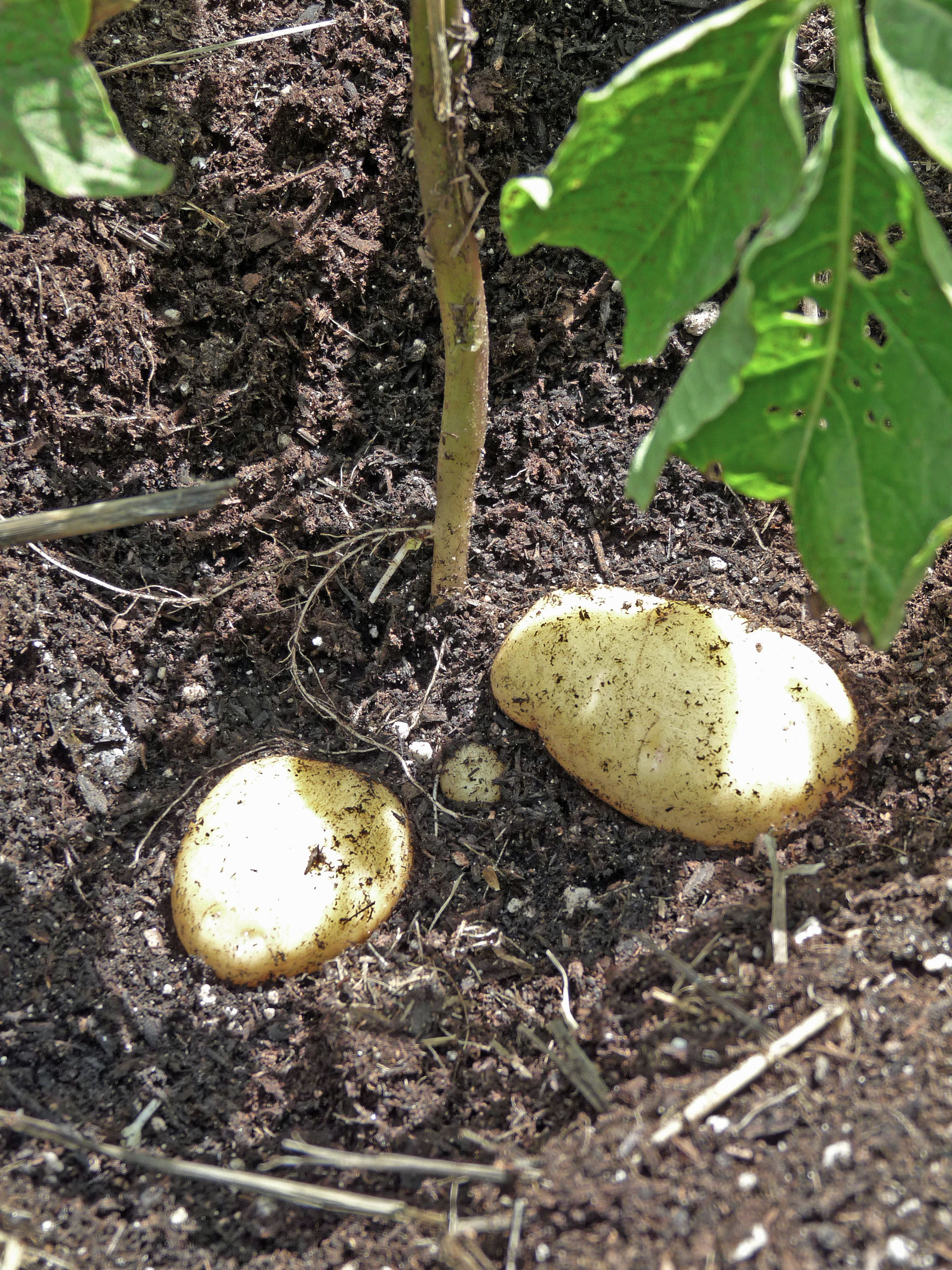
The ‘Yukon Gold’ potato shown on the left is one that was grown by traditional methods (in the ground, hilling, etc.)  except that it was grown over the winter. At harvest in April, it measured roughly 16″ from seed potato to leaf top. Because I tried to grow it through the coldest and darkest time of the year, it made an unimpressive number and weight of potato tubers. This particular plant set stolons, those little ‘umbilical cords’ that potatoes grow on the end of, along the first six inches of stem that grew up from the seed potato. But, identifying a potato variety that produces lots of potatoes vertically on a tall stem could allow thousands of urban gardeners to reduce their environmental footprint and produce more of their own food at home in small spaces.

Low Yield of Yukon Gold potatoesSo, how do you find that potato? It’s gotta taste good. It’s gotta grow well in a variety of conditions. It’s gotta be tall. And it’s gotta set stolons for a lot farther up it’s stem that the six inches that ‘Yukon Gold’ used.

That’s where Tom Wagner and New World Seeds and Tubers come in. Tom is the go-to guy if you want to try your hand at the potato varieties Carol Deppe mentions in her fascinating book. If you’re feeling adventurous, Tom will even send you an 8-pound sampler box, with anywhere from 5 to 20 different varieties of potatoes represented in those 8 pounds. That’s plenty to start your search. We even asked him to start us out with some of his tall-vined favorites.

But, if it’s really your lucky day, the generous folks at New World Seeds and Tubers will accidentally fill your order twice and then tell you to go ahead and keep the extra package! That kind of bounty begs to be shared, so I took the search to the Dirt to Dinner kids. So far 18 students have volunteered for the research project to grow out Tom’s rare and experimental potato varieties searching for the best potential vertical growers.

There’s now even a site on WePay where you can support the kids research in the next stage of the project to propagate and share with urban gardeners around the world. The Great Potato Grow Out team will be recording potato growth rates, height of stolon set, amount of potatoes produced, weight of potatoes produced and, of course, how their potatoes taste.

Got a favorite potato recipe? I’ll be collecting them to try during our Taste Test in 100 days or so!

4/23 Update –

Our WePay Earth Day project “Potatoes Grow Up” was the winner of the Earth Day donation. Thanks for your support and generosity!