January Gardening

Leave a comment

Arugula plantPlease try not to hate me. It might be hard when you hear it was over 70 degrees Saturday and I had to spend the bulk of the day in the garden. I couldn’t stay inside. I know it’s January. I know weather like this can’t last even in California. But it was still wonderful.

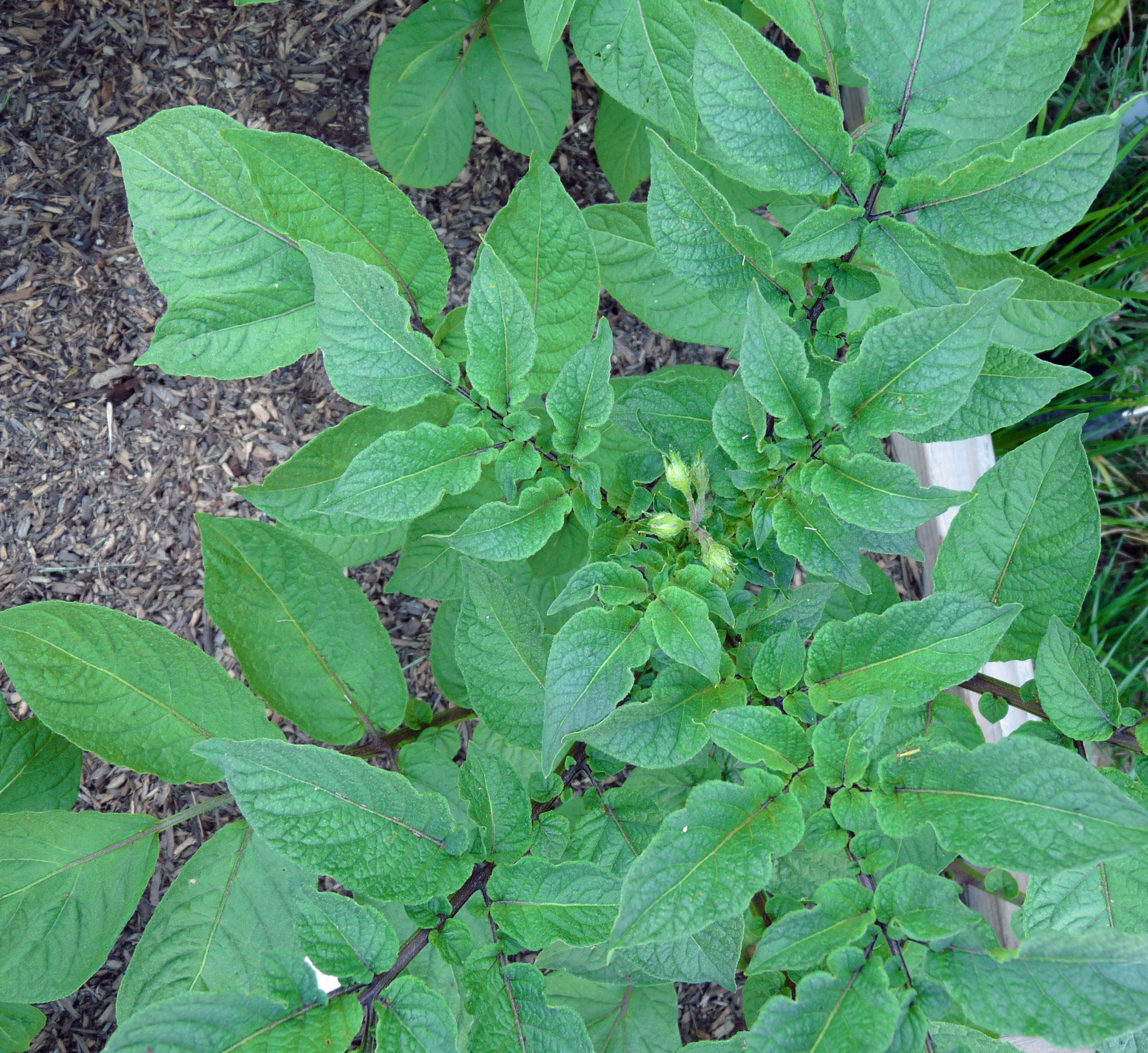
I found this giant volunteer arugula growing contentedly on the edge of last year’s bean patch. I may have munched a few of those leaves after the picture was taken, but it clearly has plenty, and it’s not even close to going to seed. Several of the pampered arugula starts in the raised bed nearby are already sending up fuzzy flower stems. I was planning to let five or ten of them go to seed for saving, but maybe I should wait on this one instead.
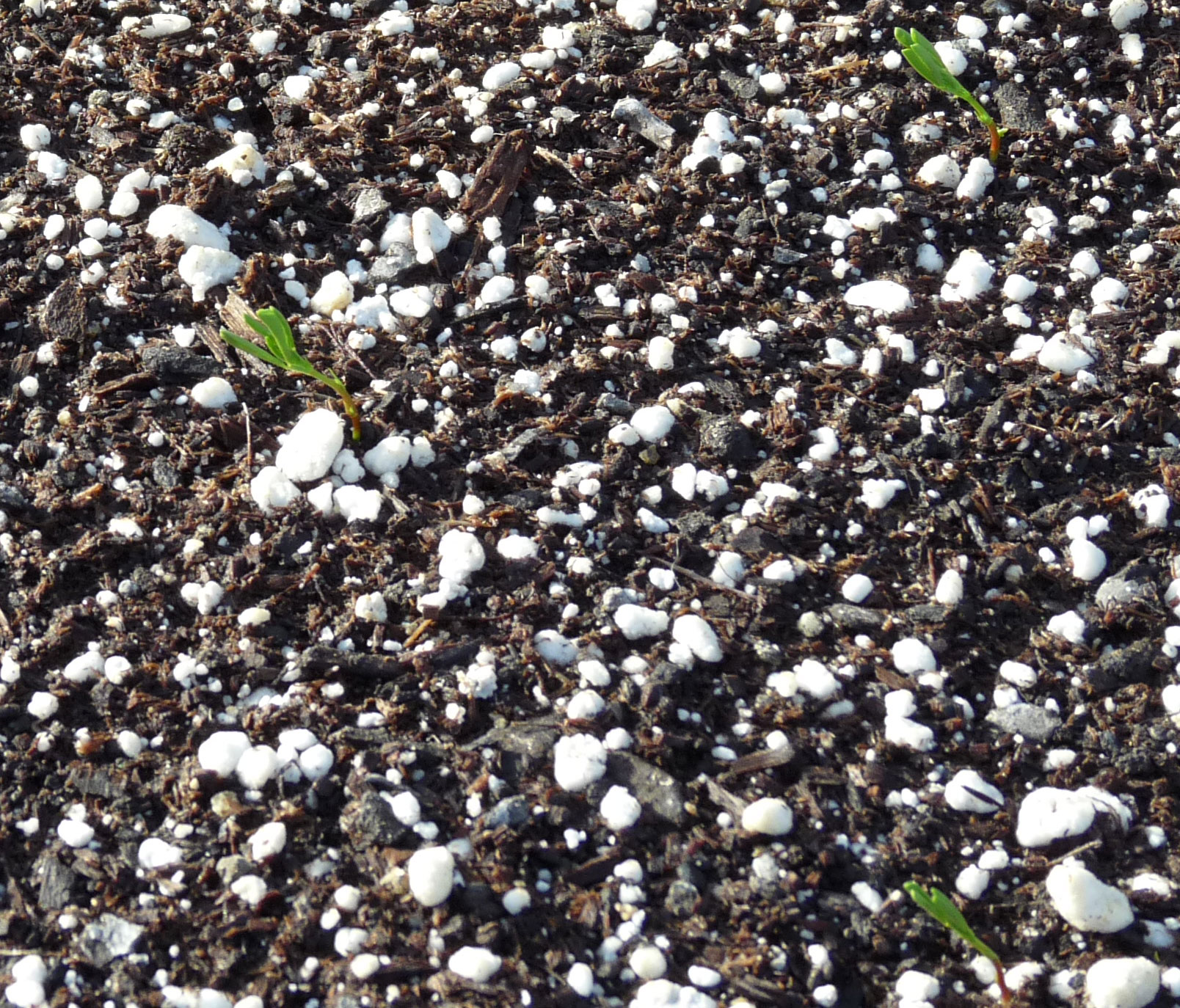
French Green Lentil SproutsAnother wonderful surprise was seeing how well the lentils have sprouted. In our family, my mother-in-law is a legendary cook. If you want to get the kids to try something new, all you have to do is tell them, “Grandma Susan made it,” and they head to the table salivating. Our youngest is especially partial to Grandma’s lentil soup, which is made with the small ‘French Green‘ lentils that look like little grey rocks. When I saw these available through Bountiful Gardens, I had to try growing some. And the sprouts look healthy so far. French Green lentils are supposed to like cool weather, unlike the Asian varieties that are a lot prettier, if you ask me. But what really matters is how they taste in that soup!
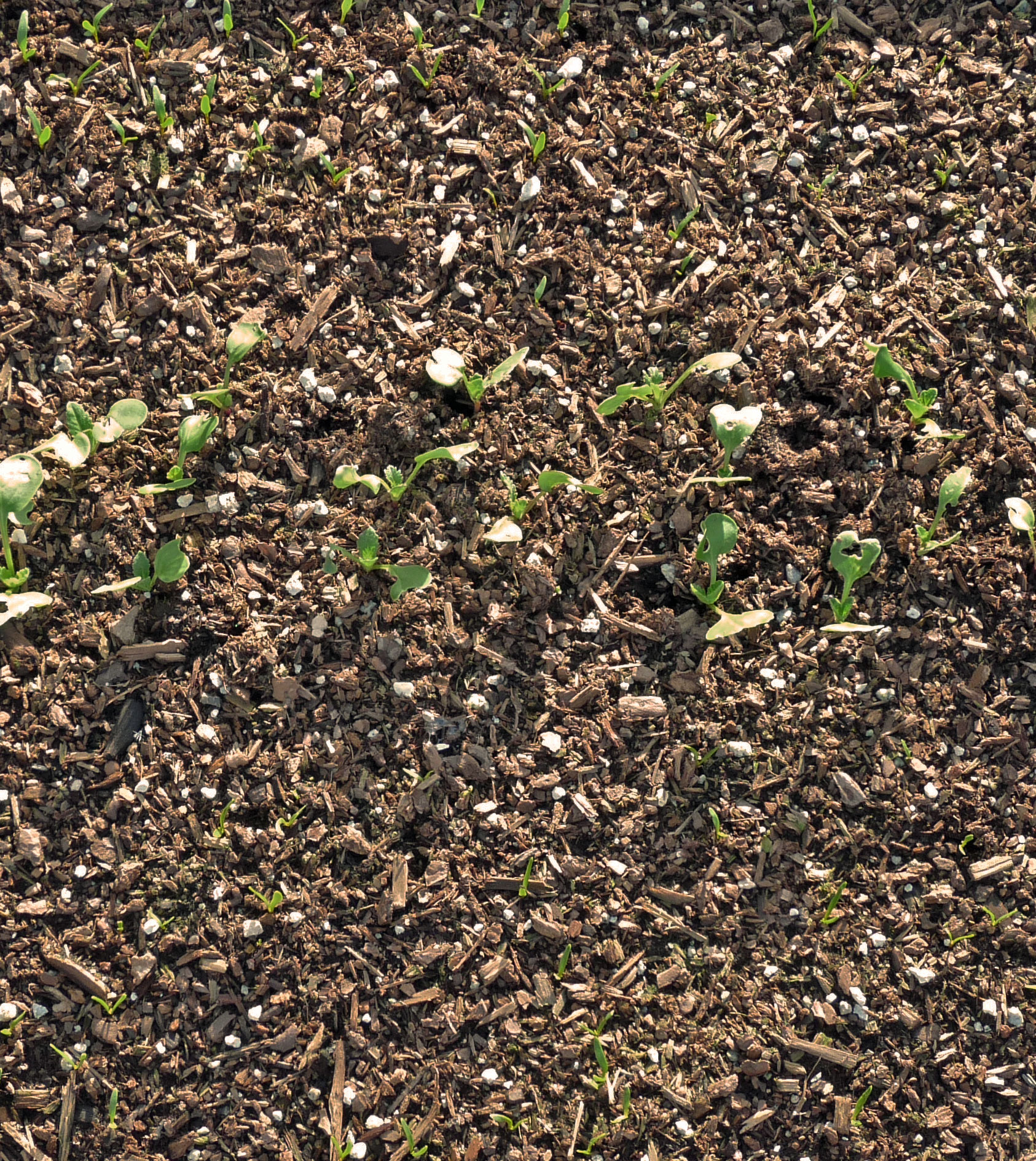
Rat-tailed radish sproutsWe’ve also got some Rat-Tailed Radishes and two small sections of Golden Beets coming up nicely–for once! Germination for Golden Beets here has been a fraction of what we get for the red beets we grow. And I honestly don’t know why. Maybe the red beets do better in warmer weather and the golden ones need cooler temperatures to germinate well? I’ll keep experimenting because I love golden beets and this is the first time I have gotten them started well. Hopefully, I’m on a roll. The patch has already been through it’s first careful thinning. I thought I would need small scissors but it ended up working fine to just pinch the stems of the beets chosen to be eaten as micro-greens with my fingernails. I’ll go through the patch again in a week to keep them spaced far enough apart that their leaves don’t touch.

Persian Cress transplantsThe rest of my day was spent on the Spring Salad Garden, which ended up planted in containers on the patio in the back garden. I transplanted Persian Cress, a variety of lettuce varieties, Bloomsdale and Guntmadingen spinaches. I seeded one pot with Beta Salad Mix and another with two varieties of Romaine, because we like it and because Frank Tozer says it’s one of the most nutritious kinds of lettuce to grow.

The salad garden ended up on the back patio because it’s close to the kitchen and well-lit. Even if it’s already dark when it’s time to put together a dinner salad, we can still pop out to the patio and snip away. And I am hoping that slugs and snails will find it very annoying to have to climb vertically on dry terracotta in order to attempt to ruin my salad greens. Earlier this week we were running late getting dinner together and had to pick spinach by flashlight. We discovered dozens of slugs had gotten there ahead of us. Yuck!

Salad Days

Leave a comment

Green onionWe actually managed to over-winter a few loose-leaf varieties of lettuce and a surprisingly hardy French chicory whose leaves turned a gorgeous deep burgundy in the cold weather. But most of our winter salads are made of chard, spinach, mustard greens, beet greens, radish sprouts, arugula and green onions we discovered bursting out of a compost pile. Now that we are on the far side of the Winter Solstice, I’m starting the Asian greens–the Pac Chois and Chinese Asparagus–and a much more expansive salad garden.

I chose High Mowing Seeds ‘Beta Mix’ to anchor the salad garden this spring. It’s a blend of beet and chard varieties that should have no trouble germinating even if we have a cold February. Of course, that’s anybody’s guess. The next ten days of weather here call for Sunny and 60’s which will make a wonderful germination window for just about anything I want to plant as long as I can keep all the seedbeds moist enough.

I plan to include spinach, mostly the Guntmadingen from Adaptive Seed, several Romaine varieties and some ‘Rubin’ lettuce they gave me yesterday when I made the pilgrimage to Baker Creek Heirloom Seeds in Petaluma. The ‘Rubin’ leaves have a warm red-gold color that just has to be good for you.

If I can bear to cut and compost more of the favas and other cover crops, I’ll also put in some of Territorial Seeds Italian Saladini blend. But the problem with lettuces is that you really don’t want them all at once, you want them over time. Unfortunately, the window of optimal eating for any individual lettuce plant is actually very short. I’m using two different strategies to try to keep the family in salads this spring. First, I’m planting mixed varieties, so not all the plants in the mix are ready at once. And, second, I’m planting in small sections every couple of weeks from here until the weather gets settled and really warm and we switch over to eating orach and other summer greens and tomatoes and cucumbers fill our salad bowls.

Are you starting the spring salad garden yet? What are you putting in this year?

Winter Potatoes

Leave a comment
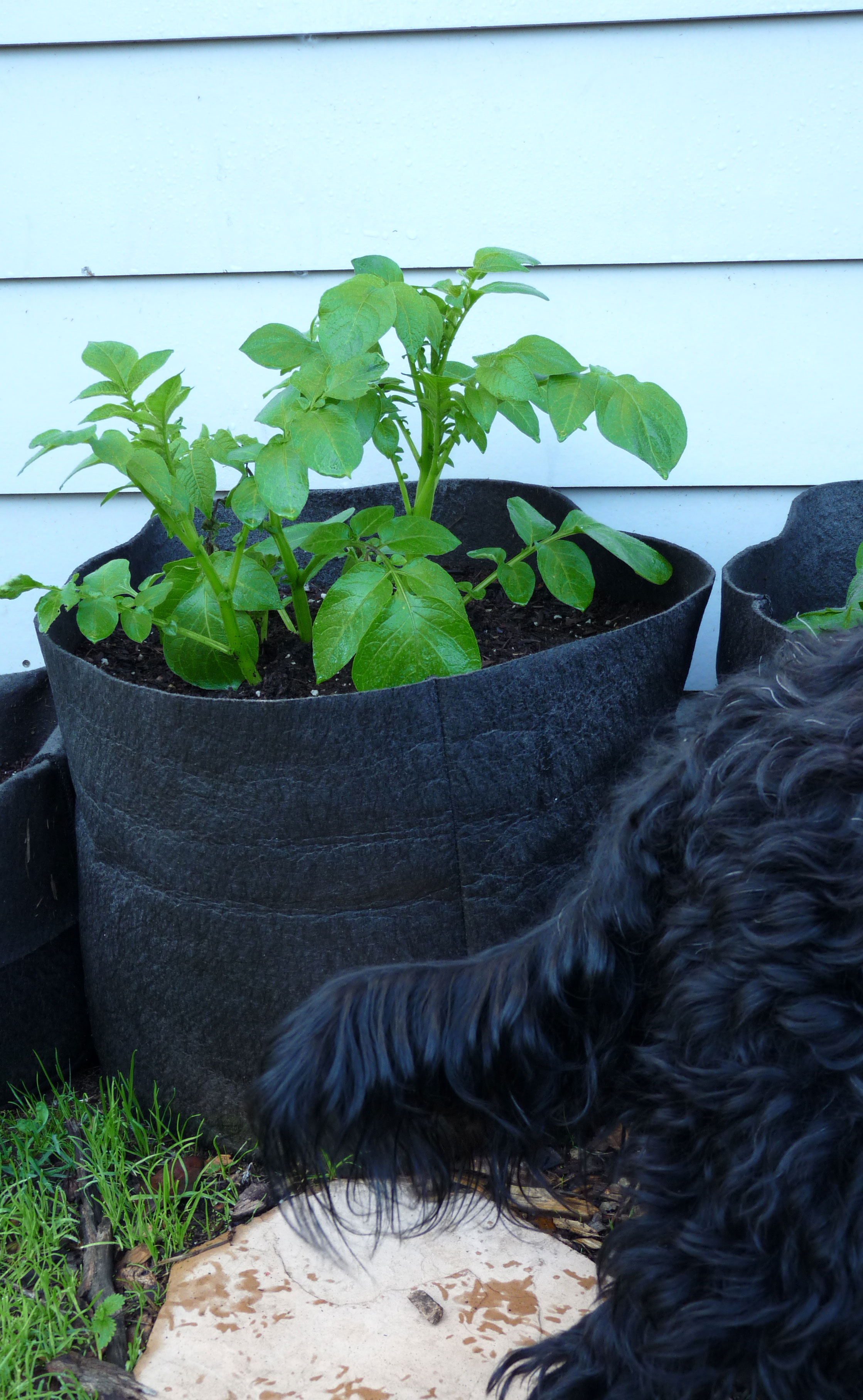
Potatoes in Grow Bag

Tail End of Potato Season

I’m growing potatoes through the winter as an experiment. They don’t look too bad in the bags in the back garden. Though the planting in the front garden got hit by a little frost and was looking pretty ragged before it hit me that I should just hill them deeper and protect them with soil until it warms a bit.

I think if I timed it right, I could have potatoes growing year round. It’s only December and January that are tricky. If I had them ready for the plants to start dying back by December anyway, the potatoes in the ground would be safe here. The ground doesn’t freeze even if we do get a little frost. Then I could get new seed potatoes in the ground in January and could easily cover the sprouts for a few weeks after they were up to keep the frost off, letting them grow up after Valentine’s Day or so.

If each planting took ~100 days between seed potatoes and potato salad, I could plant January through September. Of course, it’s tough to get seed after March or so. I would need to store the seed or save my own for the April through September plantings. And some seed potatoes, though I honestly don’t know which varieties, need to rest before they will sprout, so I can’t just immediately reuse the potatoes I’d be harvesting. I’d have to set aside seed staggered three or four months before I wanted to plant it. (I’m gonna need a spreadsheet here in a minute.)

Seed Balls forming on Potato Plants

True Seed for Potatoes

I have some Desiree seed potatoes I bought for the fall planting that I haven’t used yet and they are barely starting to sprout now that it’s January. So, saving through that part of the year clearly could work. And I might try growing some potatoes from actual seed. This plant from the 2010 summer garden bloomed and formed seed balls. I know the seed may not breed true for the variety, but it could give us a variety that we like or maybe even one that would adapt to the conditions here over the years. Several gardening authors have information available on how to do those sorts of experiments. Though I can already tell from the current potatoes growing in the front garden that we’ve got at least one variety out there that has weathered the frost better than the others. Maybe it will make seeds and give us some material to start with that already shows an advantage for my year-round potato planting scheme.

January Blooms

Leave a comment
Thyme and 'Negreta' Fava Beans

Thyme for Favas

OK, fine. I broke down and grew a flower. Sure, the blooms might be technically edible, but I admit it, I am growing something in the garden that’s not for eating. Those of you who know me might suspect that it’s not actually just one flower. It’s a lot of flowers. More on that in a minute. First, these beauties, surrounded by my Extra Thyme plants, are ‘Negreta’ fava beans that are about ready to transplant into the garden. That will make three varieties of favas on the place, growing lots of biomass, holding the soil together and deflecting some of the compaction from the rains, fixing nitrogen, and making winter beans for the crock pot. And they do make really nice black and white flowers. But those aren’t the flowers I’m talking about.

Flat of Blue Borage, Rutabagas and Spinach

Baby Blue Borage

This year, for the first time, we’re growing over a dozen beneficial or “insectary” plants that are either good companions for crops we especially like, are good food for pollinators or insects we like having around the garden or do good things for the garden soil.  The first one we started, shown here on the right, is Blue Borage which is supposed to have flowers that taste like cucumbers but we’re trying it as a companion for beans, spinach, strawberries and maybe one of the tomato patches as well. It should bloom a good part of the year and we can always toss it in a salad in an emergency cucumber shortage.

We’ve also got some nice looking Calendula coming up from Seeds of Change seed I’ve been hanging onto since 2007. I had no idea it would still sprout but it looks fine so far. We’re also trying ‘Tangerine Gem’ and ‘Pesche’s Gold’ Marigolds, which are supposed to be bad for the bad nematodes, Cleome, Zinnias, Echinacea, Cosmos, Mexican Sunflowers, ‘Texas Hummingbird’ Sage and Alyssum.

Persian Cress Sprouts

Is Persian Cress like English Watercress?

And that doesn’t take into account the herbs, like my Extra Thyme, which is growing in several spots in the garden. We’re also starting Sweet Marjoram, Italian Flat-Leaf parsley, Mexican Tarragon and I’m not sure which category to put the Sesame in. I thought it would be fun to try to grow our own sesame seeds. Does that count as an herb? And does anyone know the difference between ‘Persian’ Cress and English Watercress? Are they related? That’s gardening for you. It always brings up more questions than it answers!

First Up in the 2011 Garden

Leave a comment
Asparagus Seedlings

Asparagus Sprouts

My friends at Common Ground Garden Supply may have shaken their heads at me a bit when I told them we were starting asparagus from seed.  Apparently most people get dried-out, nasty looking year-old roots, soak them in warm water for several hours to rehydrate them and somehow configure the poor, spidery things over a cone of soil, bury them over the winter and hope for the best come spring. I actually tried this! But, no luck. The year-old ‘Mary Washington‘  roots from Yamagami’s didn’t take. I lost the year I would have gained by starting with year-old roots waiting for dead roots who had no intention of sprouting into asparagus ferns. So, when I saw the heirloom ‘Precoce d’Argentuil‘ asparagus seed, I figured it couldn’t  go any worse than the roots had.

First-Year Asparagus Ferns

First-Year Asparagus Ferns

In fact, it went well, I guess. The seeds sprouted. The seedlings grew slowly but by fall they were big enough to set into their composted horse manure amended permanent bed. The stems are fairly spindly, but all asparagus ferns are like that, aren’t they? This picture was taken around Thanksgiving, just before our first frost,  so I think it’s normal that the ferns were starting to yellow. I had expected them to start dying down before then. The books say to clip the dried ferns in the fall but these young’uns were still pretty green at Thanksgiving, so I left them standing where they were.

I checked in on them on New Year’s Day, thinking it would finally be time to clip off the old ferns and clean the bed up a bit, and here’s what I found.

Winter asparagus

Eat It or Leave It?

The first year after the roots are in their permanent bed, you are supposed to take nothing. Let the spears that form grow into ferns to feed the roots. The second year after they’ve been in the ground, you can take any spears that form thicker than a pencil for something like a few weeks. This monster is as thick as a Sharpie, and year-one in the ground or not, I’m thinking about eatin’ him.

Got any recipes that call for a single asparagus spear?