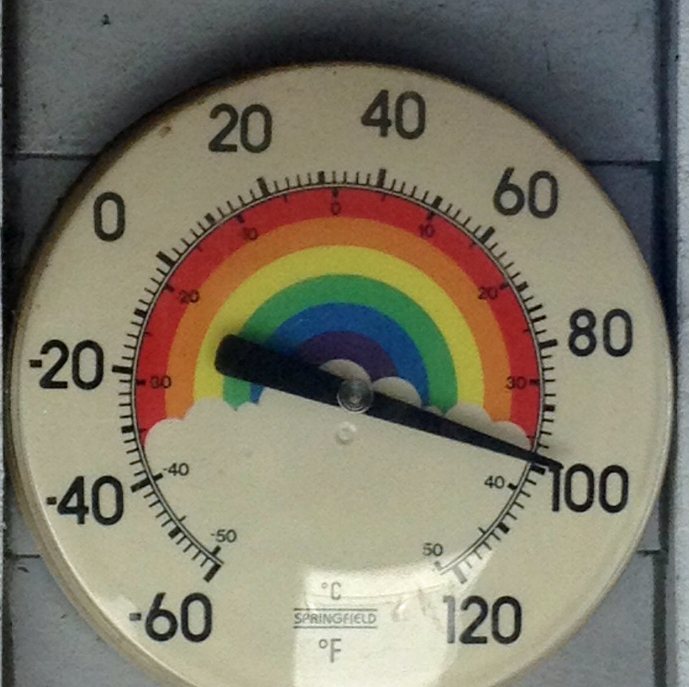
The most important thing we’re trying to do in the summer garden is recover from the nine-day heat wave that has stressed or killed our project plants this year. It was an unusually dry winter here in Northern California, so soil moisture was already low moving into a dry and warmer than average spring. Shifting to an evening watering schedule has given the plants more time to recover before the heat of the day dries the soil.
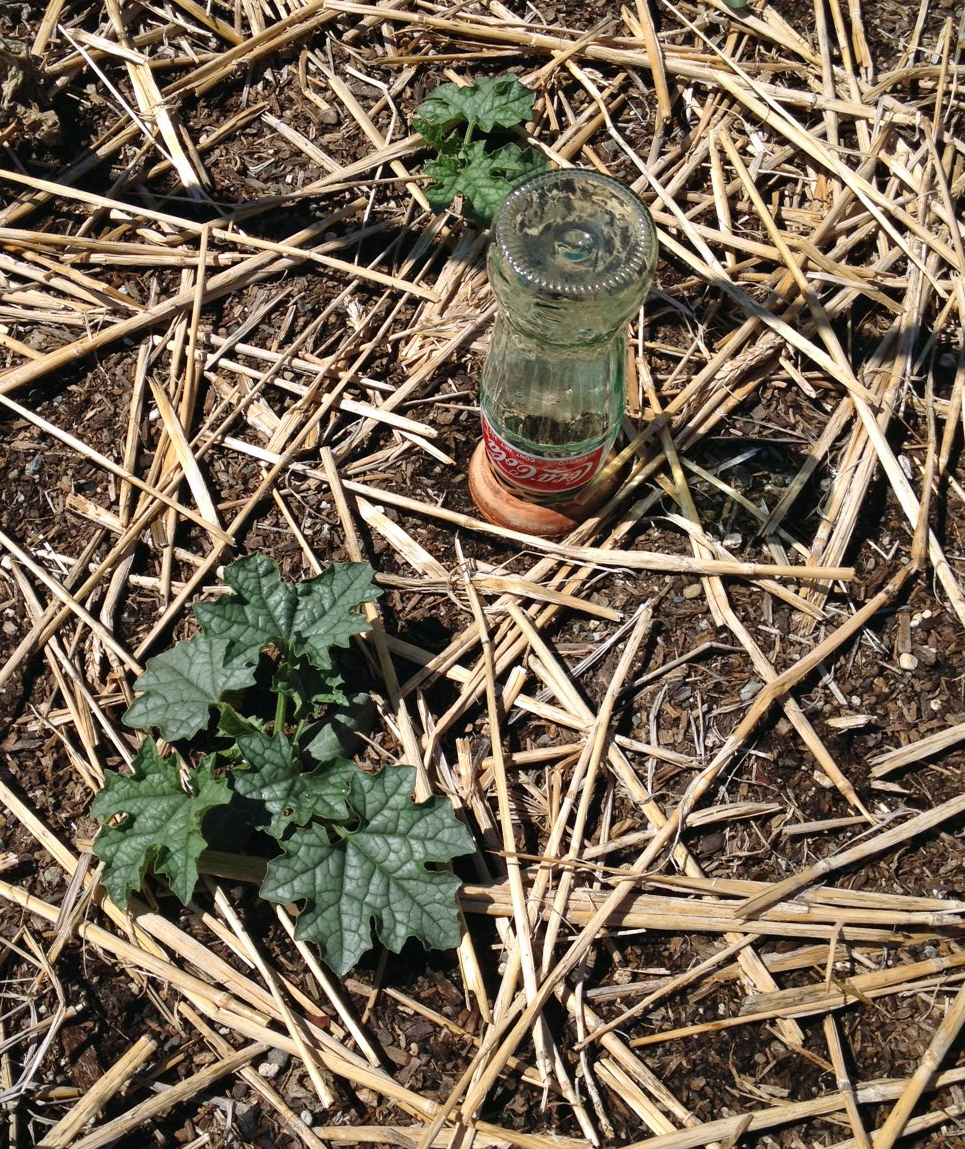
We are covering all the growing areas with straw mulch, even seed beds, and increasing the mulch until it’s several inches thick after plants are growing well. We are also testing out these Terra Cotta Aquacone Watering Devices from gardeners.com. I bury the terra cotta in the soil with only the top lip showing and upend bottles into them to help keep soil moisture where it is needed. Seems to be working well for these young Luffa starts.
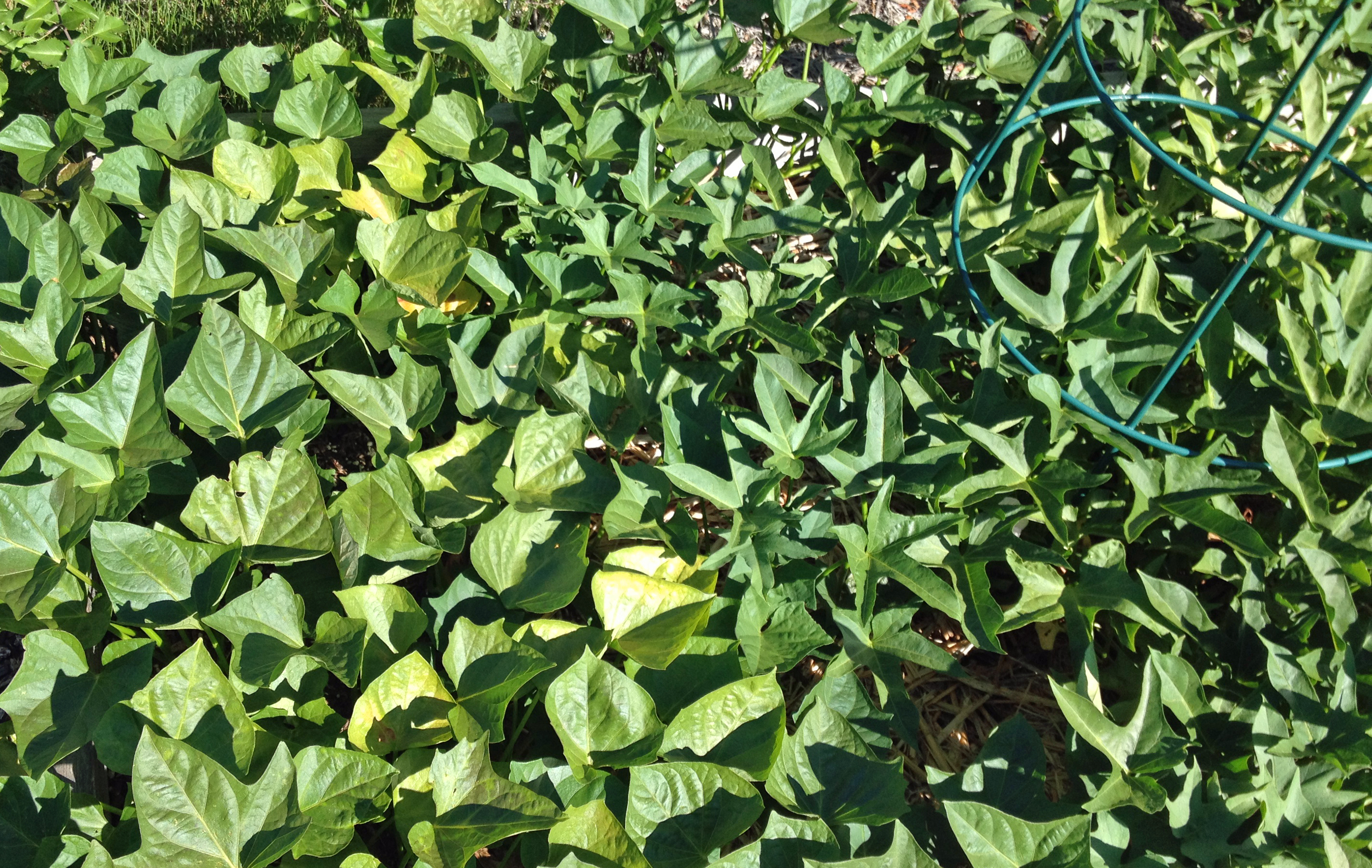
If you can tell which variety these are by the leaf shapes–please share!
One crop that seems perfectly happy with the weather is the sweet potatoes. Finally! The experts at Sand Hill Preservation Center say, “It takes about 1,200 heat units for our early varieties to reach a decent crop of usable sized roots…The question you must then ask yourself is, ‘How is 1,200 heat units determined?’ To get heat units you take the day’s high temperature (maximum) and the day’s low temperature (minimum) and add them together. Then divide by two and subtract 55 from that. That gives you the day’s heat units.” So, if our daily averages during the Heat Wave were at least 90 during the day and probably warmer than 60 at night, that gives us easily 20 heat units a day. Two months of that and we have a nice crop of delicious sweet potato pies! Of course, the heat wave did eventually break, but even so, if we stay at historical average temperatures for the rest of the summer, that still gives me plenty of time to enjoy sweet potatoes by fall.
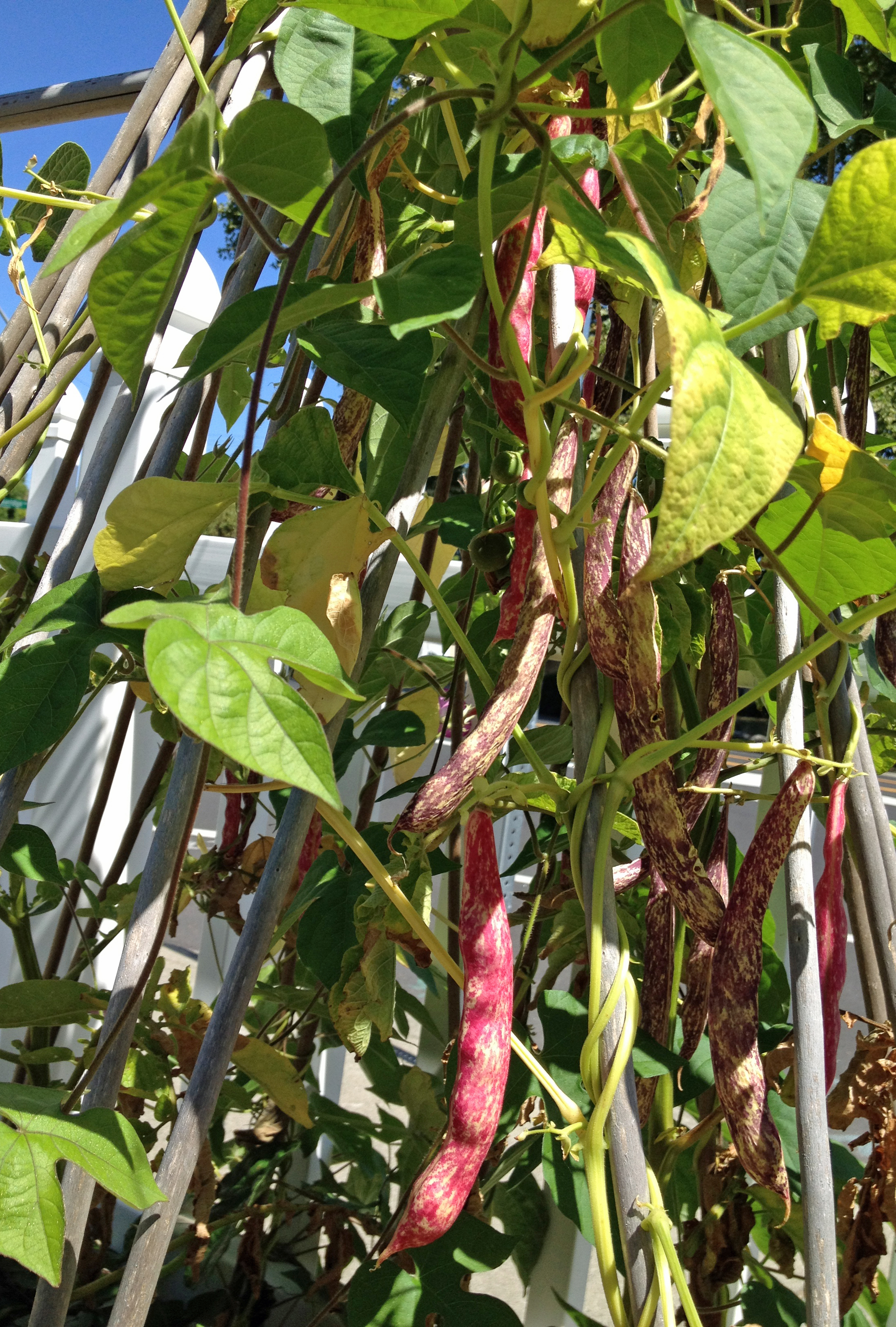
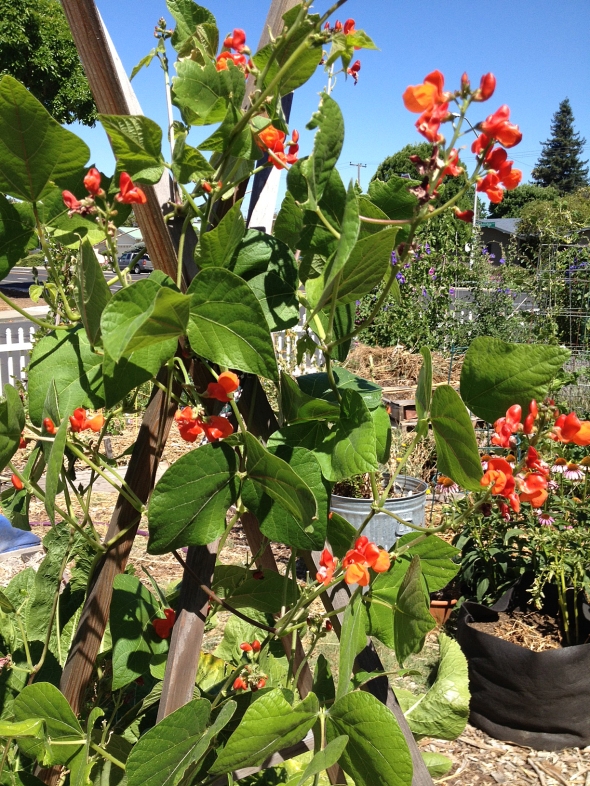
Another wonder of the heat is that we had beans drying down by the 4th of July. If I am very nice to the runner and Borlotto bean vines, we have time for a full second cropping of beans this year. I was so excited by this prospect that I started another dozen perennial bean vines just the other day. They should have plenty of time to get established by fall and then start cropping early next spring.
What helps your garden survive the heat? Share your ideas with us in the comments.


 From Dirt to Dinner