A New Start for Fall

Leave a comment

Some New Favorites

We learned a lot from the Fall Greens Trial this year, including:

  • Mice like collard greens seedlings even more than they like yellow tomatoes
  • The humans around here do not like ‘Runway’ arugula, no matter how well it sprouts and grows
  • ‘Osaka Purple’ mustard is quite possibly the stuff wasabi is made from and should not be chomped in the garden by the unsuspecting. (How bad can drinking out of the hose really be? It was an emergency!)

Starting on August 12th, we tried two varieties each of chard, mustard, arugula, collards and kale. For each variety, we started half the seeds in pots and the other half were direct seeded.  Direct seeded ‘Italian’ arugula was the first to sprout, a full 24 hours ahead of the same variety in a six-pack and both the direct seeded and the potted ‘Runway’. During the course of the trail we have come to believe that seeding fall arugula in Northern California is not a challenging task, no matter where you put it. ;-)

Ready for Cinderella

In our trials, ‘Improved Dwarf Siberian’ kale beat out the ‘Nero di Toscana’ which barely sprouted at all in the heat.  The thing is that I like the lacinato kale, so I am trying ‘Nero di Toscana’ again right now, half a flat of it, in the cooler temperatures. The ‘Mangold Witerbi’ chard has done slightly better than ‘Orange Fantasia’ but both are strong and delicious now. The spoon mustard seed was disturbed in its six-pack and didn’t sprout at all in the ground, but the ‘Osaka Purple’ came up with nice wide leaves with a beautiful green and purple mottled color and plenty of taste!

The ‘Georgia Southern’ and ‘Green Glaze’ collards were not nearly as accommodating. Potted ‘Georgia Southern’ sprouted first, though germination was thin for both varieties, under both conditions. And once the sprouts began to fill out beyond their seed leaves, all the direct seeded ones were quickly munched to the ground by some vile rodent nesting in the nearby ‘Star’ Jasmine. Probably a relative of the same evil pest who turned my ‘Lady Govida’ pumpkin into Cinderella’s carriage.

A brazen infestation of diurnal rodents was certainly not in the summer gardening plan this year, but they came anyway, bringing their friends and relatives. My daughter saw as many as six individuals at once stealing yellow, red and even green tomatoes in broad daylight. I cut back the jasmine. I planted catnip. I put out peppermint plants, tea and oil. My daughter tested a number of different home-designed traps, all to no avail. Easily half of the tomato crop and a fair number of green beans were lost to them before the Iowa farmer living next door put an end to the “nonsense” with D-con bait and peanut butter. I’m not saying it’s my idea of a perfect solution, but I’m also not saying I’m not grateful to have the population culled a bit. Now maybe I can sprout a pea plant without having it ripped up and eaten before it even spreads it’s seed leaves!
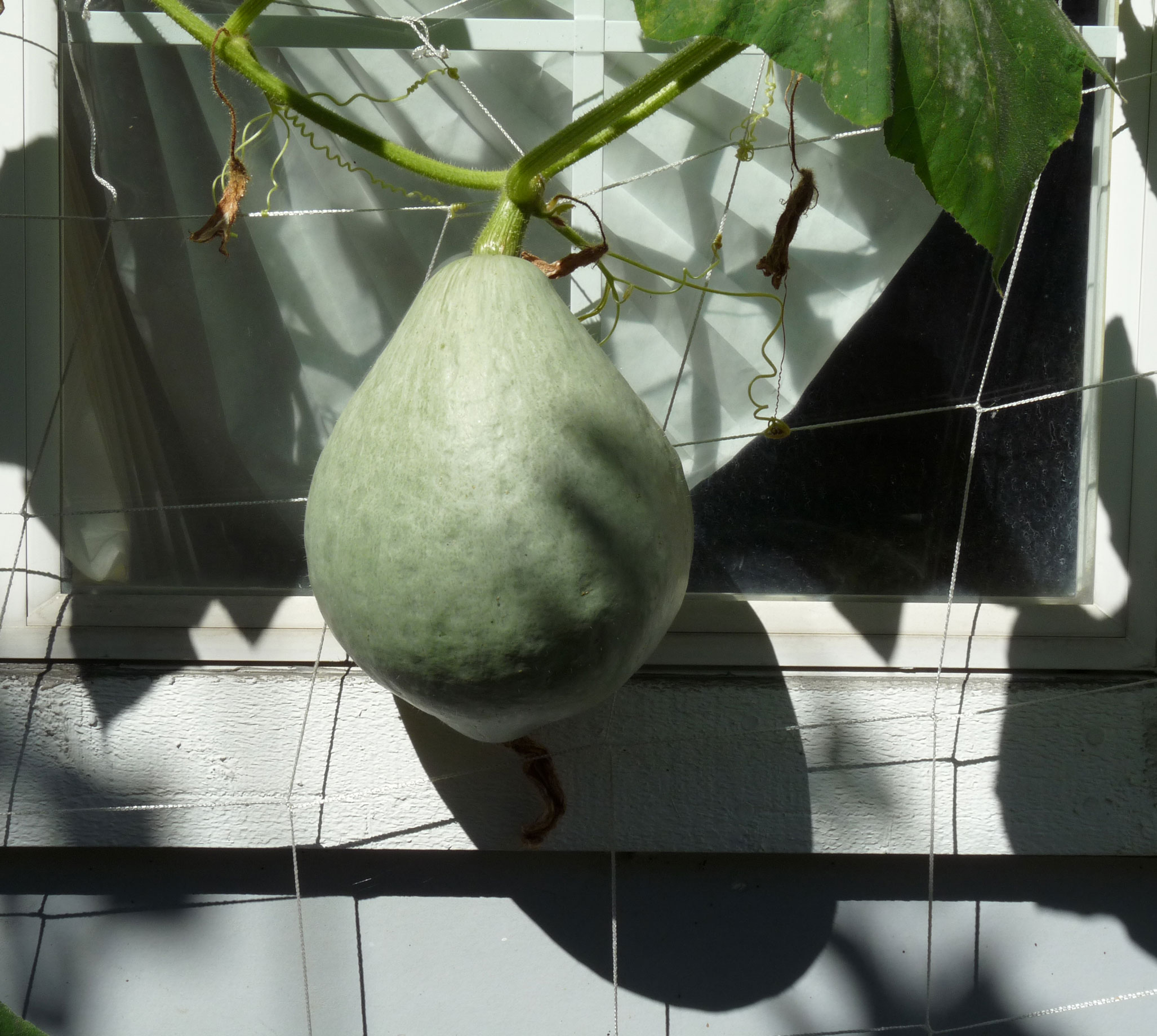
Hubbard Squash

A Mother of a Hubbard

I know some of the neighbors were probably laughing when they realized I had trellised my ‘Sugar Hubbard’ squash. But, for the record, they held just fine. Because of slow growth in our unusually cool spring weather, I held each of the trial vines to one squash, 7 and a half pounds and just over 5 pounds, with no tearing in the netting and nice strong necks. I can’t wait to try them to see if we like Hubbard squash. Let me know if you have a favorite recipe.

I put one ‘Waltham Butternut’ under green mulch this afternoon to try to keep it going farther into the fall, but all the other squash are done for this year. If the green mulch works, I plan to start melons, cucumbers and squash under it next spring, just in case. I want to be more prepared if we find ourselves standing around next May wondering when it’s going to warm up so I am testing several different kinds of season extenders this fall.

Though it looks a bit like spring with the overgrown summer crops disappearing into the compost pile and bare ground showing again as the garden switches over to rutabagas and radishes, broccoli and beets, carrots, cauliflower and collards. Salad greens are in alongside Asian mixes and thin strips of onions and garlic separate patches of this from patches of that.

Now That’s Dinner!

1 Comment
Picnic Shoulder Roast

Smokin' "Picnic"

My apologies to the vegetarians in the crowd, but I just had to include a shot of the Picnic Shoulder Roast from TLC Ranch my husband smoked for our Father’s Day feast last night. I got a “Versatile Cook” box of their pork through our CSA and was glad to learn that Picnic Roast is a good cut to put into the smoker. Now I can spend my time getting versatile with the other cuts they sent. (I am currently thinking of mixing the ground pork with some grass fed ground beef and mixing up some meatballs, but I digress from last night’s meal…)

The Picnic Roast was treated to a rub the night before it was cooked, then it was injected with my husband’s marinade mix and basted while it smoked for several hours. About ten minutes before the roast was due to come out of the smoker, he also added a finishing sauce. Then I endured a torturous, ravenous ten minutes of ‘resting’ (the meat–not me!) while the delicious and complex aroma of all those carefully blended ingredients filled the house before I was allowed to taste it. And oh, it was worth the wait!

Mixed potato varieties ready for cooking

Grab Bag Potato Salad

I could have slapped any old mayonnaise-y side dish down next to this amazing meat, it’s not like anybody was going to notice the side dishes! But I went with Balsamic Potato and Green Bean Salad out of home grown California White, Red-Skinned, All Blue and Rose Gold potatoes, fresh from the garden. I tossed together the first of our Contender green beans, vinegar, a little sugar, olive oil, green onions, chopped thyme and cracked pepper. Not your average potato salad ingredients where I come from, but it makes a very tasty salad and I’m glad I took the time to root around under our potato plants to steal the new potatoes the recipe called for. We also feasted on Zucchini Bake, frittata and something called “Poke Cake” that I had never heard of but my mother-in-law and stepdaughter made it and everyone enjoyed having it around.

Now I just hope there is something leftover for lunch today!

Up the Bean Pole

2 Comments
White Emergo Pole Beans

White Emergo Pole Beans

Remember that crazy thing we did this winter with a dozen or more varieties of peas? Well, I think it’s happening again, this time with beans. White beans, black beans, heirlooms, perennials and beans with packaging in languages I can barely understand. Ever wonder what the opposite of monocropping would be? Stop by and I’ll show you.

We like green beans, especially if Chinese sauces are involved. But most of these beans are intended for drying. This winter they will turn into chili and baked beans and hearty soups.

Tarahumara Black Bean Trellis

Sprouting Tarahumara Black Beans

Some of the beans are heirloom black beans traditionally grown by the Tarahumara. We are trying both the bush variety and the pole beans. They are used to a very dry climate and I initially over-watered the bush beans giving them “chlorosis” which is a yellowing of the young leaves that occurs when you give them so much water that you actually wash away some of the nutrients they need for photosynthesis. Oops! I mulched them with some Happy Frog and cut back on the water and they seem much happier now. It helps that it’s not over 90 degrees any more.

Druzba Tomato and Hutterite Soup Beans

Eastern European Cousins

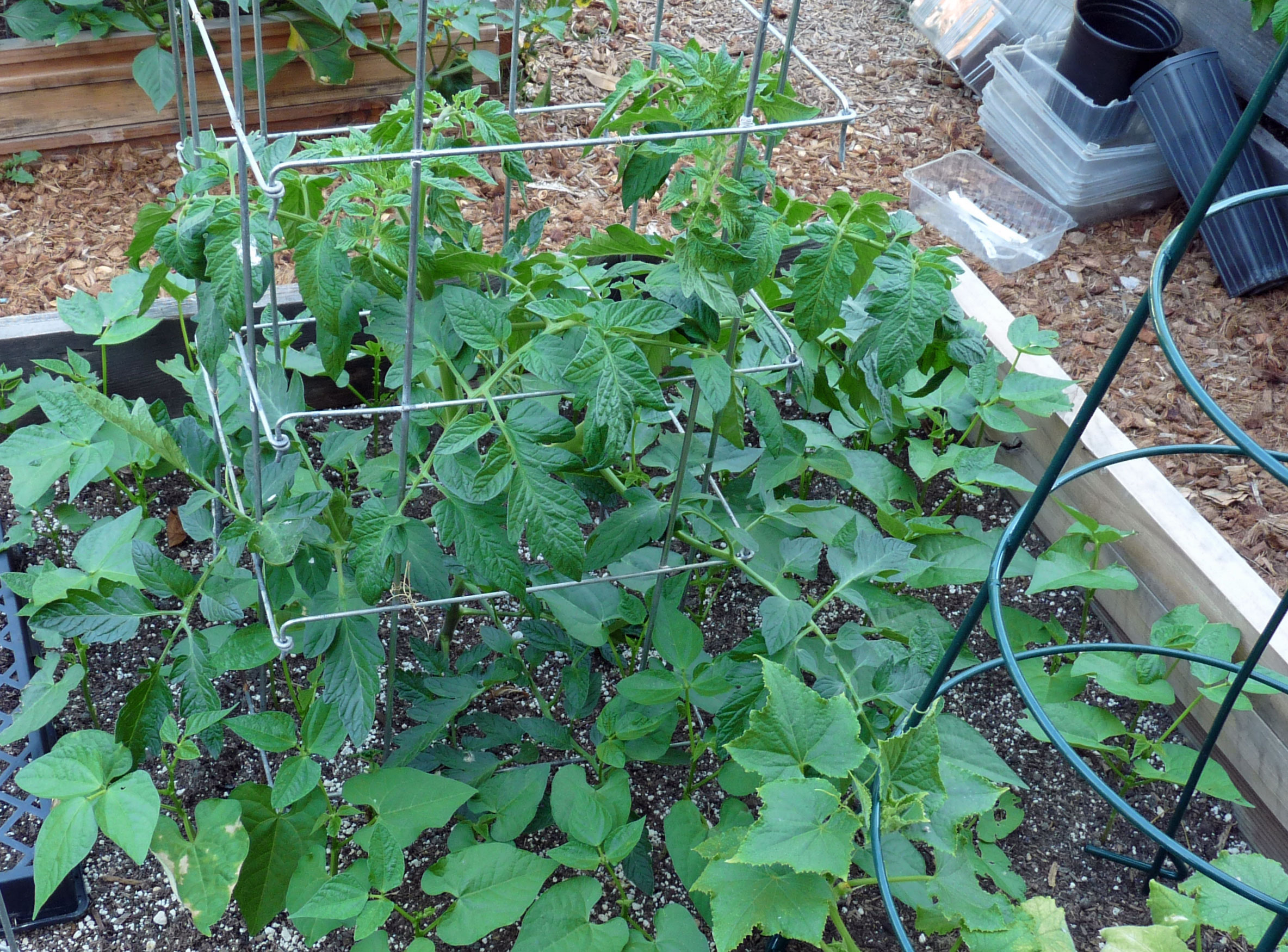
Another interesting variety we have in the garden right now is the Hutterite Soup Bean. Seeds of Change says these beans immigrated to the U.S. in the 1760’s with a religious group from Austria. Which sounds nice and is about all you can fit on the back of a seed pack, but the Hutterite’s have a rich and interesting history. And let’s hope they have some good soup recipes too, because these beans sound delicious so far. In homage to their Eastern European connections the Hutterite Soup beans are interplanted with a Druzba tomato, an heirloom from Bulgaria. They may actually be planted a whole lot too close for comfort. In my research about the Hutterite beans, I came across one site that recommended planting them 18″ apart. I’m lucky if mine are 3″!

Contender Bean Pods

Our First Contender

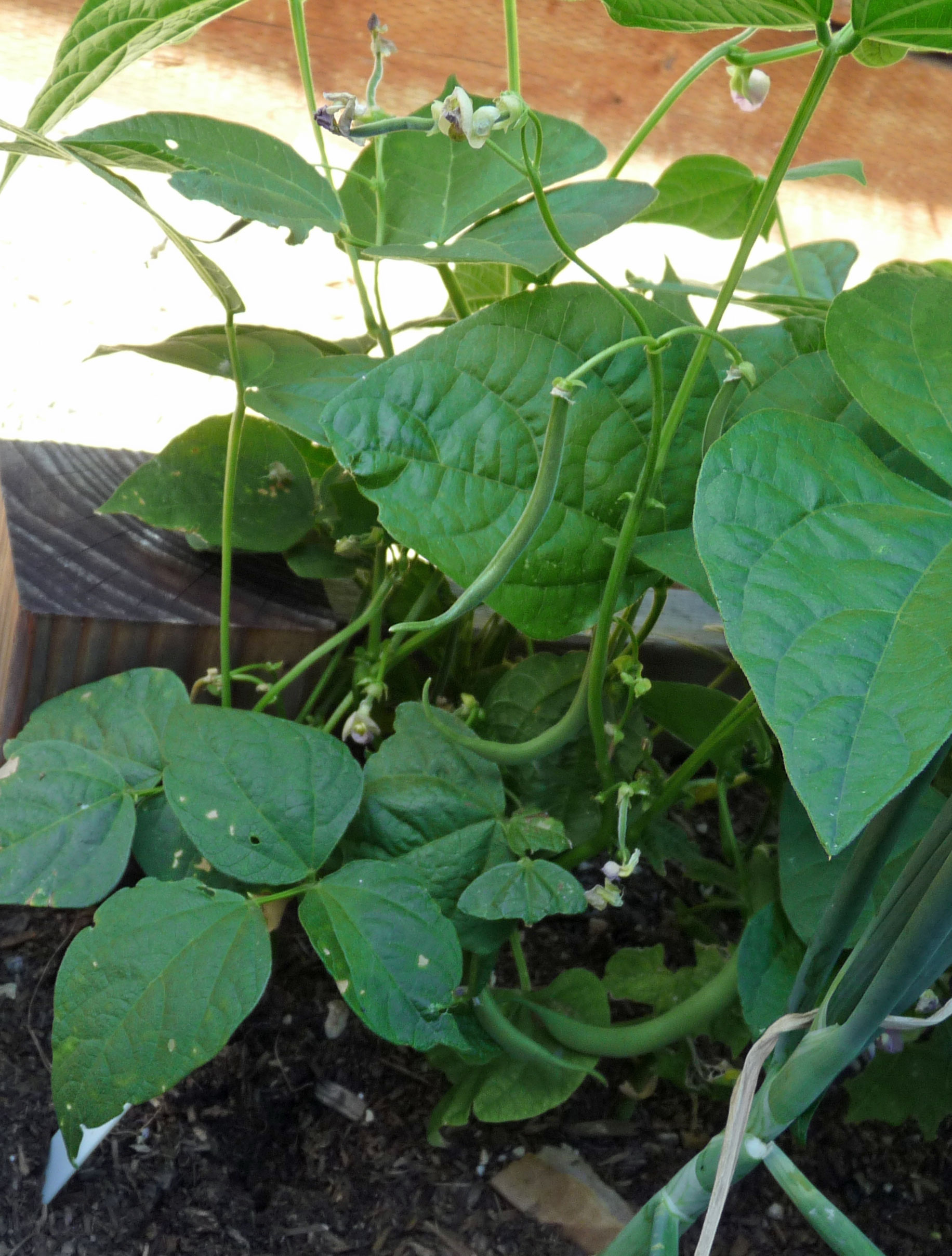
The first beans planted in the garden this year, Contenders planted on March 30th, no less, were the first ones to give us pods. I’m surprised they didn’t curl up and die from the cold. I know I nearly did! I planted a tiny patch of them, maybe a dozen plants, just to see if it was warm enough to sprout beans yet. I have been cautiously adding different varieties to the garden since mid-April when these came up looking no worse for wear. So far the list includes:

Contender
Calypso

Soldier
White Emergo
Christmas‘ Limas
Fagiolo di Spagna ‘Spagna Bianco
Bush Black Beans ‘Tarahumara Ejotero Negro
Hutterite Soup Bean
Swedish Brown
Pole Black Beans ‘Tarahumara Chokame
California Blackeye Pea
Cannelino
And I have some Fin de Bagnol seeds around here ready to slip into a spot where nothing else is growing yet.
Why didn’t I get more pole bean seeds? They are so much easier to find room for. Though I think the real question will be, how many beans of a given variety do I need to plant in order to save enough dry beans to cook something from them? I guess we’ll find out.


One Potato, Three Potatoes

1 Comment
Sack-grown Potatoes

Potatoes Are Ready Droop

Have I ever mentioned how important it is to keep good records of your garden experiments? ‘Cuz I sure wish I had ’em right now. This spring, on some now-unknown date, I planted an unrecorded variety of potatoes, very carefully, in two identical Potato Grow Bags. In one container, I planted a single seed potato. In the other container I planted three seed potatoes of that same variety. Now, the directions call for five seed potatoes in each 15 gallon grow bag, but that seemed crazy based on what we saw with the spacing of the All Blue potato plants last year. If we grew them that way, the potatoes would probably be tiny. But, if we cut back to just three seed potatoes, would that give us a better yield of good sized potatoes, or did we really need to go all the way back to just one seed potato per pot to get the best potatoes? Only one way to find out, so we grew some.

Potato Spacing Yield Test

One Beats Three

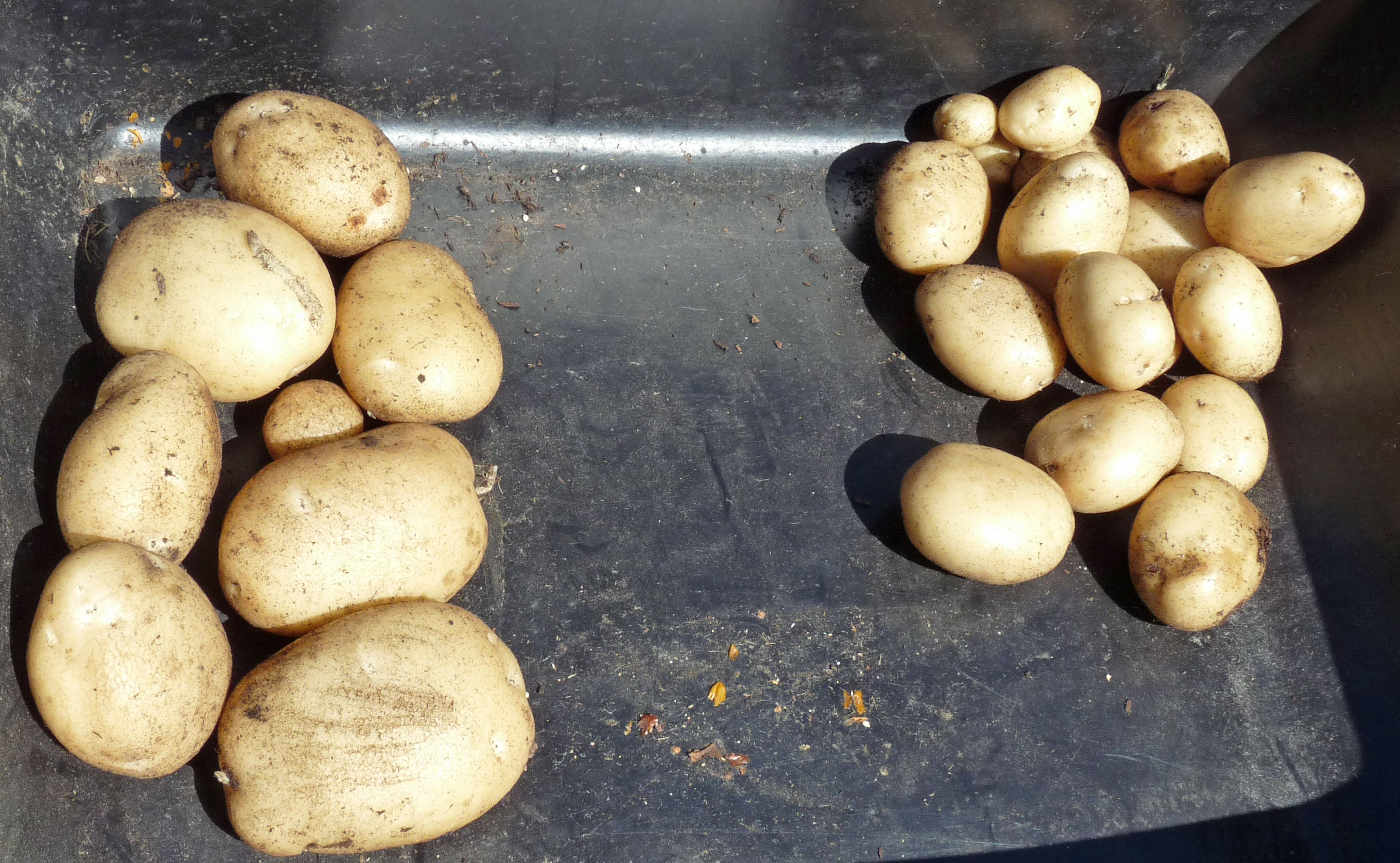
The bags were placed side by side and given the same amounts of compost and water. The two grow bags ended up with similar amounts of foliage, though the three-in-one bag flowered first and drooped earlier. I thought the potatoes were Rose Golds, and wanted to save some of them for seed, so I pulled the potatoes when the singleton had just started to droop in earnest.

The three-in-one bag had a dozen nice-sized potatoes and a handful of small ones, too small to save for seed, if I had been planning to save from that bag. This might be a fine harvest from this variety of potato, which I am now thinking is a California White. But I don’t honestly know. The label from the California Whites says, “Cal White is a long white-fleshed potato with brilliant white skin. Produces heavy yields of large potatoes.” Would you call this skin ‘brilliant white’? It’s certainly the whitest one we’ve pulled out of the ground here at Dirt to Dinner.

Potatoes on Scale

One Potato, Seven Potatoes

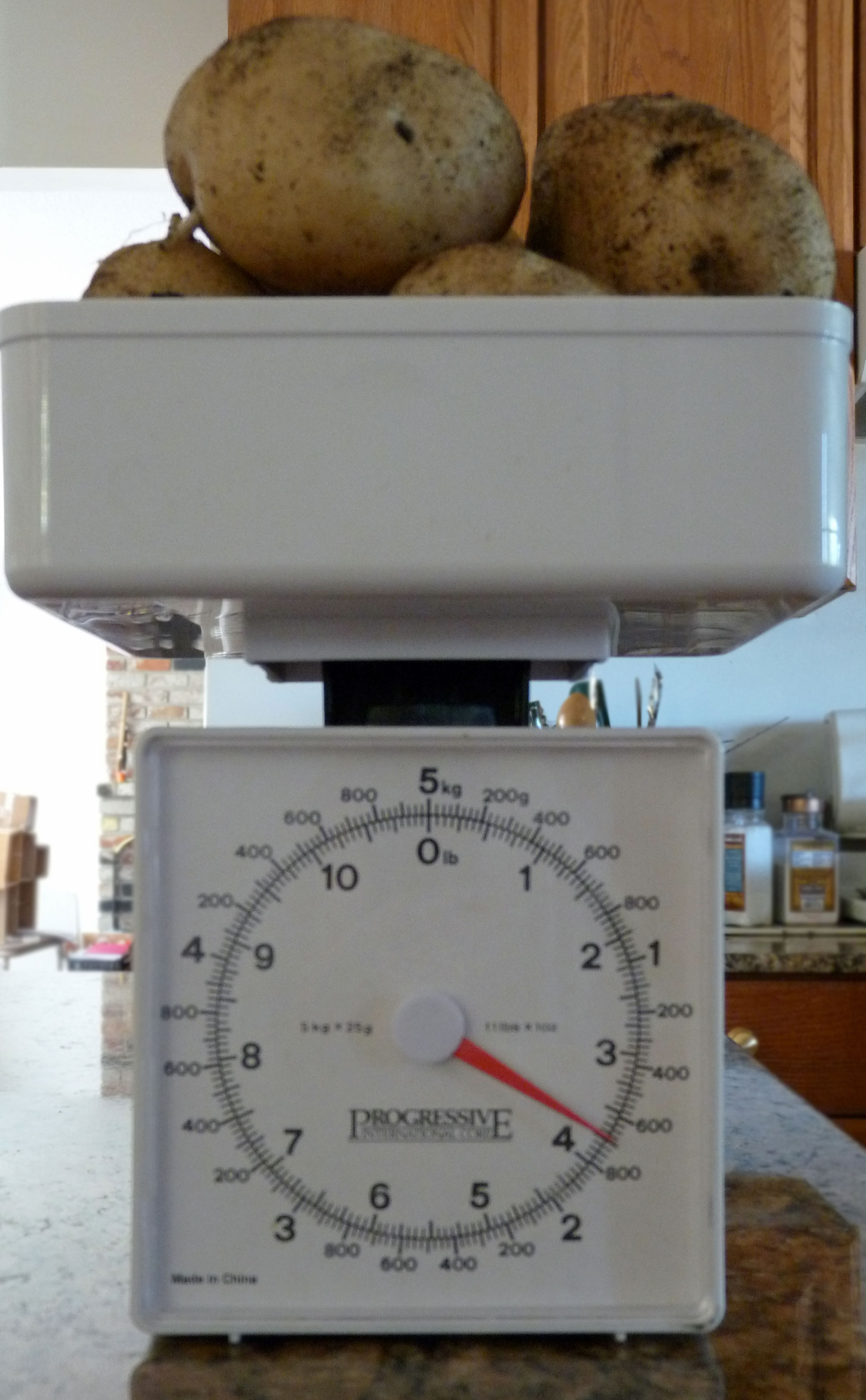
The singleton bag had seven big potatoes, and one tiny one,  which together weighted 3 and 3/4 pounds, almost a pound more than the dozen potatoes from the three-in-one bag. Now, how many square feet is 15 gallons? The over-wintered potatoes produced just under 1 and 1/4 pounds of potatoes per square foot. The 15-gallon bag has an 18″ diameter…any math geeks out there? Ah, what the heck, even if we call it two square feet, they are doing well. In fact, it should have taken us over 3 square feet to get those 3.75 pounds of potatoes over the winter so I’m calling that bag a success. And the other bag is good too. It all depends on what you want. If you want big fat baking potatoes, or even just all the potato you can get out of a square foot, you might want to give the potatoes more room. If you want lots of small potatoes, you might purposely crowd them into the bed even though it may reduce your yield slightly.

Either way, it’s time for me to make some potato salad.

Fun Stuff in the Garden

2 Comments
Yacon Start Newly Planted

Yacon Start

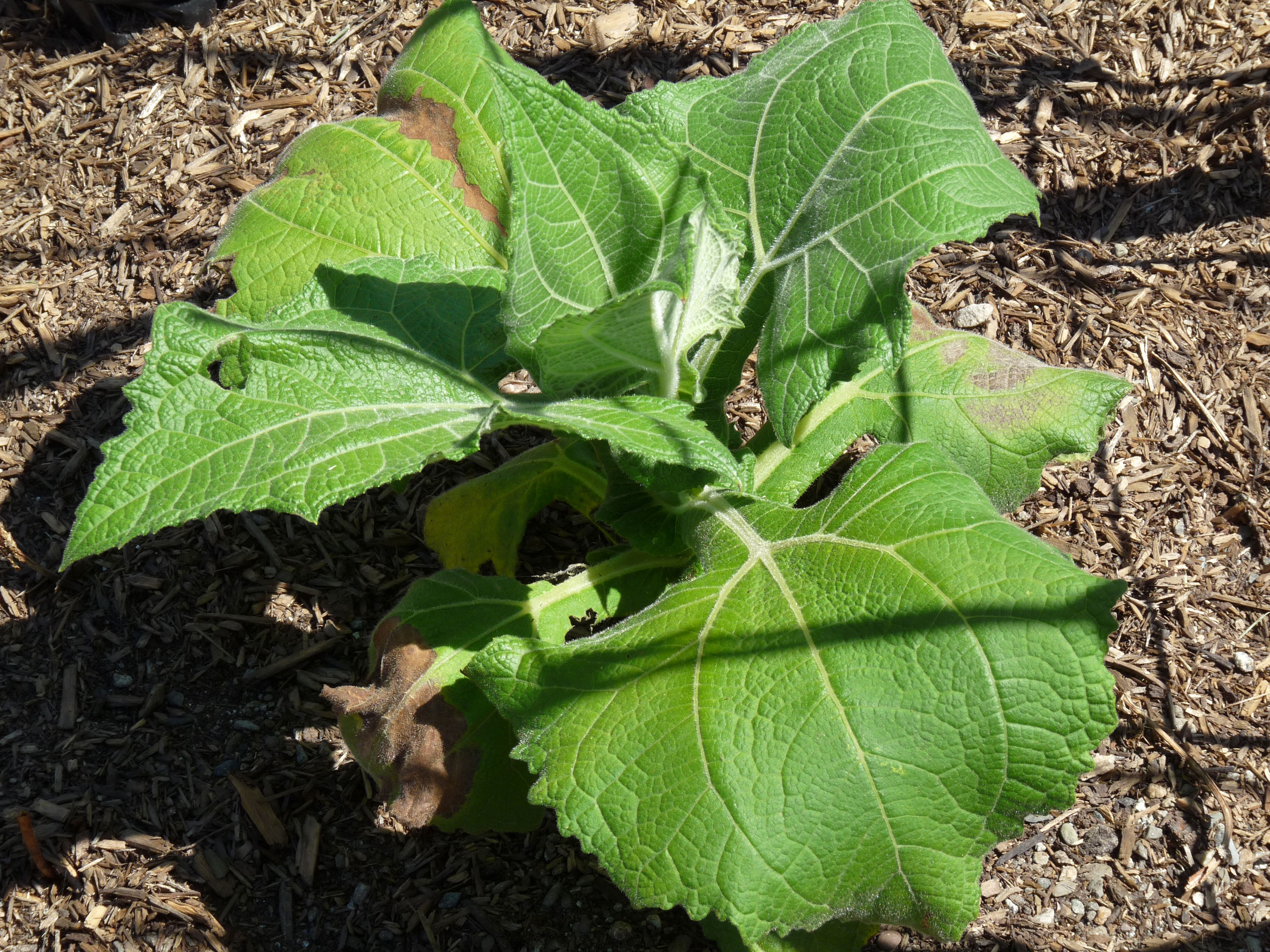
We’re developing a few of our own standby’s in the garden, like the Principe Borghese tomatoes for drying, Costoluto Genovese tomatoes for eating fresh and Straight Eight cucumbers for slicing, but we’re also trying some new things this year just for fun. One of them is Bolivian Sunroot, also called yacon. The plant reproduces through a rhizome, but stores energy in sweet, crunchy tubers with a unique taste. They were described to me as something like a yicama-strawberry flavor, which I find hard to imagine but am looking forward to trying. The plants can grow over 6′ tall, so I have this one near a trellis post in case it needs staking later.

Brightest Brilliant Rainbow Starts

Brightest Brilliant Rainbow Starts

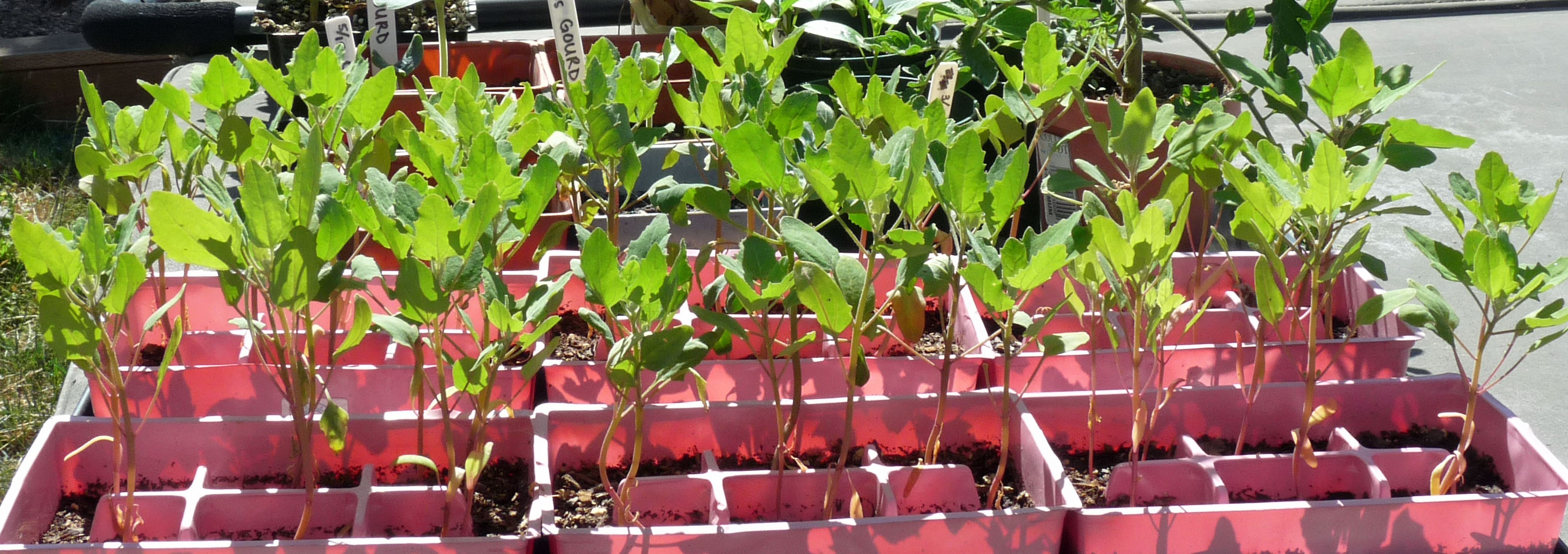
Another new friend in the garden this year is quinoa. I’m growing ‘Brightest Brilliant Rainbow‘ quinoa which is supposed to be good not only for the variously-colored seed heads, but for summer greens when the plants are young as well. I don’t grow wheat or corn because of allergies and am looking forward to exploring some of the other grain options that are possible for a home gardener.

Lima beans starting up their trellis

Christmas in June

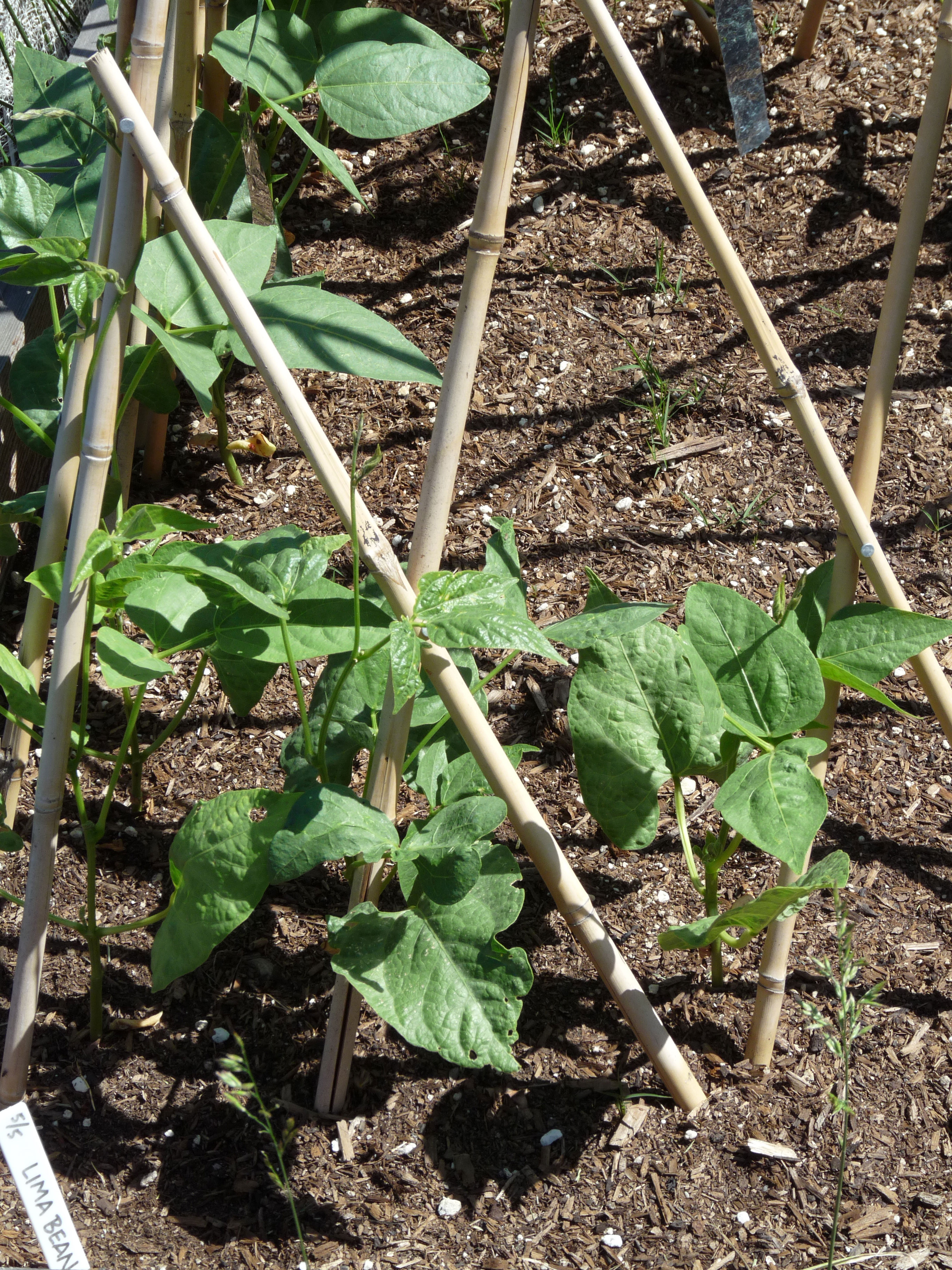
Lima beans are also new for us this year. I went with the ‘Christmas‘ Lima because I just couldn’t resist them in the catalog. The seeds are big and plump and have deep red striping on them. We grew a few Italian shelling beans last year that were delicious in soup and I think these will be gorgeous in a summer minestrone or on cooked their own. I was planning to pick half the plants and let the other half set seed for dry beans in the winter but as they are beginning to twine their way up the teepee, I’m already wondering how I’m going to do that. Might be time to plant another teepee of them specifically for drying. That would make it easier to deal with.

My family also really enjoys Black Bean Soup so I am trying several different varieties of Black beans this year to see which ones grow well for us. I have both bush and pole versions of a traditional variety grown by the Tarahumara Indians and some Black Turtle Beans to test.

Garlic growing in Straw Mulch

Garlic growing in Straw Mulch

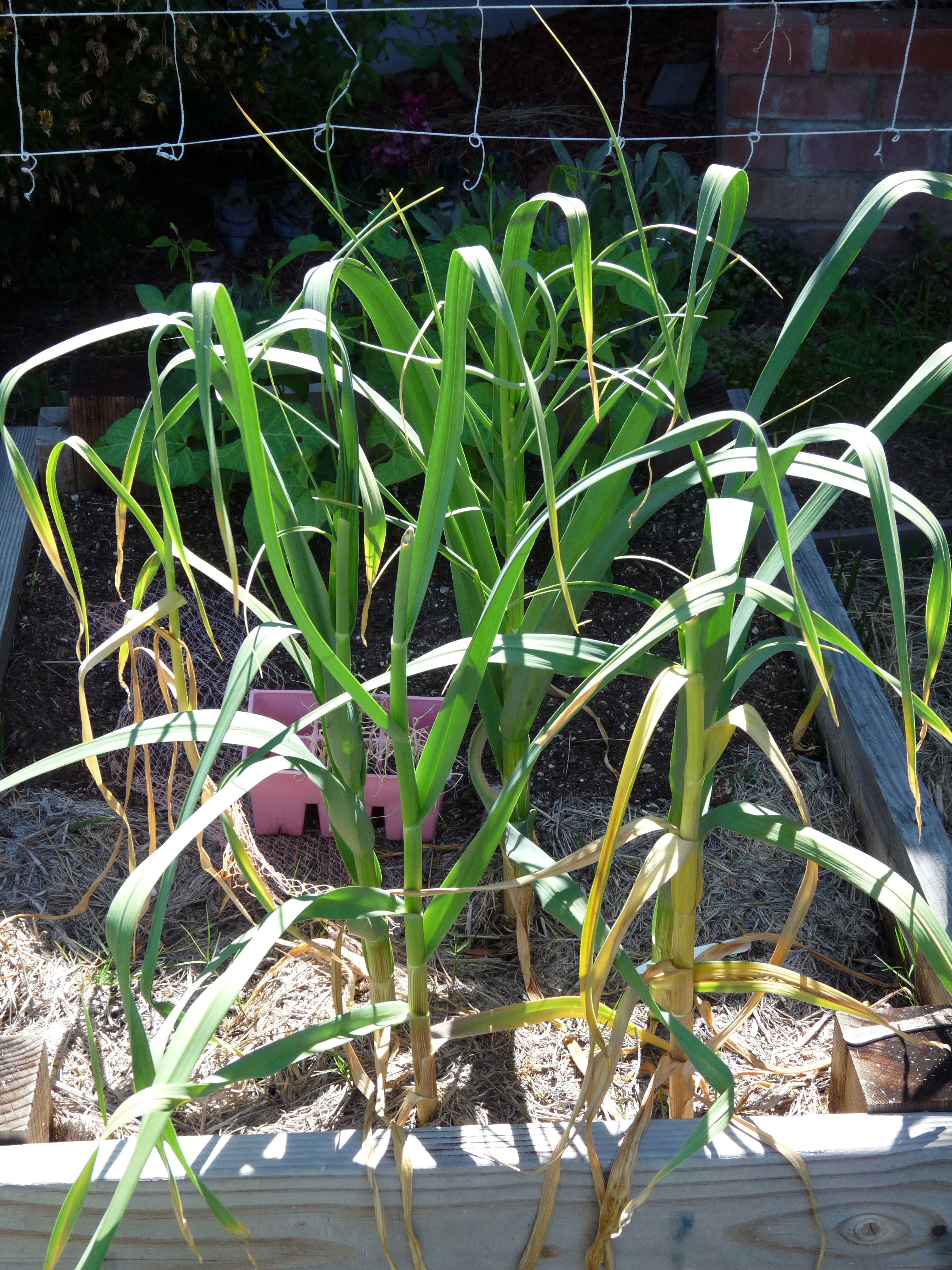
We also have a small test patch of garlic this year, and, if it works well, we’ll have a lot more of this cooking essential planted this fall. There are a lot of meals around here that begin with garlic and olive oil. It would be fun to have our own varieties growing in the garden for when we want them. If I can decide what kinds to grow. The Winter Gardening catalog from Territorial Seed has literally dozens of different kinds of garlic. I may have to order a sampler and see which ones do well here.

I have a feeling the first stems of our test garlic are going to be ready in a day or two, so we’ll have some idea what’s going on down there under the straw mulch. The drying process for onions and garlic sounds really simple and if this hot weather keeps up, we should be prepping some of both this week or next.