Growing A New World Potato Sampler

3 Comments

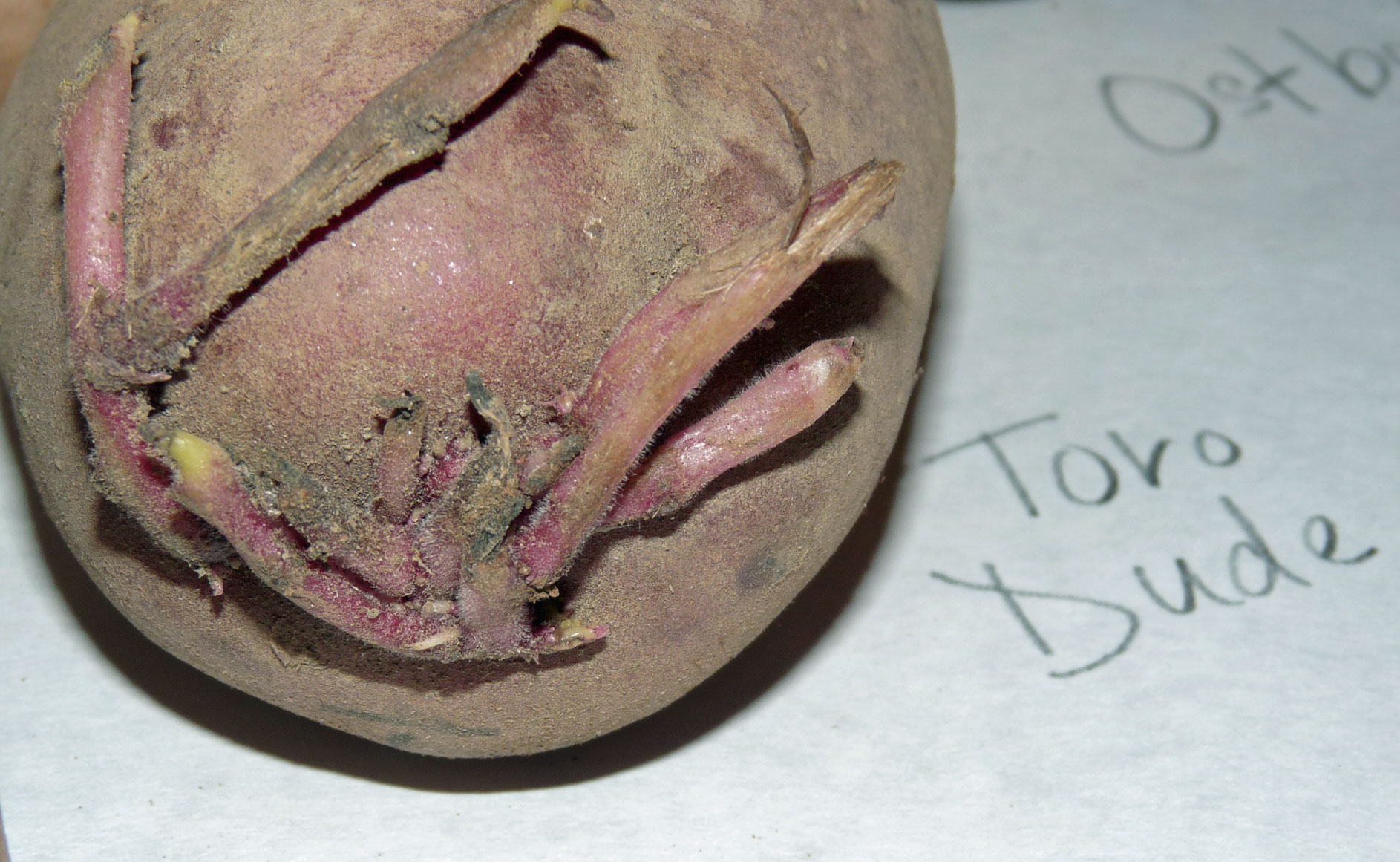
Toro Dude Potato for SeedIt takes a special sort of person to see the beauty in a Potato Sampler box from New World Seeds and Tubers. My husband, for one, just didn’t get it. If he’s gonna look at a potato he wants to see it buttered and already on his plate. But I know beautiful when I see it and, to me, these guys all look gorgeous.

I chose the 8 pound sampler which promised 5 to 20 different varieties “from around the world, special breeding lines that are available only from us and a few classic varieties” of potatoes to try. I specifically asked for any they thought would do well growing vertically, since I wanted them for the 99 Pound Potato Challenge. I was also interested in trying some of the types Carol Deppe mentioned in her book, The Resilient Gardener.
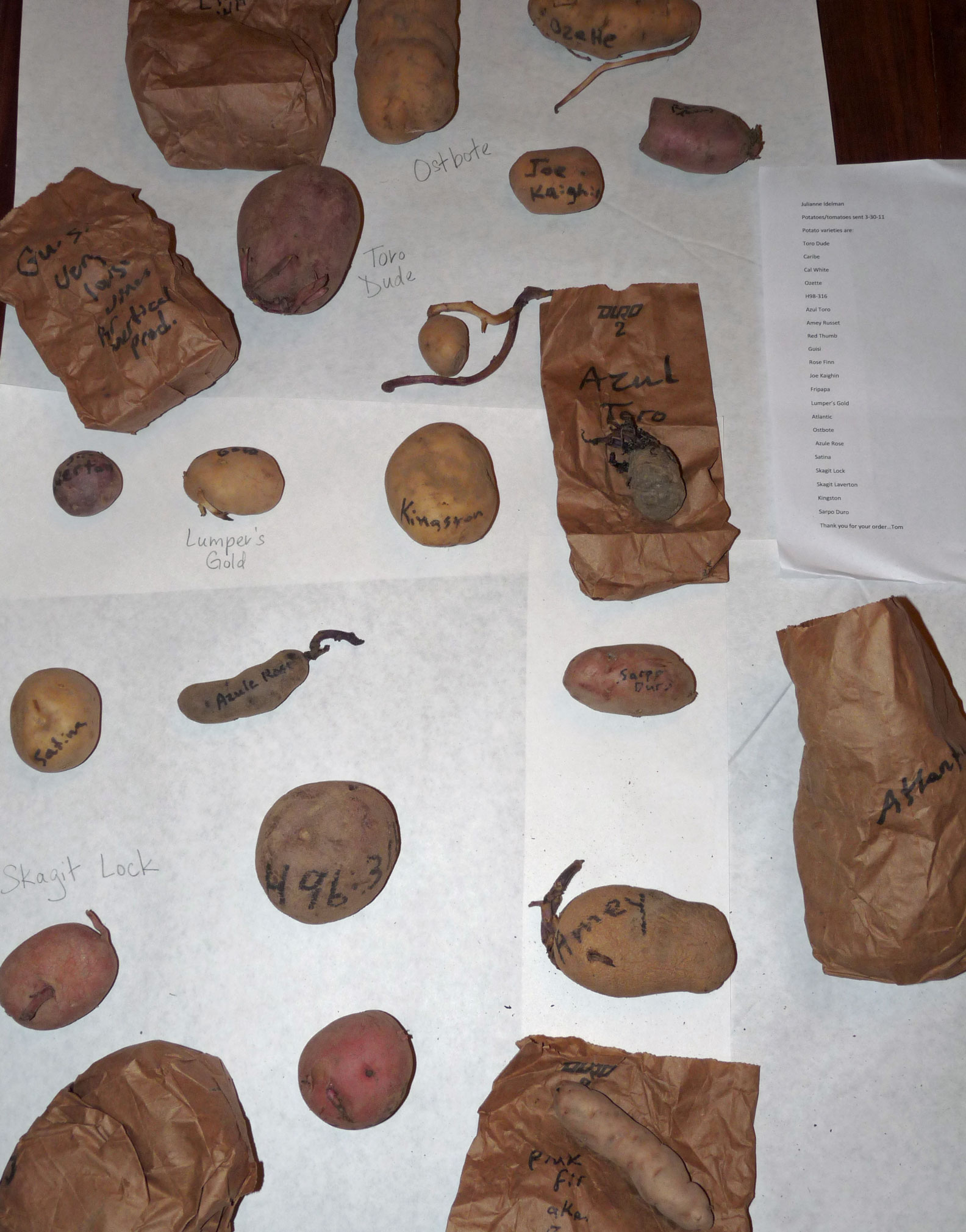
Seed Potato SamplesWhat arrived was a broad sampling of the possibilities of potatoes, twenty-one different clones and nearly forty individual potatoes, many I had never heard of before. In Heirloom Vegetable Gardening, William Woys Weaver says, “Growing heirloom potatoes presents special problems for the gardener because old varieties are not as resistant to disease as modern ones. Futhermore, potato varieties predating the advent of the blight in the 1840’s are to be found only in gene banks or in special botanical collections.”

I honestly don’t know where Tom Wagner finds all of his potatoes, but I am certainly glad that I found him. And I couldn’t wait to start getting these potatoes planted. One of the varieties specifically marked for the vertical growing project was Guisi, a potato I think is named for a Peruvian potato researcher killed tragically near one of his experimental fields.
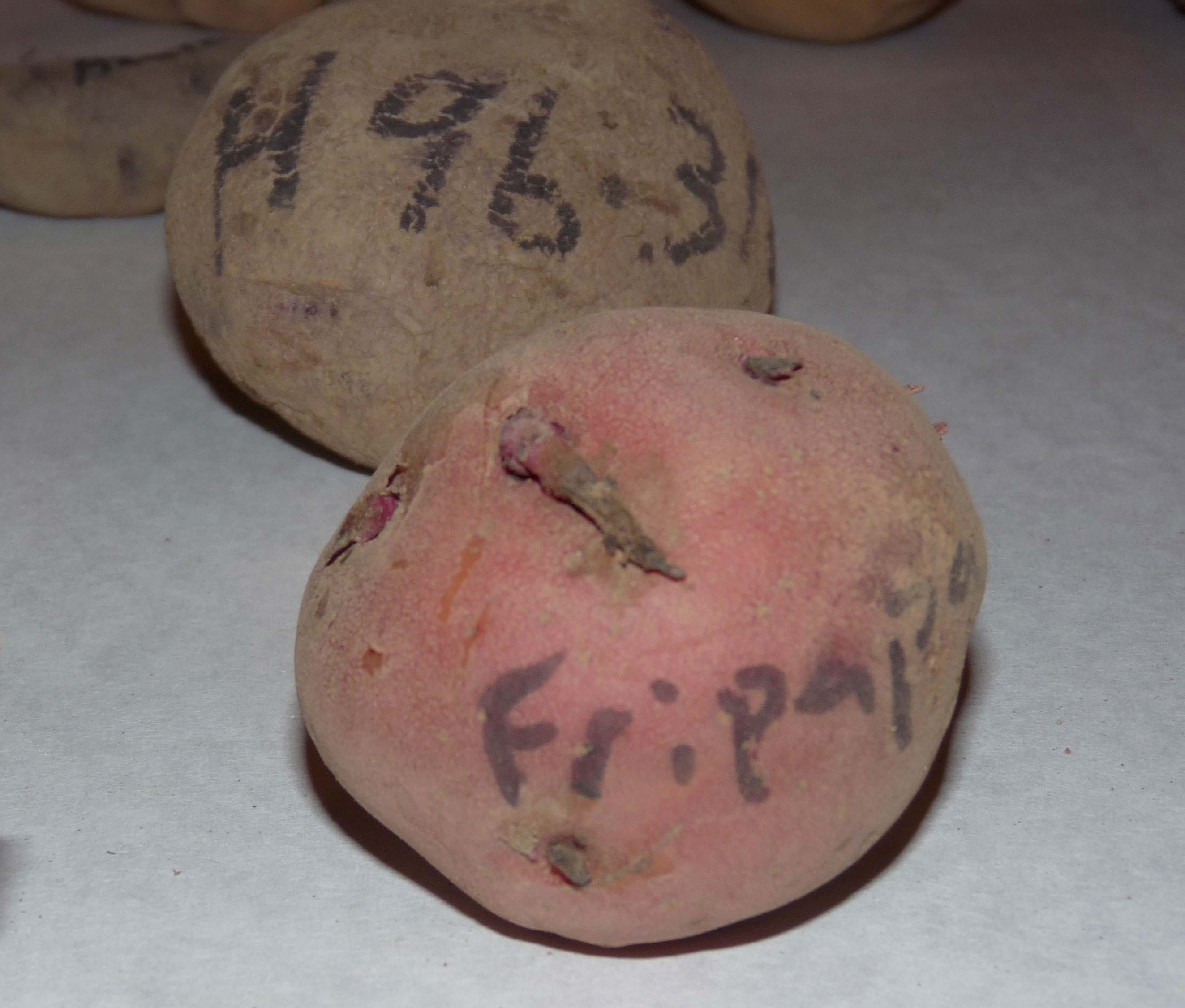
Fripapa and H98-316 Seed potatoesI got blues, reds and golds. I got fingerlings and smooth rounds, big bulbous blobs and delicate tiny tubers. But some of them don’t even have names! This hefty spud arrived with a number hand-written on its side. A quick Google search turned up an entry from the United States Potato Genebank that looks like H96.316 is an improved variety from the International Potato Center in Peru. Who knew there even was a United States Potato Genebank?

The Fripapa shown here had a hollow center, so I set it aside to research whether or not I should plant it. A potato with a hole in its heart would never pass the Carol Deppe rogue test. She cautions readers to eliminate peculiarities as something that might indicate a disease or a growing problem. Though none of the other potatoes I have cut for planting looked unusual.
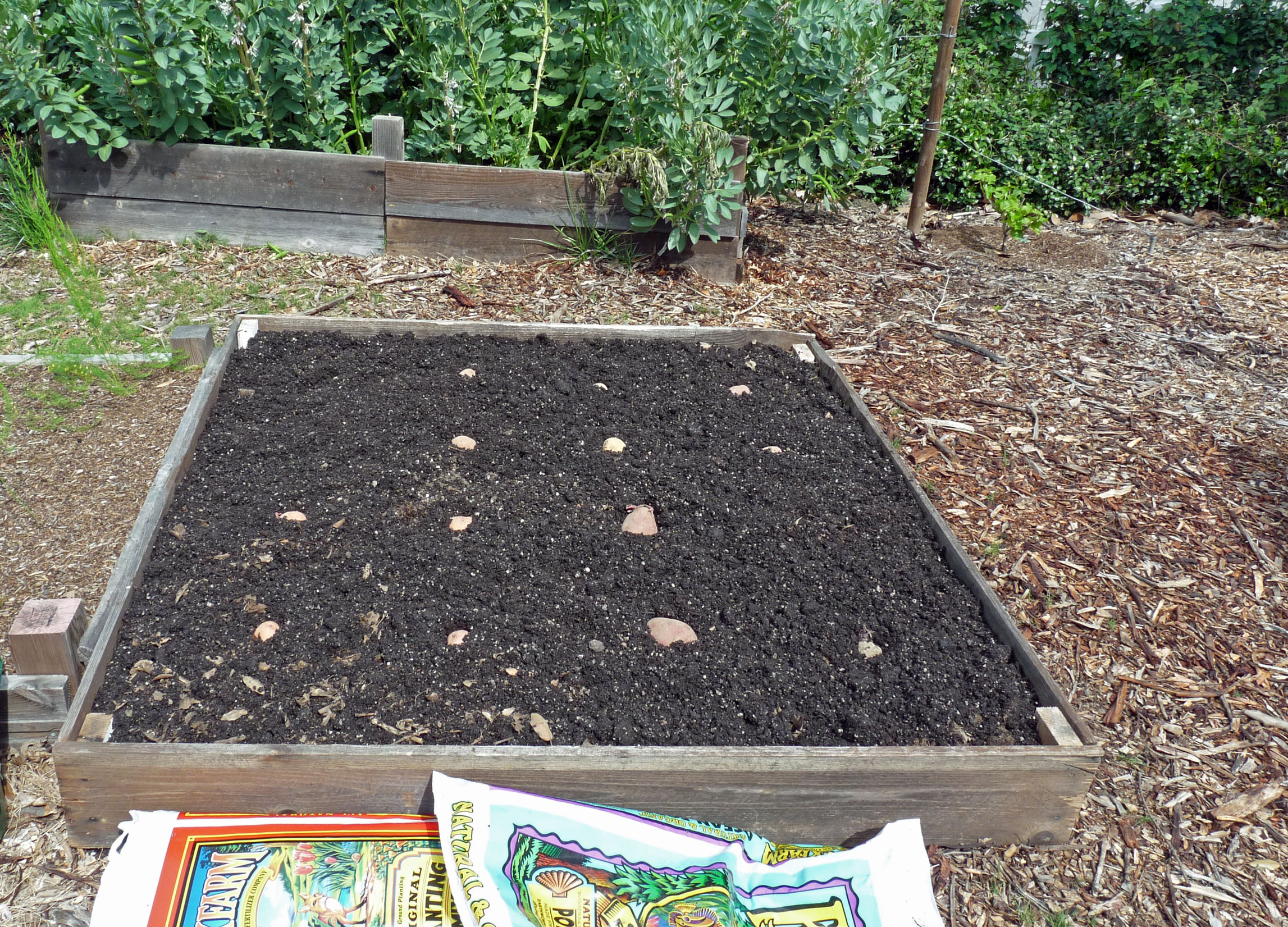
Planting potatoes in raised bedI set the potatoes 15″ apart, which gave me room to plant 16 potatoes in a 5’x5′ bed. This bed started out as a compost pile last year and grew favas through the winter. I amended it with my favorites from Happy Frog to deepen the soil level as much as anything else, since I anticipate soil fertility to be pretty good. Then I covered the seed potatoes with several inches of planting mix and watered the whole thing in. Depending on the weather, I hope to see at least some of the potatoes sprouting in the next week or two, though I understand it could take some of the varieties longer than that.

Map of Potato Varieties PlantedThe trick is, how do you keep track of which potatoes are which varieties when you are growing 16 plants of nine different varieties in one raised bed? To start with I got a stack of the really big plant markers from Common Ground so I can actually find them when I want to know who is who. I noted on the row marker how many plants of that variety are in the bed. For example, the ‘Guisi’ marker says (4) because the four plants closest to the marker should all be ‘Guisi’s’. I also drew myself a quick map, just in case something happens to the giant plant markers. Now I can refer back to this when the plants come up and remind myself that there should be two ‘Satinas’ and four ‘Guisi’s’ but only one of the ‘Skagit Lock’ and ‘Red Thumb’ plants.

Now, if I could grow a sour cream plant, I’d be all set!
10 Small, Good Things

Leave a comment

The enormity of the news from Japan is overwhelming. The scale of the quake and the power of the waves is beyond what I can comprehend. Wishing I knew how to cool a nuclear reactor, I’ve retreated to my garden to spend time with the small, good things I can see there. They feel fragile and precious and I want to see them and share them before they are gone.

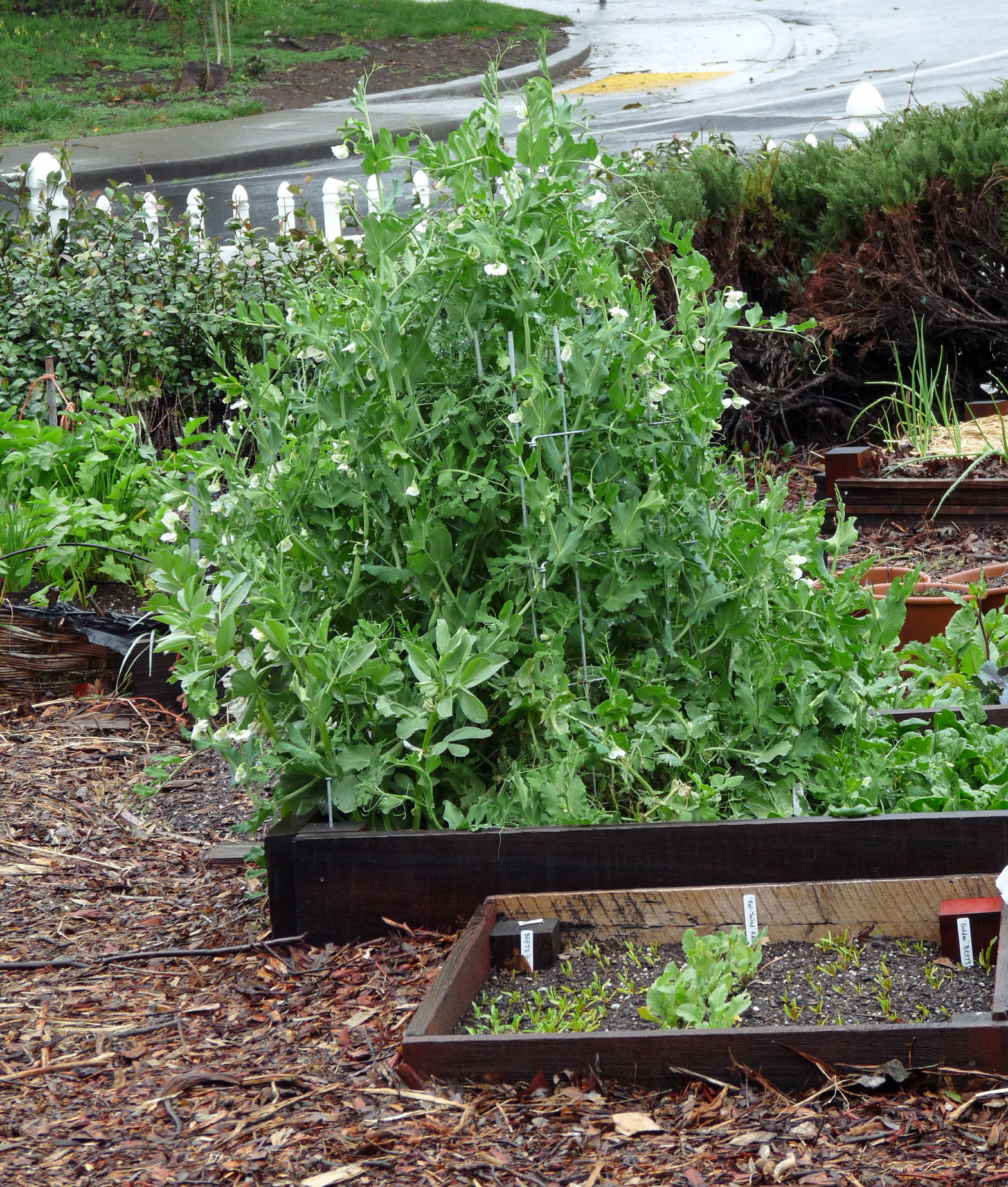
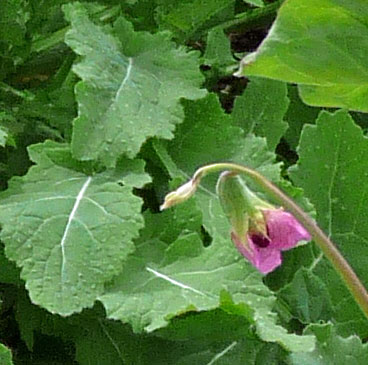
Snow Pea Flower#1. The ‘Green Beauty’ snow peas have grown almost three-feet tall and are just starting to bloom with velvety bright-pink flowers.

#2. The new compost pile is already cooking. If you press your hand against the outside of the pile you can feel the warmth inside.

#3. The ‘Banana Fingerling’ potato plant made dozens of perfect little potatoes before the frost got it. I discovered them as I was tipping the potato bag soil onto the compost pile and recovered them and added them to a pot roast.

#4. Each one of the newly planted ‘Norkotah’ potatoes for this spring are already sprouting in their bags.

Fava Bean Pod on Plant#5. The ‘Broad Winsor’ favas have actually made beans! Of course, I didn’t discover them until after I had complained to my mother-in-law that my favas had no beans. Some of them are so large that now I need to find out when to pick a fava bean and how to eat one.

#6. The sauerkraut I made out of savoy and ‘Stonehead’ cabbage, ‘Danvers Half-Long’ carrots, apples, onions and cumin seeds is silently bubbling on the counter and actually smells slightly sauerkrauty.

#7. The stick, literally, of ‘Pakistan’ mulberry that I brought home from a grafting class and stuck into the ground has an actual growth, bud, thing that shows life, on the side of it.

#8. The sad, scrawny ‘Thompson’ grape vines that were hating me for trying to grow them in pots last summer aren’t dead. They are in the ground now and both have buds forming at every available end-point.

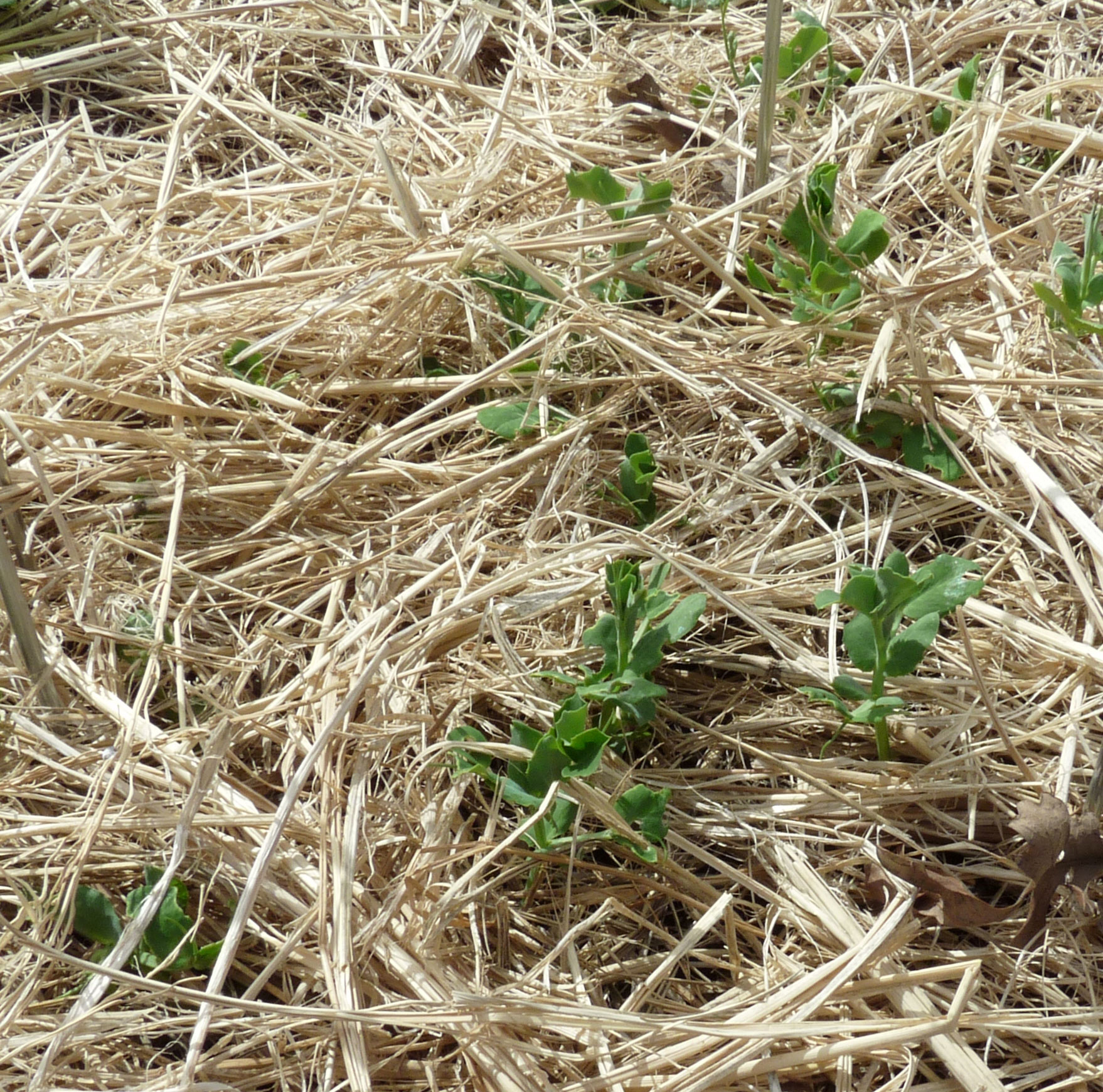
Straw Covered Pea Patch#9. The slugs didn’t decimate the last patch of ‘Sugar Daddy’ peas. They were hiding out under straw and have made it to the point where they each have several leaves before anything found them and chewed them to nubs.

#10. I pulled and ate the first ‘Yellowstone’ carrot of the season and it was every bit as bright and crisp and delicious as I remembered them.

It may not solve natural disasters, but my garden is a refuge and I’m glad to be able to share it with you.

Tomato Math: How Many Seedlings Does 64 Tomato Seeds Make?

Leave a comment

Heirloom Tomato SeedsIt nearly killed me, but I have managed to wait until March 6th to start my main season tomato plants. The early drying tomatoes, Principe Borgheses, are out in the garage under lights already. But this year I am following the planting schedule recommendations from the Common Ground Ecology Action Planting and Gardening Guide and it really does say to start tomatoes in flats in March. If truth be told, the printed version actually says, “Tomatoes, Early” under the Start in Flats column for March, but I am gardening to the south of their location in Palo Alto, so I am taking this gardening license.

The first batch consists of ‘Cherokee Chocolate’, ‘Pruden’s Purple’, ‘Aunt Ruby’s German Green’, ‘Green Zebra’, ‘Pineapple’, ‘Old Kentucky’, ‘Black Sea Man’ and ‘Orange Heirloom’. Eight varieties in all. Because I’m only starting a few of each type I chose not to use flats but to start the seeds in Fiber Grow Coir 8-packs I picked up at Common Ground. I planted eight seeds of each variety, two to a cell. Because the seed is from different years, germination may not be consistent, but I am hoping for at least two nice looking plants of each type. One for the Dirt to Dinner garden, and one for a friend we are starting tomatoes for this year.

Seedling IncubatorThe soil in the planted coir 8-packs was well misted, then I set the tray of all 64 seeds onto a covered heating mat, which I am hoping will keep them between 72 and 78 degrees. The temperature of the area was 68.8 degrees when I covered the heat mat. Then I covered the whole thing with a plastic storage bin to keep in the heat and moisture. An hour later the center section registered 74.7 degrees. Now, I just have to remember to keep the moisture right and wait for yet another week. When this group of tomatoes moves into the garage or cold frame, depending on the weather we get, it’ll be time to start the paste tomato varieties and the ‘Cherokee Purple’ trial. Makes my mouth water just thinking about it.

Turnip Testing 2011

Leave a comment

TurnipsWe didn’t have enough turnips in the Dirt to Dinner garden in 2010. Or in 2009 for that matter. When I was growing up in the 70’s in the suburbs around Cincinnati, no self-respecting kid would have eaten a turnip. Today, in California, I know kids who will happily eat raw, pickled, braised or stewed turnips without complaint. So, I guess we really are making progress. It just takes a long-range perspective to appreciate it.

Because the turnip is a popular vegetable around here, and we have an unexplainable deficiency in the radish growing department, we’d like to identify a turnip variety that does well in our conditions, grow a lot of it, save our own seed, and maybe even further improve or adapt the variety in the future.

This is probably a bad idea for several reasons:

#1. Turnips are biennials. They won’t even make seed until after they have been in the ground over the winter. Which means they are going to take up their space in the garden for a long time.
#2. Turnips are out-breeders so even if we grow only one turnip variety we could still have our seed accidentally crossed by a bee visiting from a neighborhood garden growing a different turnip variety we didn’t know about. But how many neighborhood gardens are going to have turnips laying around long enough to go to seed, you say?
#3. Well, it’s not just the turnips we have to worry about! Turnips are classified as Brassica rapa and could potentially cross with mustard, rutabagas, Chinese cabbage, Chinese greens or those radishes we can never seem to grow! On the up-side, Ecology Action’s booklet #13 “Growing to Seed” says we only need to keep seed from five plants to maintain enough genetic diversity in the line.

Not one to be deterred by facts, I went ahead and started Phase 1, which is growing several varieties in order to choose one to work with in the fall or next spring. This part just involves growing and eating. We have identified six types of turnip seed to trial, four of them were planted today and after the next storm front passes, we’ll add ‘Tokyo Market’ and ‘Tokyo Cross.’

2/23/2011 We seeded two 2.5′ x 2.5′ beds with turnips separated by a North-South running strip of ‘Petit Pois’ peas saved from 2010.

Bed A is ‘Scarlet Ohno’ from Bountiful Gardens vs. ‘Scarlet Ohno’ from High Mowing Seed. I’m hoping they aren’t both repackaged seed from the same farm! At the very least we should see some landrace variation. The Bountiful Gardens package says, “Greens are smooth and hairless, excellent for greens. Roots for fresh use and pickling, not keepers.” High Mowing adds, “Hot pink skins with white, mild and crunchy flesh. Excellent for baby roots or greens with a signature pink streak.” 50 days. The Bountiful Gardens pack is marked for planting in May-August, but I’m guessing that’s either not right or not for our area. Seems odd when everything else says, “As soon as soil can be worked,” or “4 weeks before last expected frost.”

Bed B is ‘Gold Ball’ side-by-side with ‘Orange Jelly’ with the same separating strip of ‘Petit Pois’ between the varieties. The Sustainable Seed package for ‘Gold Ball’ says, “…perfectly shaped 3-4” amber globes…never woody…perfect storage turnip for the root cellar.” ‘Orange Jelly’ is also recommended for its storing ability and says flavor is improved by frost. Might be nice to try these two again in the fall.

By about mid-April we should be munching, marinating, fermenting and baking our different turnips and picking a winner. Do you already have a favorite turnip that does well in your area or a favorite turnip recipe to share? Leave us a comment!

Fresh in February: 22 Things We’re Eating Right Now from the Family Food Garden

3 Comments

It takes some planning. And, depending on your growing zone, it may take some straw, row covers or cold frames. But it really is possible in most USDA Zones to eat something out of your garden year round.

That’s easy for me to say, I live in Northern California and garden in Zone 9b. So, don’t take my word for it. Grab The Winter Harvest Handbook by Eliot Coleman. He’ll tell you everything you need to know to grow through the winter—and he’s farming in Maine!

Peas, Spinach and ParsnipsOur favorite snap pea, ‘Sugar Daddy’, is delicious this time of year, sweet, crisp and productive. It’s growing alongside ‘Catalina’ spinach which is producing a surprising amount of salad greens and stuffing for omelettes. In the bed behind, you can see the tops of parsnips ready for pulling. Get your digging trowel ready though, those roots are deeper than they look.

One of the joys of winter food gardens is that the wet weather waters for you. Try to be sure that you position plants that are sensitive to too much moisture, like these peas, in raised beds with good air circulation around the plants so you don’t have to fight mold for the delicious pods. Even though pea plants will grow happily when crowded, consider spacing the seeds a bit farther apart in the winter to give them good air circulation and also so they are better able to share the available sunlight.

Kale, spinach and collards prefer the cool winter weather. The spinach that I am growing will not do a thing for me in warm weather even when I shade it with tomato plants. But it grows well in the winter and doesn’t fall apart when exposed to a light frost. The ‘Dwarf Siberian’ kale and ‘Vates’ collards actually improve their flavor after exposure to colder temperatures. Most of the red cabbages growing among them have been ripped apart by slugs, but the green cabbages are doing much better and providing us with slaw and sauerkraut galore.

Here are the 22 fresh foods we can eat out of our yard this February:

1. Spinach
2. Mustard Greens
3. Snap Peas, Snow Peas and Shelling Peas
4. Chard
5. Parsnips
6. Cabbage
7. Collards
8. Carrots
9. Rutabagas
10. New Potatoes
11. Beets
12. Fava Beans
13. Arugula
14. Celery
15. Lettuce
16. Radishes
17. Turnips
18. Bok Choi
19. Green Garlic
20. Broccoli
21. Cauliflower
22. Kale

Do you have a favorite winter-grower in your food garden? Let us know about it in the comments section. We’d love to hear what works for you and give it a try next year.