Spring Soup a la Dark Days

Leave a comment

OK, the Dark Days Challenge is over now that we’ve made our way to the Spring Equinox and beyond, but in the spirit of those inventive and inspiring cooks, I offer you my Spring Soup.
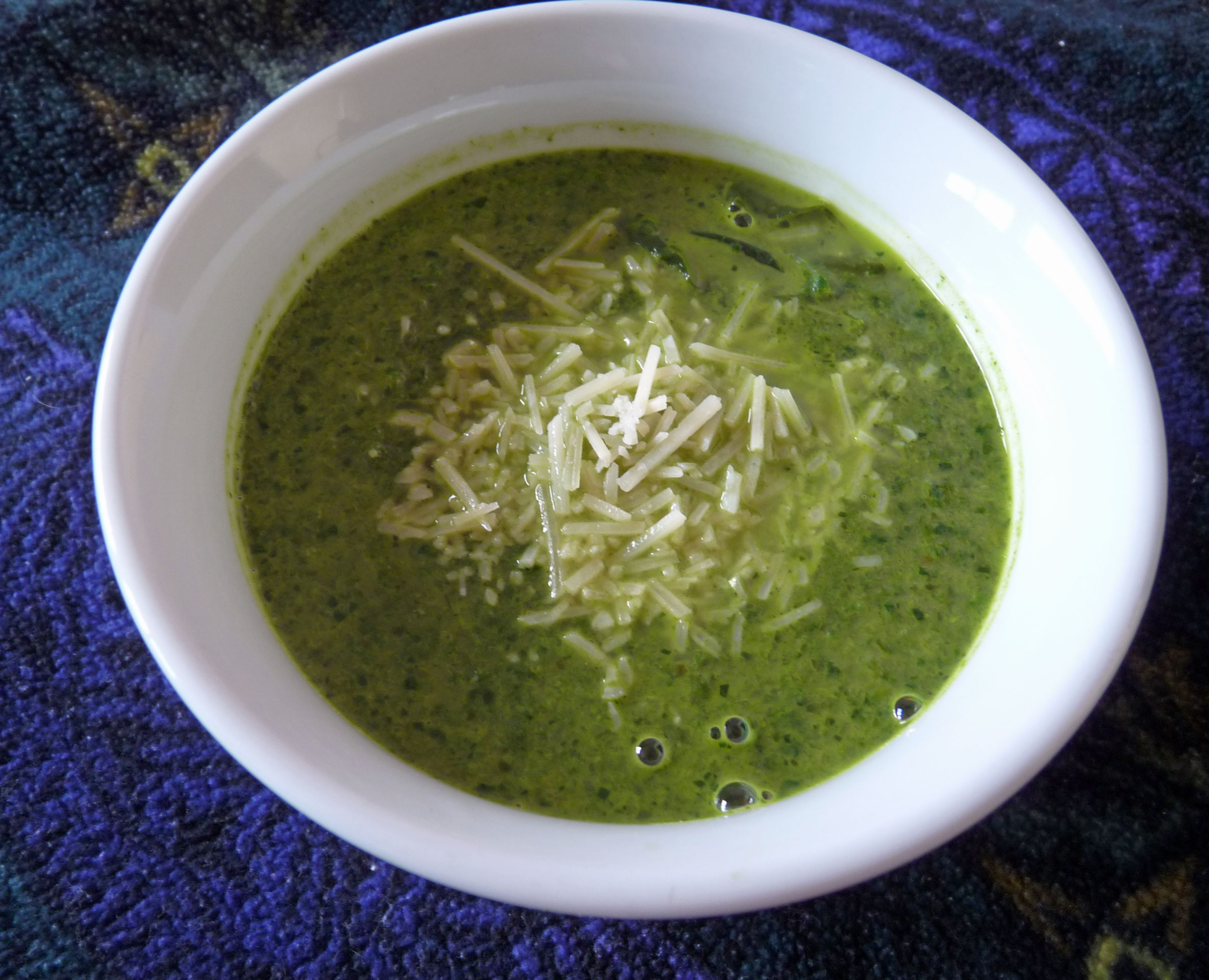
Spring in a Bowl

One of the many things I have left over from the Dark Days is a chest cold that will not give up and go away. This morning I was reading in the new issue of Clean Eating about some recent research from UCLA on the anti-inflammatory effect of Brassicas on the respiratory tract.  Kale is a Brassica and there is kale in the Dirt to Dinner garden pretty much year round. I also had some nice chicken stock waiting for a good use. A delicious and curative soup began to simmer in the back of my mind. A quick tour through the garden turned up beautifully red Cincinnati Market radishes, Yellowstone carrots, a few small Nantes carrots, celery, Italian parsley, Tokyo Market turnips, a parsnip that looked a bit worse for wear and plenty of broad-leafed kale.

I saved half of the radishes for a braise I have been waiting to try with them, chopped up the rest and sautéed them in olive oil with an onion, a tablespoon of garlic and everything but the kale. When the vegetables were tender, I added the stock, turned up the heat a bit and quickly finished cleaning and chopping the kale. As soon as the stock was at a healthy simmer, I tossed in the kale and covered the pot for three minutes while I dug out the food processor.

With the kale wilted but still a nice bright green, I turned the soup down to Low and processed batches of it in the food processor until it was a lot smoother, but still a bit chunky. If you want more of a cream of kale soup, process until smooth. The finished product called out to me for a dusting of nice Parmesan. Sadly, not local, but I have to admit it was delicious. A dash of hot pepper might be tasty. I plan to try that in my next bowl. Enjoy!

Bridging the Hungry Gap at Dirt to Dinner

1 Comment
Fresh peas

No Time to Cook These Peas

Historically speaking, this time of year was often referred to as the ‘hungry gap’ when food stored for the winter was running low–or running out–and spring crops had yet to produce. But this year the Dirt to Dinner garden is doing its best to bridge the hungry gap.

Yesterday we picked a big bowl full of ‘Petit Pois‘ shelling peas so sweet we ate every last one of them before we even started cooking. Today we tried the ‘Telephono‘ peas.  And there are four other varieties of peas ready to pick and six coming on soon.

There are lettuces for salad, along with celery, spinach and the last of the wintered-over kale, arugula, scallions and snow peas. There are still some carrots, parsnips, rutabagas, turnips and radishes in the ground. And the potato patch planted on Christmas is just starting to pass its peak of leaf growth. If we reached around under those slightly weathered branches, I’m sure we could find some new potatoes. And we may have to, as the last Dirt to Dinner ‘All Blue’ potato accompanied a pot roast into the slow cooker earlier this week.

Mini Purplette Onions

'Purplette' Onions Before the Dryer

There are plenty of herbs around to flavor whatever we do find to eat. We have chives, sage, thyme, oregano, rosemary and parsley all doing well, and some marjoram trying to fight its way back to full vigor. Some of the herbs are already finding their way into the dehydrator. Today we did three full trays of thyme leaves. Tomorrow I plan to add slices of green onion to the drying list as there are beautiful stems of ‘Purplette Bunching’ onions ready in the middle of the asparagus bed. There are also bulbing onions tucked here and there around the garden that we could pull and eat if we needed to.

But, thankfully, we don’t. We can wait and plot and plan for summer’s tomatoes, basil, beans, cucumbers, squash and melons. And sip fresh lemonade as we count the blossoms on the apricot, cherry, nectarine and apple trees. For this year at least, no one will be hungry in the Dirt to Dinner garden.

Melons by the Moon

Leave a comment
Melon varieties

Seven Select Melons

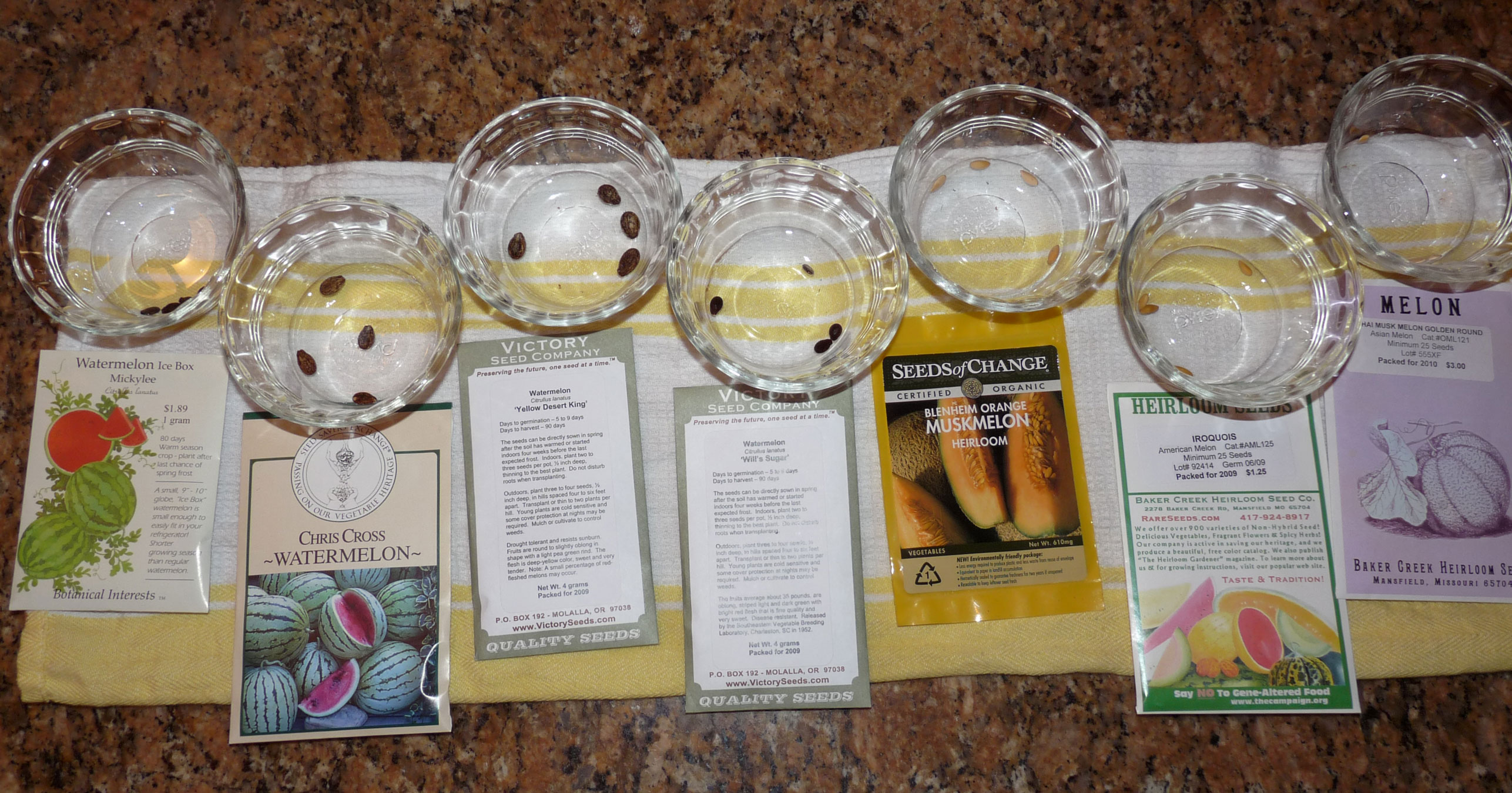
The Old Farmer’s Almanac includes this weekend on the list of “Moon-favorable” dates to plant melons, which is a good enough excuse for me. Though I did check the soil temperature in the beds slated for the melons. Several hours after the sun was off the beds the temperature still held at over 65 degrees. Frank Tozer, in the Vegetable Growers Handbook, says we can expect germination in about 8 days at that temperature, though 70-90 degrees would be optimal. I’m soaking the seeds overnight to help improve germination. I figure with that, some good compost and all the moon power, we ought to be set.

This year’s melon trials will include ‘Will’s Sugar‘ and ‘Yellow Desert King‘, both donated by the Victory Seed Company, ‘Cris Cross‘ from Seed Savers, ‘Mickylee‘, an ice box watermelon sent to us by Botanical Interests which sounded perfect for our trellising, a ‘Blenheim Orange‘ heirloom muskmelon Seeds of Change sent us last year, ‘Iroquois‘ and Thai Melon ‘Golden Round‘ both donated by Baker Creek Heirloom Seeds.

Trellised Watermelon

2009 'Rainbow Sherbet' Icebox Watermelon

Melons need hot weather to be sweet and delicious, hotter than what we usually have in Northern California. Our average high temperature here even in July and August is only 84 degrees. But we were able to produce a dozen or more ice box style watermelons last year with excellent flavor which the kids really enjoyed. My sister is trying half of these same varieties in her garden in Union, Kentucky. Her latitude is pretty much the same as ours and her July average temperature is only two degrees hotter than ours, but the humidity there may affect the melon production. Or is it only humans who feel like it’s hotter when it’s humid out?

I don’t know how much the phase of the moon matters to the melon seeds–there seems to be some actual science on it, but not much in the way of conclusions. But I do know that melons like compost, so we’ll be digging in a 2″-3″ layer of compost mixed with our own earthworm castings where the melons will be growing. And, just in case it really is too early to be planting melon seeds outside, I think I will start half the seeds from each variety indoors, just in case. We also plan to start another group of these same seeds at the end of April so that we can compare the plantings.

3/26/2010 Update

‘Iroquois’  melons planted indoors, in the comfort and splendor of a heating mat and overhead lighting, started sprouting yesterday. Looks like we will have a few more of the indoor varieties up tomorrow. No sign of any of the outdoor seeds yet.

Growing the Perfect Pickle

1 Comment
cucumbers

A & C Pickling Cucumber

An important part of the perfect pickle, the crunch, is impossible to recreate unless you have fresh pickling cucumbers on hand and pickle them at peak freshness. Or so I have been told. My family’s pickling tradition consists of my mother doing whatever was printed in The Joy of Cooking and turning out a jar or two of kosher dills if the mood struck her and the cucumber harvest was cooperative that year.

In Dirt to Dinner, we like to teach the kids as much as possible about their food, where it comes from, how to grow it, what it’s history is, and how to preserve it for later. So today we started four different varieties of pickling cucumbers in the raised beds in the back garden, where the soil is well warmed. ‘Bushy Cucumber’, from Seed Savers Exchange, a variety from southern Russia where it is recommended for your dacha garden because it grows a compact “bushy” plant. ‘Double Yield Cucumber’, a variety from 1924, that we ate fresh last year. ‘A & C Pickling Cucumber’, also from Seed Savers Exchange, a variety introduced in 1928, that says it produces very uniform fruit but shows some healthy diversity in the photo. And ‘The Pickle of Paris’ or ‘Cetriolino Piccolo di Parigi’ which I hope will produce small gherkins for pickling, but we’re not totally sure of, because all the printing on the packaging is in Italian.

Lemon Cucumbers

There were also some slicing cucumbers that we couldn’t do without. We started a few seeds for some of the good old ‘Straight Eight‘ cucumbers that have been favorites here for the last few years. We also planted heirloom ‘Lemon‘ cucumbers, donated by Botanical Interest. These plants grew very slowly last year but the fruits were delicious when they finally came. That should probably be a lesson to us not to start them so early in the year, but here we go again, planting them in March. Maybe in a few weeks I will start a few plants from these seeds inside so we can do a comparison of the harvests. We also started ‘Armenian‘ cucumbers from seed donated by Territorial Seed Company. We had a variety of Armenian cucumbers last year that did well and were delicious. In fact, these are my personal favorites for quick-pickling with salt, vinegar and herbs, or for dipping in hummus. They were grown in a very protected spot last year and did well. I’ll be looking for another sheltered corner for them for this season.

This summer we plan to try the Pick-a-Vegetable Dill Pickle recipe from the Complete Book of Home Preserving and these Garlic Dills from Food in Jars.

3/26/2010 Update

Our first direct-seeded cucumbers sprouted today, the ‘Bushy‘ variety from Seed Savers. The slicing cucumbers all started in pots are starting to poke up their heads today as well, ‘Lemon‘, ‘Armenian‘, and ‘Straight Eight‘s which were first and look strongest out of the gate.

What We’ve Got Growing for 2010

Leave a comment

Petit Pois Peas

The sunny weather has lots of folks asking what’s growing in the Dirt to Dinner garden. We are still enjoying the wintered-over ‘Tokyo Market‘ turnips, ‘King Midas‘ carrots, collards, ‘Rainbow‘ chard, ‘True Siberian‘ kale, rutabagas, lettuces, chicory, radicchio and parsnips.

The 2010 Pea Trial is well under way and at this point two contenders are pulling ahead, the ‘Petit Pois‘ and the ‘Gigante Svizzero‘ eaten as a shelled pea. We had one guest who swears by these peas eaten pod and all. Unfortunately, the early patch we are eating from was interplanted with the shelling pea ‘Telephono‘ so we can never be positive the shells of any pea picked there are going to be edible. The only variety we lost this year were the ‘Laxton’s Progress No. 9‘s’. We used a lot more netting and bird tape this year, and transplanted starts into several of the test beds. By the time the kids get back in April, we should have around ten varieties ready for a taste test.

Thirteen different varieites of tomatoes are growing under glass or lights; ‘Chinese Cherry’, ‘Big Beef’, ‘Aunt Ruby’s German Green’, ‘Blondkopfchen’, Grandma Jill’s ‘Ugly‘ ‘Homely Homer‘, ‘Roma Paste’, ‘Moonglow’, ‘Speckled Roman’, ‘Amish Paste’, ‘Costaluto Genovese’, ‘Cherokee Purple’, ‘Big Rainbow Striped’and ‘Tennessee Britches’. And the much beloved ‘Principe Borghese’, all six of them, are brazenly growing, without covers, right through the 42 degree nights. And while I wouldn’t recommend you try this at home, they look sturdy and healthy. I wouldn’t do this myself if we hadn’t had at least one Principe Borghese flowering by March 20th last year.

Eight different varieties of tomatillos are cuddled up on heat mats with the peppers; ‘Aunt Molly’s’, ‘Verde’, ‘Cossack Pineapple’, ‘Tomatillo Verde’, ‘Toma Verde’, ‘Purple Tomatillo’, ‘Purple De Milpa’, ‘Giant Cape Gooseberry’.

Now that the weather is so tempting, I can’t wait for the kids and Mackenzie to get back to growing in the garden!