Why You Need “The Quarter-Acre Farm”

2 Comments

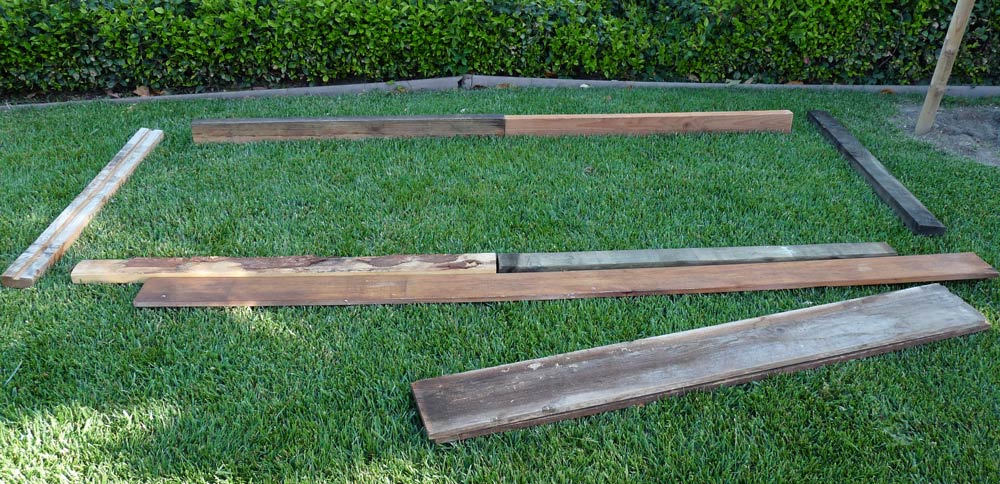
Garden Bed PrepIt’s been over two years now since we took up the front lawn, mulched the entire yard and started growing our own fruits, vegetables and sundry other crops. Along the way I’ve looked for some good company. Novella Cartenper’s “Farm City” was close, in a satisfyingly grungy and carnivorous way. “Animal, Vegetable, Miracle” by Barbara Kingsolver and family certainly inspired, if on another scale and at a geographical and practical distance.

But “The Quarter-Acre Farm” could have been written about my yard–if Spring Warren hadn’t already done so in such a charming way, it might well have been written about my yard. Now, thankfully, I can cross book writing off my To-Do list and go back to my latest Potato Project as I direct you to get your own copy of “The Quarter-Acre Farm”, complete with hypnotic illustrations and delicious recipes designed to be prepared by mere mortals.
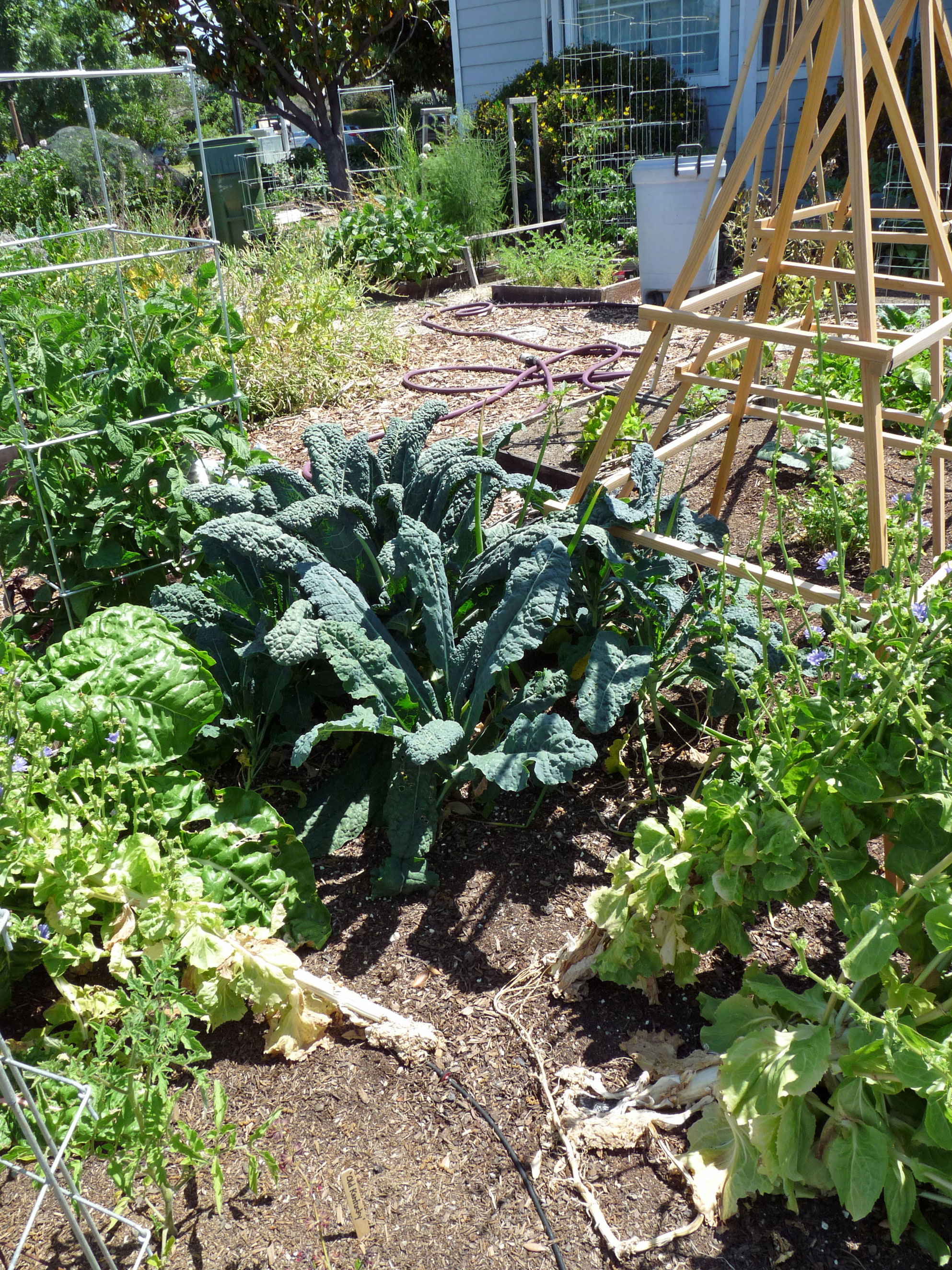
Front Yard Vegetable GardenNot only that, but it’s funny! And I can so relate. Spring Warren writes about gardening in her bathrobe without the “die-trying” seriousness of many other books in the expanding I-can-grow-more-food-in-hardly-any-space-than-you-can genre. Not only does the book leave you with the understanding that you do, in fact, need your own Quarter-Acre garden, but you’ll also want to set it down just out of goose-honking range of Ms. Warren’s so you can continue to enjoy her neighborly garden camaraderie and share the delicious produce excess  it will surely bring you.

Run out now and get your own copy. I’ll be watering the potato patch, in my bathrobe. ;-)
Red Thumbs for the 4th

Leave a comment

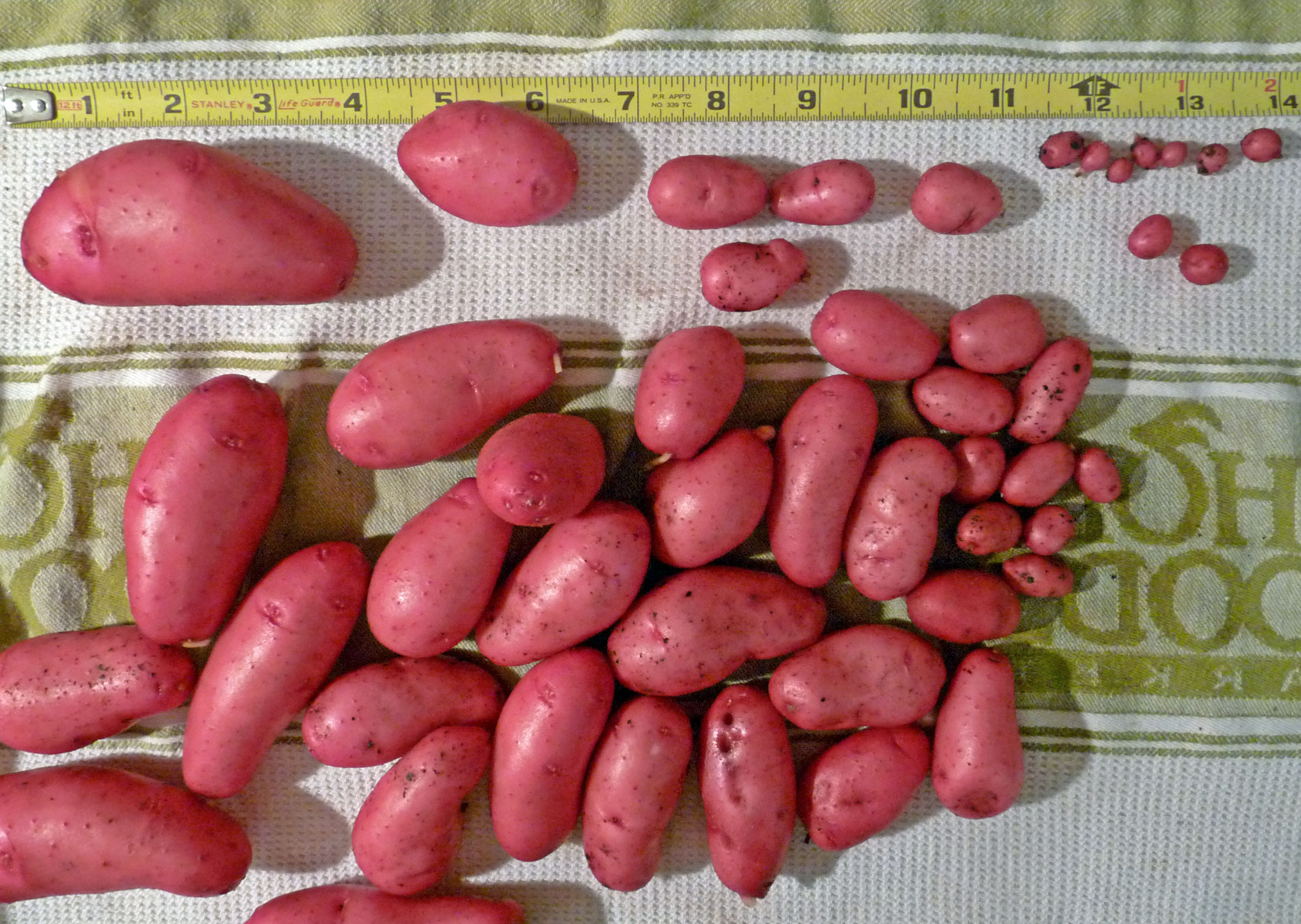
Red Thumb PotatoesI’m making Red & White potato salad for the 4th this year. Red, White & Blue potato salad sounds fun, but I know from last year that all three kinds of potatoes need to be cooked separately and the blues especially are complemented by different flavors than regular potatoes. Patriotic-looking food for July 4th is great, but if it doesn’t also taste good, forget it. And my ‘Red Thumb’ potatoes are already going to look pink at best as it is.

These 2.5 pounds of potatoes are part of the Great Potato Grow Out project, though it doesn’t look like this variety is going to be a candidate to move forward in our tests. The ‘Red Thumb’ potatoes were planted April 10th in Test Bed #3 and at their tallest stood maybe 32″ from seed potato to flowers. The highest stolons were lucky if they were set a foot above the seed potato. I pulled these particular potatoes for my potato salad because one of our other testers harvested their ‘Red Thumb’ planting today and found just a dozen grape-sized potatoes, weighing in at 3.25 ounces. I’m guessing some potatoes don’t like to be buried up to their necks in dirt after all.

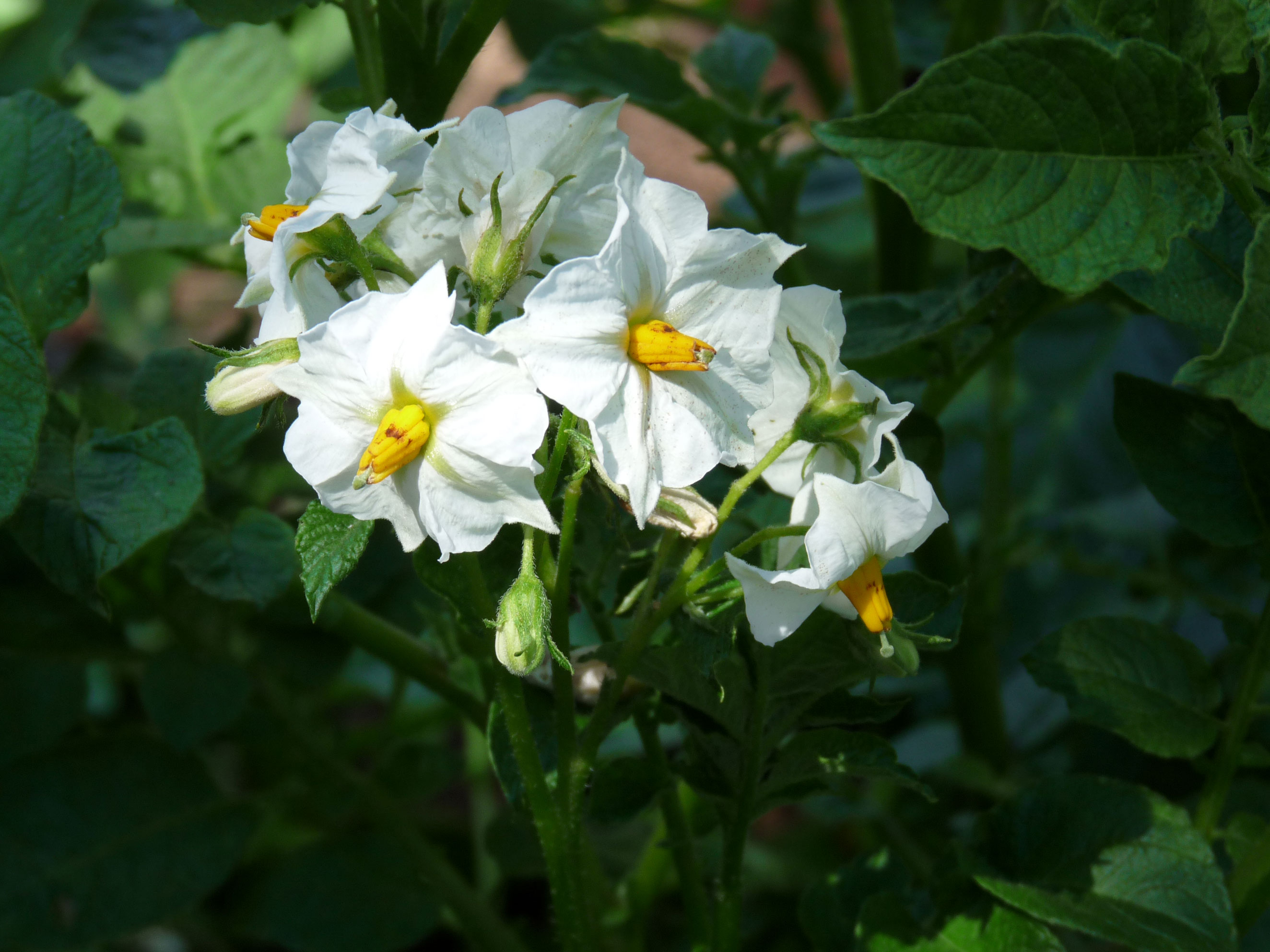
Tall-vined 'Guisi' PotatoesThe tallest potato vines we’ve recorded here for the trial are ‘Guisi’ potatoes. Their beautiful white flowers are about 56″ from the seed potatoes below. I’m afraid there are actually longer vines in the trial but the ‘Guisi’ have such a nice, upright growing habit that it makes them easiest to measure. ‘Lumper’s Gold’ and ‘Satina’ are solid contenders in our patch as well. Then there are the ‘Muruta’ potato vines.  This trial plant is reported to be 62″ tall at this point with about 36″ inches of it covered in soil. That’s a good long section of stem to be setting stolons–if we’re lucky! No idea how it’s producing yet. Apparently it did flower but the vines are still strong and green eleven weeks after planting.

A number of my potato vines are dying down. The ‘Red Thumb’ vines were so limp they were hard to find. The latest  heat wave is certainly helping. But I should have harvested the ‘Norkotah’ potatoes before today. About a third of the potatoes in one of the bags were already sprouting while still firmly attached to their stolons underground! I’m planning to put them straight into potato bags of their own and let them keep growing in a spot that gets some afternoon shade to keep them cooler.

If you’ve got tall potato vines growing this year, I’d love to know what kind and how they’re producing for you in all this weird weather.

Five New Beans

3 Comments

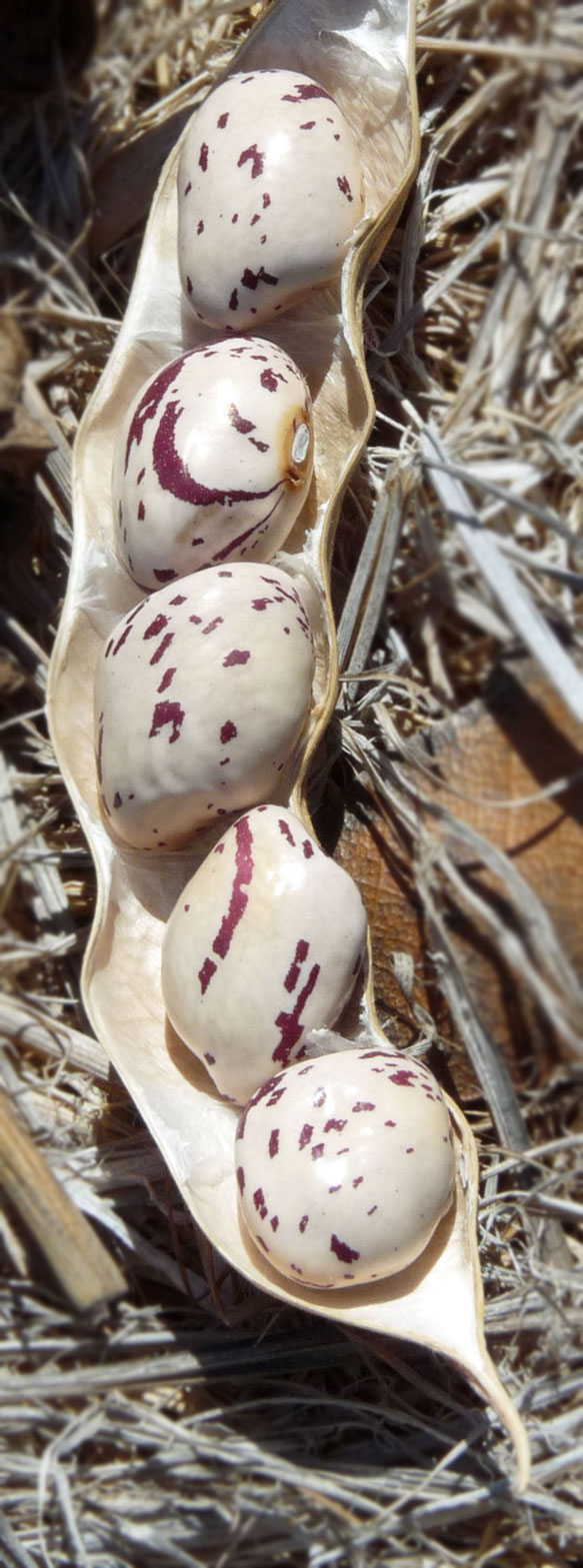
Dried BeansMy mother-in-law can’t seem to stop herself from growing enough green beans for a small army, so I do the drying beans at my house. Mostly ‘Cherokee Trail of Tears’ black beans, California Black-Eyed peas and a few colorful soup beans like ‘Jacob’s Gold’ and ‘Speckled Cranberry’. This year I’m also experimenting with some types of beans I’ve never grown before; ‘Scarlet Emperor’ beans, Four-Angled beans, also called Winged beans, Yard-Long beans which are also known as Snake beans or bora, both white and yellow Lima beans and tan Garbanzo beans.

Bush Beans growingWe’re using a number of different kinds of vertical supports for the beans, many of them homemade with bamboo. In Vertical Gardening Derek Fell reports that he’s able to harvest ten times more pods from his pole beans than their bush counterparts. Still, I couldn’t resist planting a bed of bush ‘Cannellini’ beans. We love ‘Cannellini’ beans but there just wasn’t a pole variety of them I wanted to try. I can substitute ‘White Emergo’ beans instead of the smaller ‘Cannellini’ in recipes, and they grow on big sturdy vines, so they will have to do for the pole variety this year.

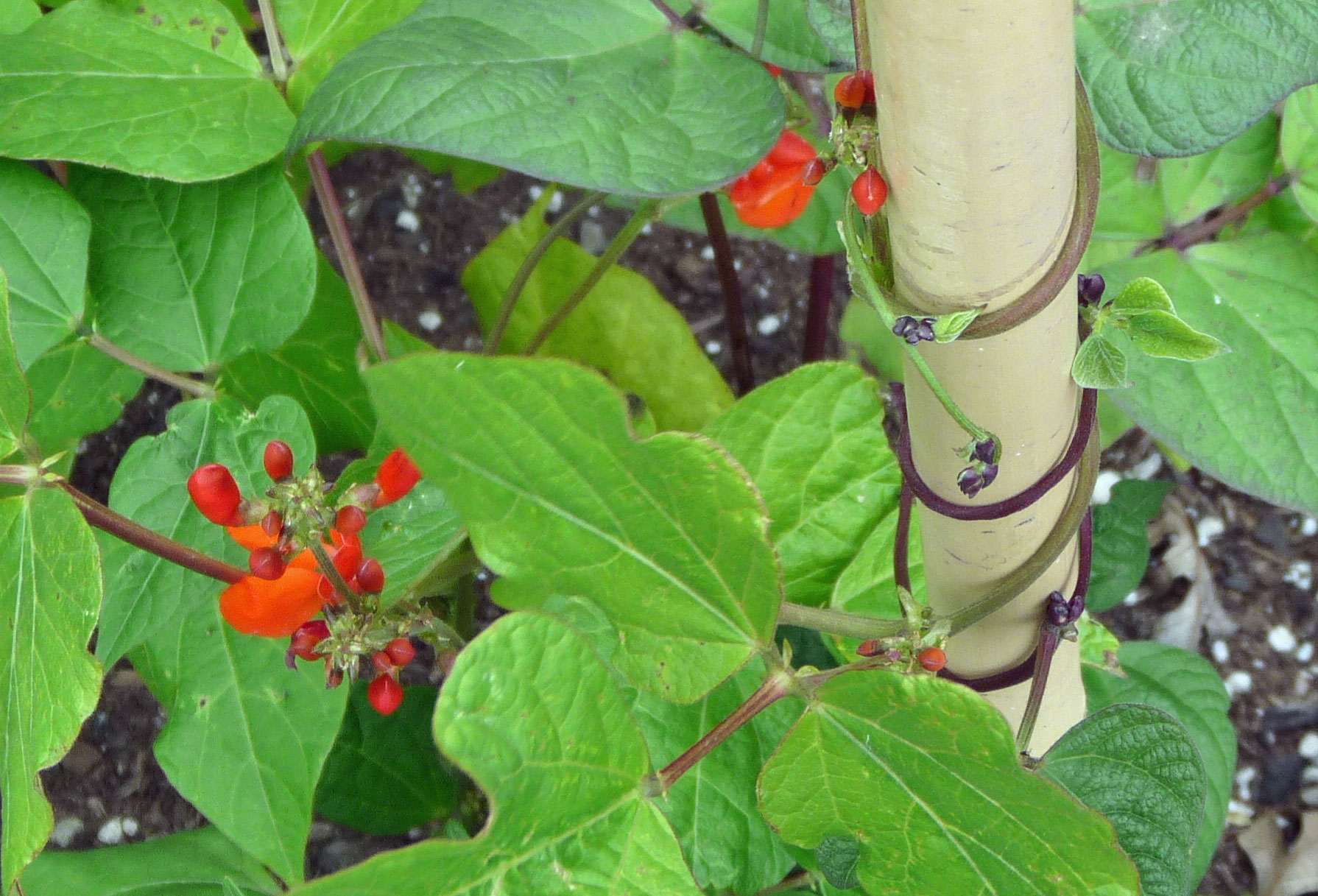
Akahana Mame FlowersThe ‘Scarlet Emperor’ Runner beans have an 8′ arbor to climb, which I hear they will need. They were the first beans to germinate in the Dirt to Dinner garden this year. I planted a few of them on March 9th just to see how the ground temperature was doing and up they came! I guess there’s a reason they are so popular in England. I was attracted to the idea of growing a perennial bean plant but I’m also looking forward to their reportedly “showy” flowers, though we haven’t seen any yet. These gorgeous blossoms are from an ‘Akahana Mame’ growing on a teepee with ‘Louisiana Purple Pod’ and ‘French Climbing’ beans for effect.

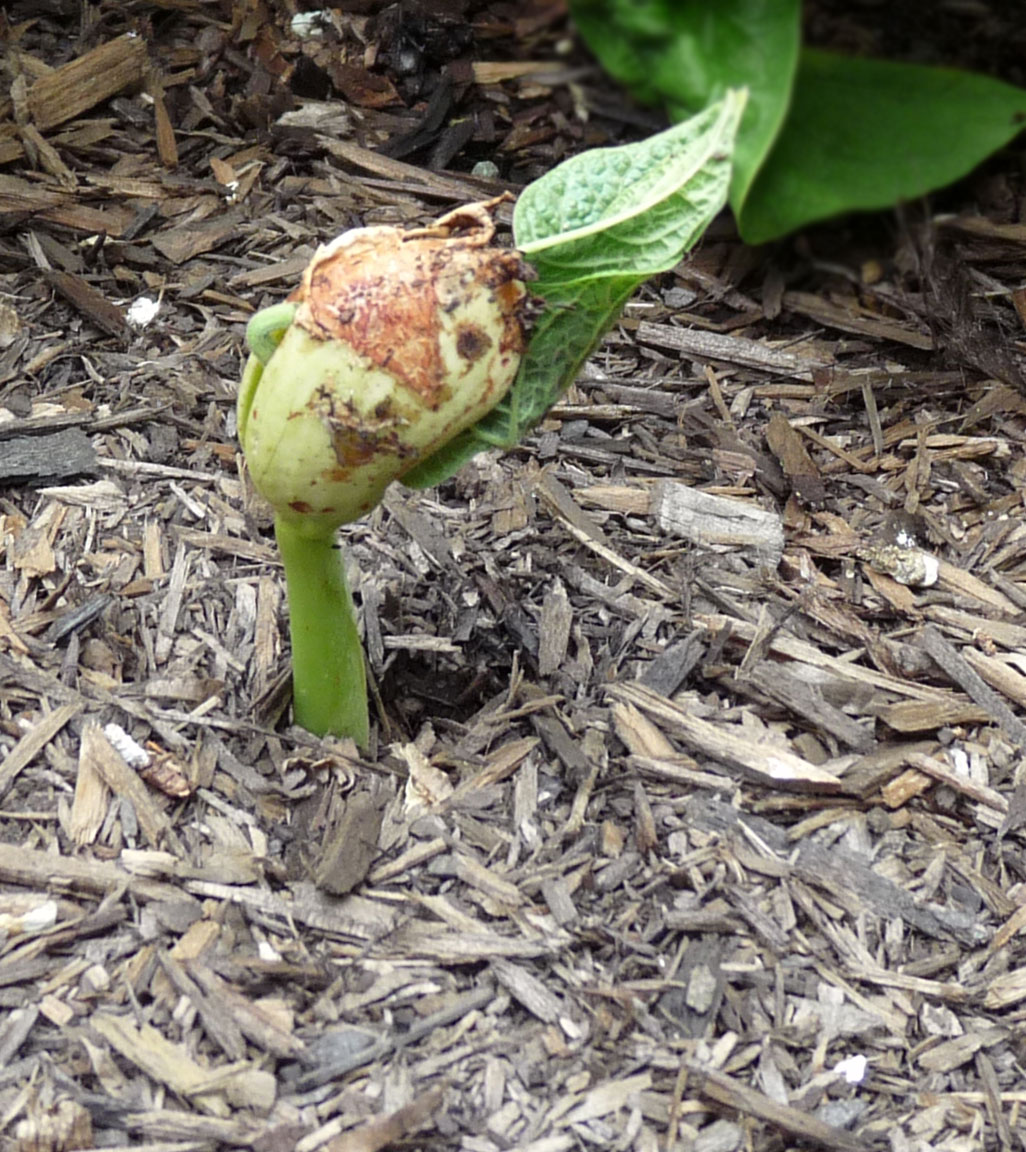
'King of the Garden' Lima BeanThe Winged beans and the Yard-Long beans are planted on either side of an 8′ trellis with sesame plants growing through the center. Imagine an A-frame with garden netting hanging down on either side. One side of the netting gets ‘Four-Angle’ beans planted along half of it. The other side of the netting gets ‘Red Noodle’ planted on the opposite half. That way the sesame growing in between gets sun from both sides where the beans aren’t.  The last beans to go in are the Limas. They like warm soil, which is in short supply again this year. It takes several days for them to emerge from the soil and spread their wing-like seed leaves. I’m nervous a bird or bug or varmint will devour them before photosynthesis even begins but keep your fingers crossed for me. We’re trying ‘King of the Garden’ lima seed from both Baker Creek and Bountiful Gardens and ‘Golden’ Lima beans from Seed Savers Exchange. If you’re experimenting with new bean varieties in your garden this year, let us know what’s working well for you and how you’re growing them.

The 226 Day Beet

5 Comments

Yellow Beets

This is my first post for Fight Back Friday.

I love yellow beets. They hate me, but I adore them. I crave them no matter how stubbornly they refuse to germinate for me, or how long it takes the few that deign to grow in my garden to finally develop to eating size. I could grow red beets in the dirt that accumulates in the trunk of my car. Yellows are carefully seeded into flats and coddled atop the hot tub as I pray for germination. Then, carefully, with a special $7 tool purchased for no other purpose, I transplant the tiny four-leaved beets into the prepared garden bed at the tender age of three weeks. By the next morning, half of them fall over dead just to spite me. Or perhaps slugs crave yellow beets even worse than I do.

But today, after 226 long, anxious days, I lunched on yellow beets braised with their greens in homemade chicken bone broth. I dribbled tamari on a third of my bowl, some really snooty French apple cider vinegar on a third and left the center portion au naturel. The bliss! After lunch I seeded a new flat with ‘Touchstone Gold Beet’ from High Mowing and ‘Golden Detroit Beet’ from Natural Gardening Company.

Yellow and orange carrotsAnother root vegetable I struggle with is carrots. They are happy to sprout in my garden but the second I look away something, or someone, mows their tiny tops down to nubs and whatever is left of the seedling dries up and blows away. I got three patches of carrots to grow this fall and they have overwintered well. We’re still eating them in May, which is wonderful. But I would love to grow more. I have tried covering the seed bed with straw, I’ve tried covering it with burlap, I’ve tried interplanting with cabbages–which actually worked in one of the patches but not the other two.

Maybe it’s time to pre-sprout the seeds on paper towels and then transplant into a bed? I got some red carrots that look gorgeous in the catalog, but half the seeds are already gone with nothing but an empty garden patch nicely lined with onions to show for it. I know carrots are supposed to like tomatoes, but do they hate onions?

If you have a favorite way of growing carrots, please share it with me in the comments. I need suggestions!