Five New Beans

3 Comments

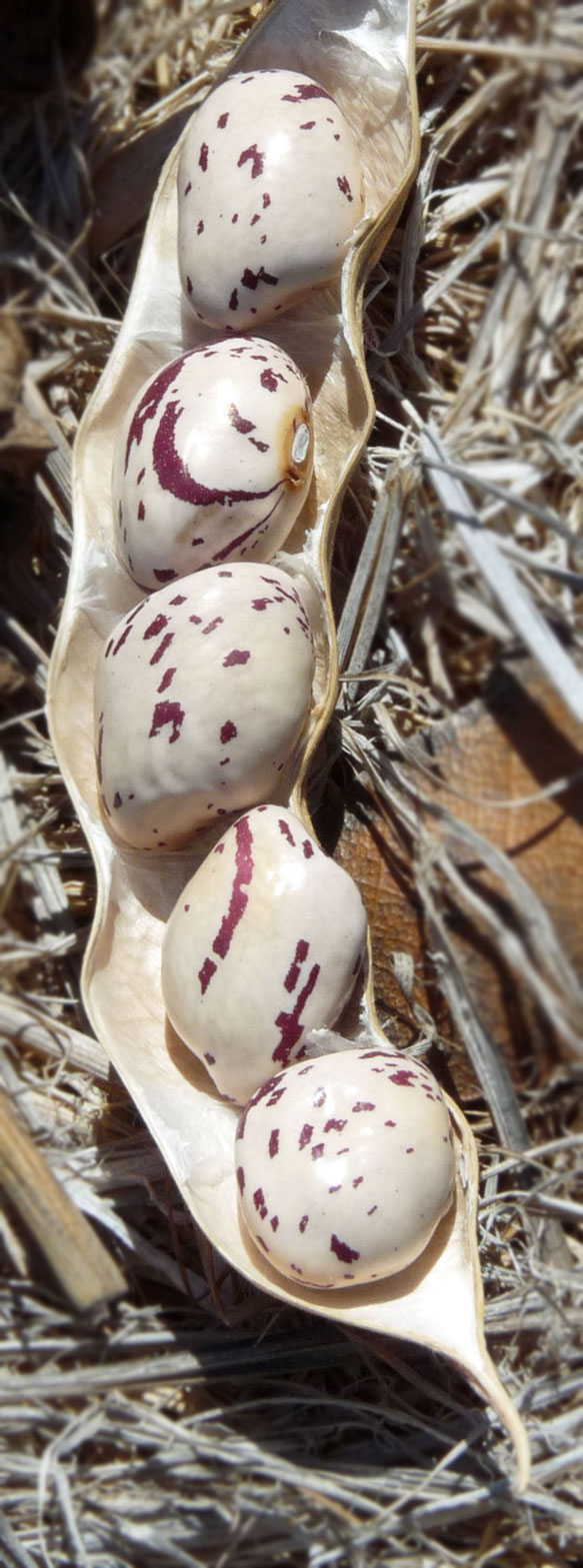
Dried BeansMy mother-in-law can’t seem to stop herself from growing enough green beans for a small army, so I do the drying beans at my house. Mostly ‘Cherokee Trail of Tears’ black beans, California Black-Eyed peas and a few colorful soup beans like ‘Jacob’s Gold’ and ‘Speckled Cranberry’. This year I’m also experimenting with some types of beans I’ve never grown before; ‘Scarlet Emperor’ beans, Four-Angled beans, also called Winged beans, Yard-Long beans which are also known as Snake beans or bora, both white and yellow Lima beans and tan Garbanzo beans.

Bush Beans growingWe’re using a number of different kinds of vertical supports for the beans, many of them homemade with bamboo. In Vertical Gardening Derek Fell reports that he’s able to harvest ten times more pods from his pole beans than their bush counterparts. Still, I couldn’t resist planting a bed of bush ‘Cannellini’ beans. We love ‘Cannellini’ beans but there just wasn’t a pole variety of them I wanted to try. I can substitute ‘White Emergo’ beans instead of the smaller ‘Cannellini’ in recipes, and they grow on big sturdy vines, so they will have to do for the pole variety this year.
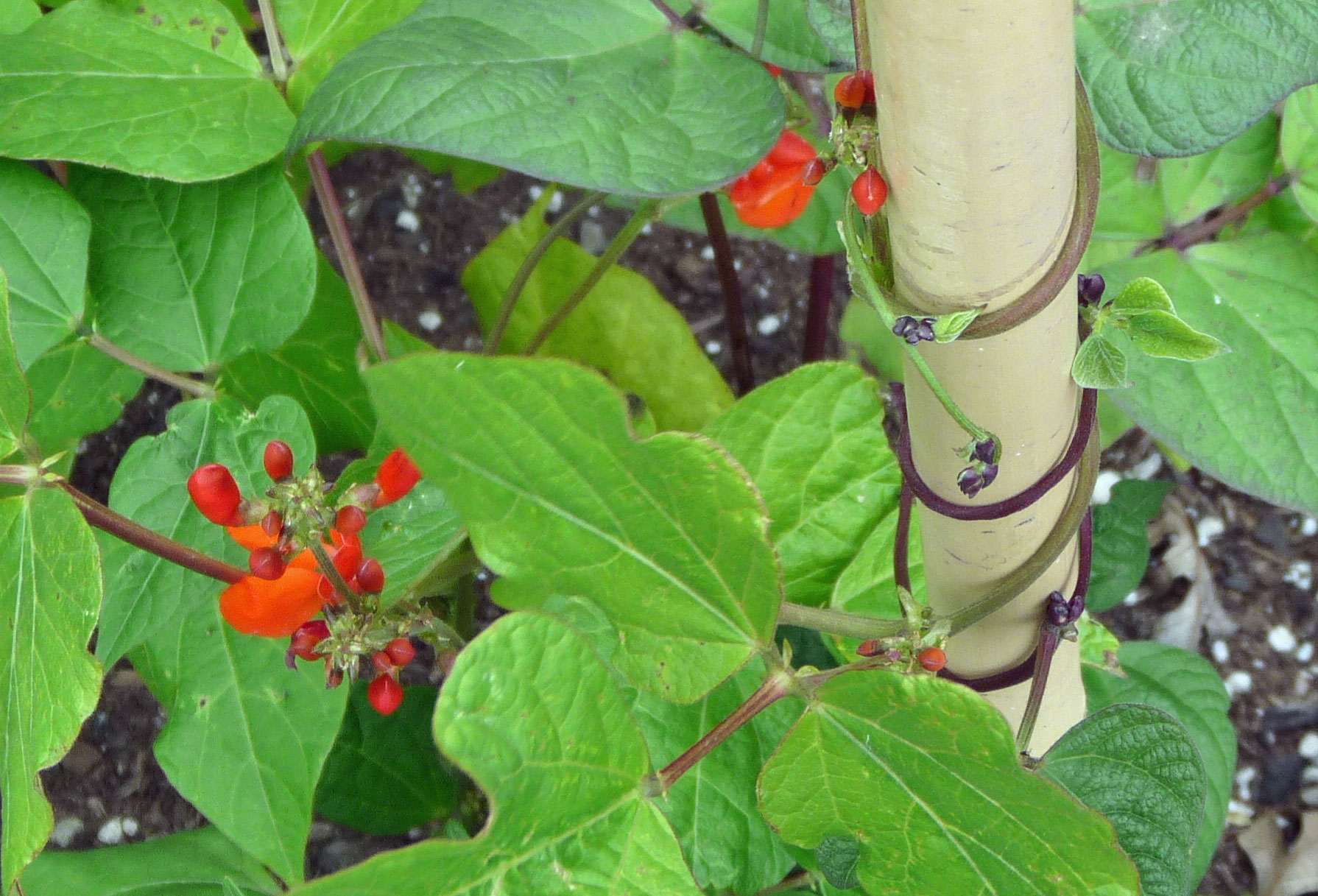
Akahana Mame FlowersThe ‘Scarlet Emperor’ Runner beans have an 8′ arbor to climb, which I hear they will need. They were the first beans to germinate in the Dirt to Dinner garden this year. I planted a few of them on March 9th just to see how the ground temperature was doing and up they came! I guess there’s a reason they are so popular in England. I was attracted to the idea of growing a perennial bean plant but I’m also looking forward to their reportedly “showy” flowers, though we haven’t seen any yet. These gorgeous blossoms are from an ‘Akahana Mame’ growing on a teepee with ‘Louisiana Purple Pod’ and ‘French Climbing’ beans for effect.
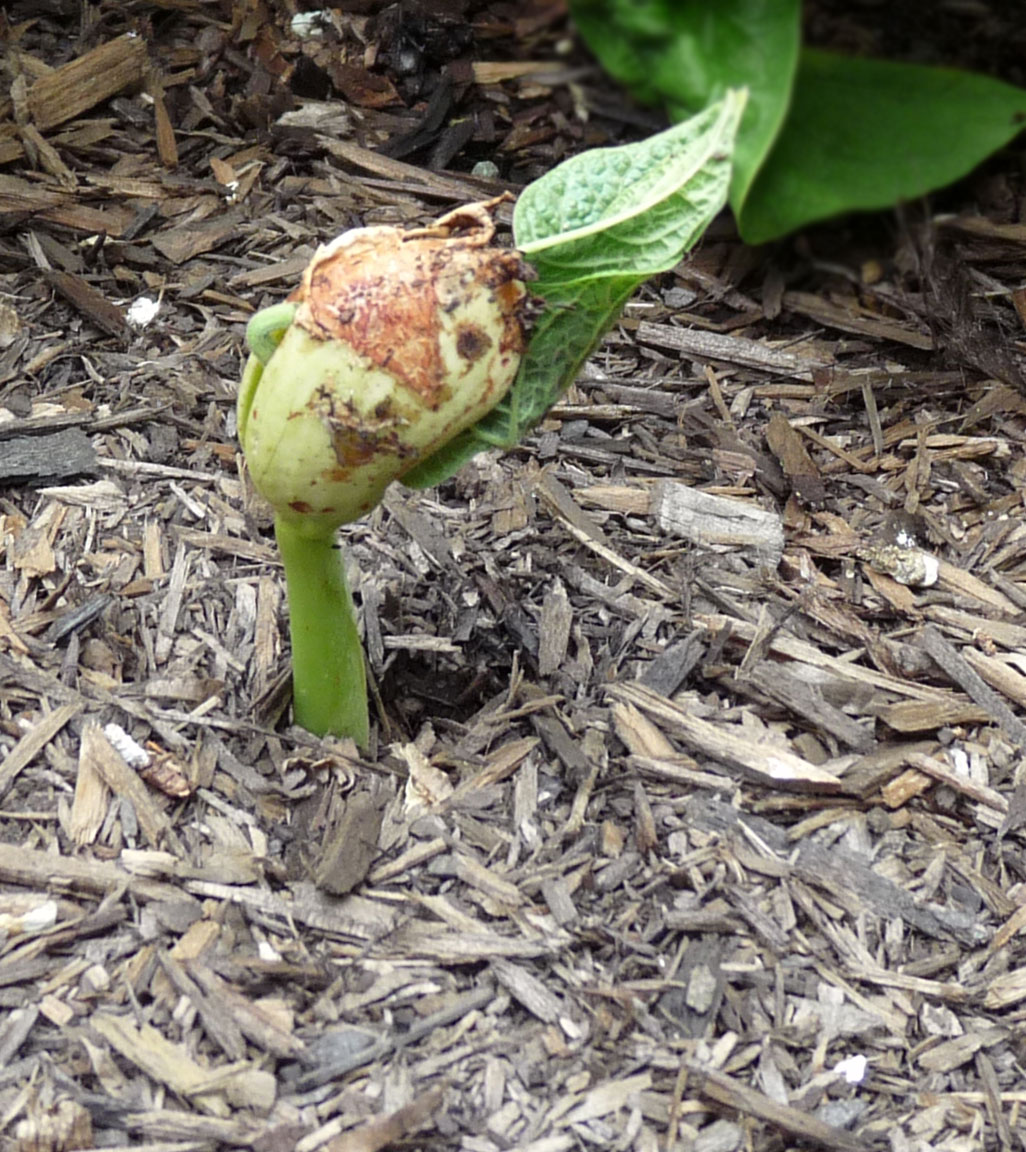
'King of the Garden' Lima BeanThe Winged beans and the Yard-Long beans are planted on either side of an 8′ trellis with sesame plants growing through the center. Imagine an A-frame with garden netting hanging down on either side. One side of the netting gets ‘Four-Angle’ beans planted along half of it. The other side of the netting gets ‘Red Noodle’ planted on the opposite half. That way the sesame growing in between gets sun from both sides where the beans aren’t.  The last beans to go in are the Limas. They like warm soil, which is in short supply again this year. It takes several days for them to emerge from the soil and spread their wing-like seed leaves. I’m nervous a bird or bug or varmint will devour them before photosynthesis even begins but keep your fingers crossed for me. We’re trying ‘King of the Garden’ lima seed from both Baker Creek and Bountiful Gardens and ‘Golden’ Lima beans from Seed Savers Exchange. If you’re experimenting with new bean varieties in your garden this year, let us know what’s working well for you and how you’re growing them.

The 226 Day Beet

5 Comments

Yellow Beets

This is my first post for Fight Back Friday.

I love yellow beets. They hate me, but I adore them. I crave them no matter how stubbornly they refuse to germinate for me, or how long it takes the few that deign to grow in my garden to finally develop to eating size. I could grow red beets in the dirt that accumulates in the trunk of my car. Yellows are carefully seeded into flats and coddled atop the hot tub as I pray for germination. Then, carefully, with a special $7 tool purchased for no other purpose, I transplant the tiny four-leaved beets into the prepared garden bed at the tender age of three weeks. By the next morning, half of them fall over dead just to spite me. Or perhaps slugs crave yellow beets even worse than I do.

But today, after 226 long, anxious days, I lunched on yellow beets braised with their greens in homemade chicken bone broth. I dribbled tamari on a third of my bowl, some really snooty French apple cider vinegar on a third and left the center portion au naturel. The bliss! After lunch I seeded a new flat with ‘Touchstone Gold Beet’ from High Mowing and ‘Golden Detroit Beet’ from Natural Gardening Company.

Yellow and orange carrotsAnother root vegetable I struggle with is carrots. They are happy to sprout in my garden but the second I look away something, or someone, mows their tiny tops down to nubs and whatever is left of the seedling dries up and blows away. I got three patches of carrots to grow this fall and they have overwintered well. We’re still eating them in May, which is wonderful. But I would love to grow more. I have tried covering the seed bed with straw, I’ve tried covering it with burlap, I’ve tried interplanting with cabbages–which actually worked in one of the patches but not the other two.

Maybe it’s time to pre-sprout the seeds on paper towels and then transplant into a bed? I got some red carrots that look gorgeous in the catalog, but half the seeds are already gone with nothing but an empty garden patch nicely lined with onions to show for it. I know carrots are supposed to like tomatoes, but do they hate onions?

If you have a favorite way of growing carrots, please share it with me in the comments. I need suggestions!

Two Greens, an Orange and a Blonde: It’s Tomato Time

5 Comments

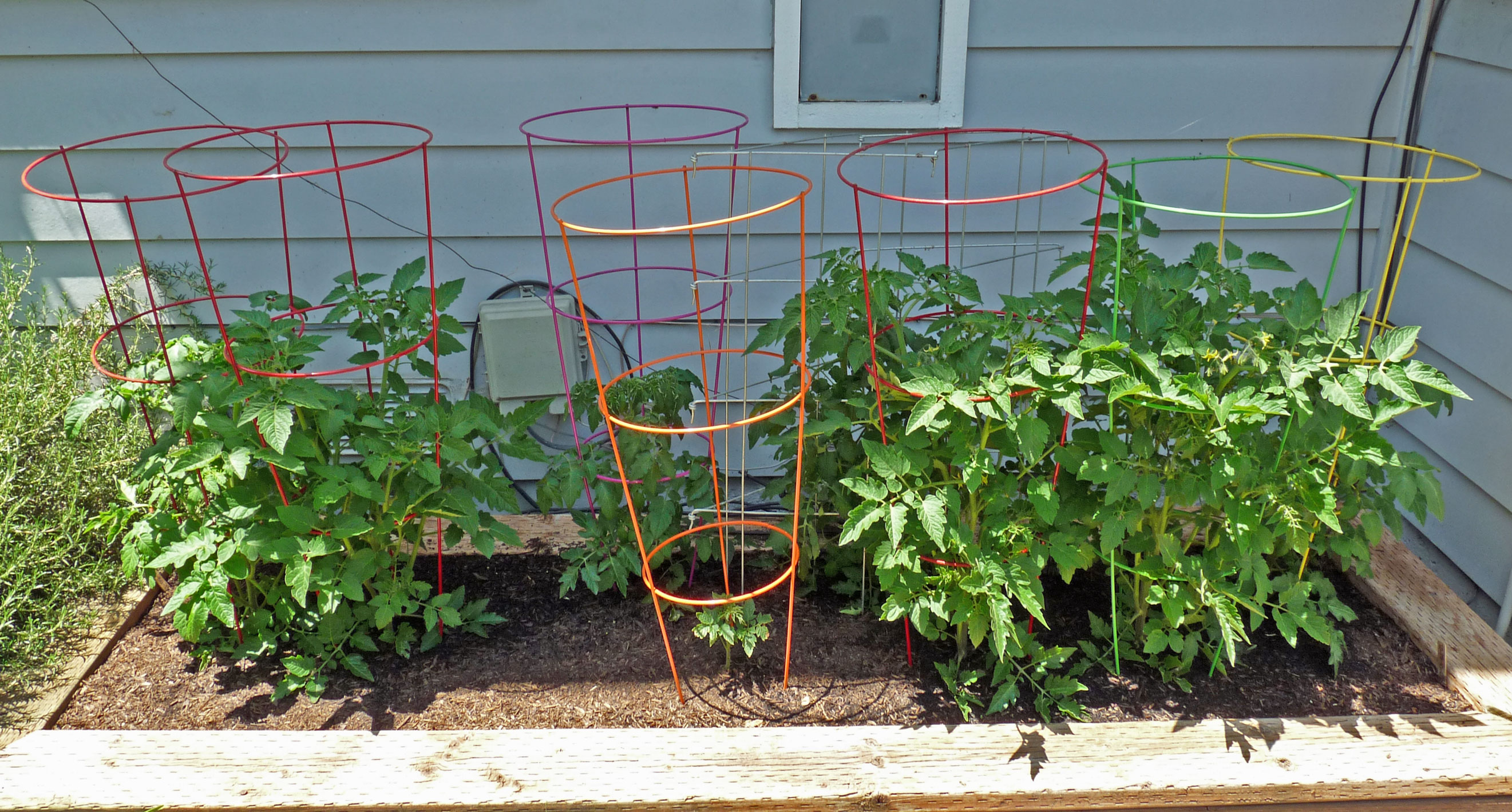
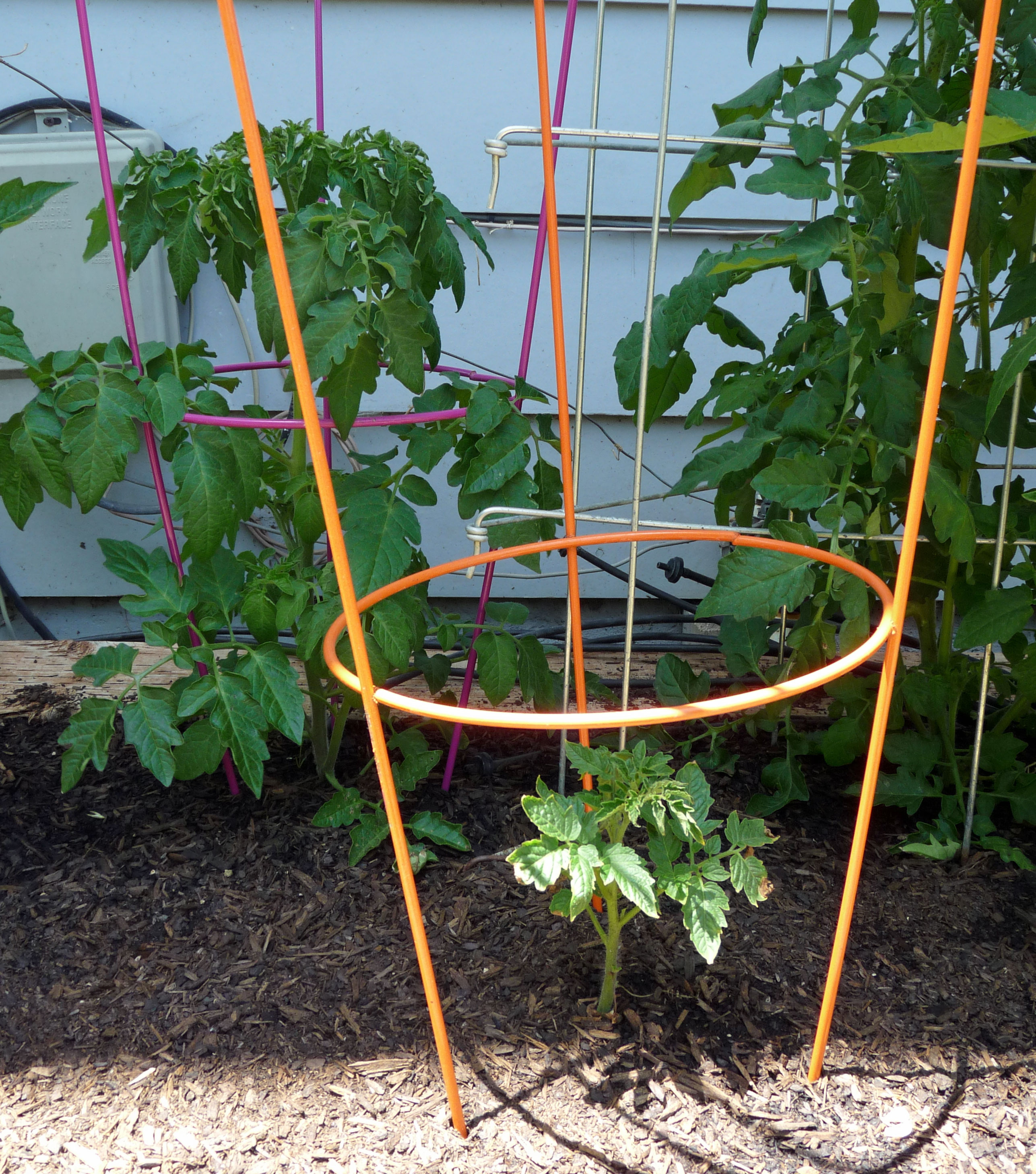
Principe Borghese TomatoesThe first tomatoes into the ground this year were the ‘Principe Borghese’ drying tomatoes, four of them started from Bountiful Gardens seed, four from Victory seed. Six of the plants are doing very well, flowering and just beginning to set fruit. Two, one from each seed company but both planted in the same section of the bed, are smaller and less robust. They don’t appear diseased or I would pull them out rather than risk the other plants. If you have a guess as to why they are so much slower than their buddies, I’d love to hear it!Lag-Behind-Borghese

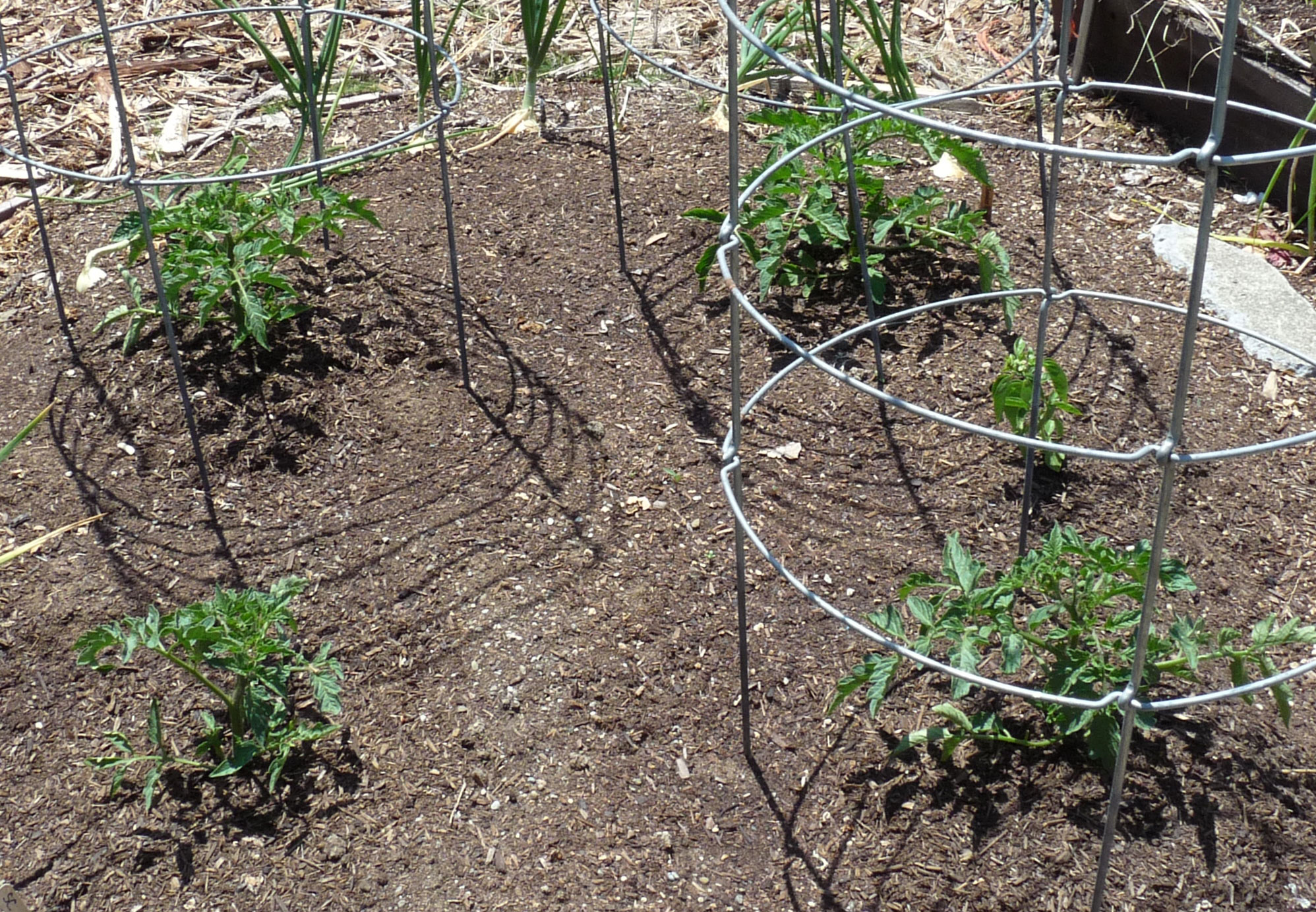
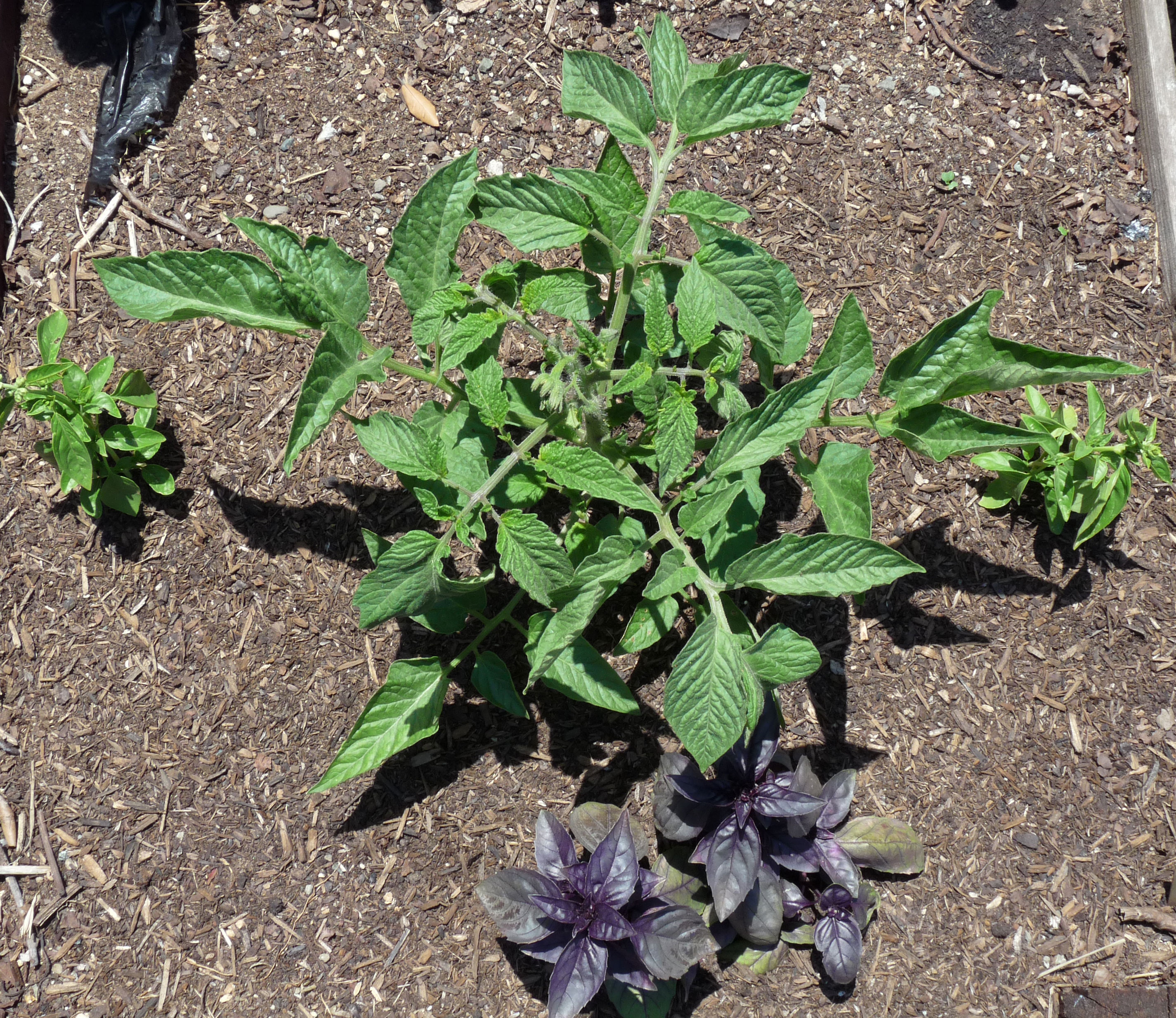
Our second tomato trial is four different sources of ‘Cherokee Purple’ seed; High Mowing, J.L. Hudson, D. Landreth and Seeds of Change.  Cherokee Purple Seed Source TrialThis crew was seeded in mid-March and the best plant from each source was planted in the garden May 1st, with compost, egg shells, bone meal and salmon heads. The tomatoes are approximately 3′ apart with some heirloom basil  planted nearby.  A second batch of strong, healthy seedlings, one from each source, are planted in a friend’s garden a few miles away. So far three of the four plants in the Dirt to Dinner garden are relatively uniform. The Landreth seedling has the largest diameter and the ‘Seeds of Change’ plant is slower growing than the other three, but they all look strong and healthy. The High Mowing ‘Cherokee Purple’ is my bet for the first to flower. Planted close to this trial is a ‘Cherokee Chocolate’ from Sustainable Seed as another point of comparison. It has already opened it’s first flowers, and they are huge!

The next tomato trial is a side-by-side comparison of ‘Orange Heirloom’ against ‘Persimmon’. Both are new varieties to us and the garden. We’re looking forward to trying them and hope to choose one to trial more fully next year. We are also comparing ‘Black Sea Man’ to ‘Black Krim’ and ‘Rosso Sicilian’ to ‘Costaluto Genovese’, which did very well for us in 2009. The ‘Costaluto Genovese’ makes deeply lobed fruit with an acidic, somewhat tart, robust tomato flavor. They were my top choice for slicing tomatoes until I met the ‘Cherokee Purple’.

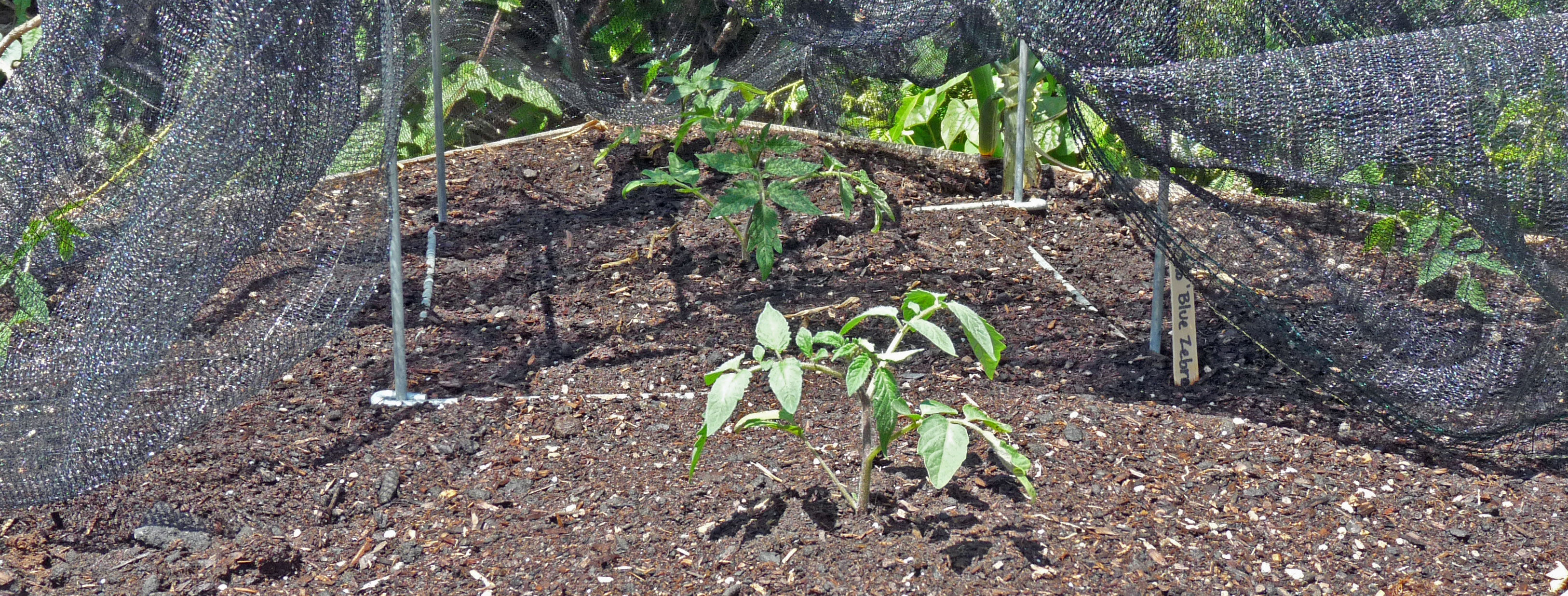
Search for the Blue Zebra TomatoesWe are also growing out five seedlings from Tom Wagner’s ‘Search for the Blue Zebra’ which we will compare with his ‘Green Zebra’ and ‘Black Zebra’ grown from Boondockers seed. These seedlings, just planted yesterday, are covered with 30% shade cloth for the first few days as they acclimate to the new garden bed. I have no idea what the Blue Zebra’s will be like. They may not be blue and they may not have stripes, but it’ll still be fun to see what we will get.

Pruden's Purple Tomato with BasilThe other tomatoes in the garden are one each of  ‘Pineapple’, ‘Aunt Ruby’s German Green’, ‘Old Kentucky’, ‘Pruden’s Purple’, ‘German Pink’ and, my eating-out-of-the-garden favorite, ‘Blondkofchen’ which does not seem any too happy about the cool weather we are having this spring.

That feels like a lot of tomatoes all of a sudden, but it’s really only two dozen plants, or so.  OK, thirty, in this first batch. We’ll talk about the sauce tomatoes another day. It’ll be weeks before we have to find room for all of those seedlings.

Garlic in May

Leave a comment

This was the year that I discovered “young” garlic. I had never tried it and didn’t know that, like a leek, you can use all of the white base of the plant, as well as the tender, lighter-green part of the stalk. And I do mean all of the white part, newly forming garlic head included. The papery wrappers we’re all used to painstakingly peeling away from our cured garlic? They are soft and savory and you just cut right through them when you prepare the immature head and the fleshy bottom of the stem.

I must have stolen at least a dozen of these treats out of the garlic patch before the rest of the heads were fully plumped up and the leaves were starting to dry down. I used them to flavor stocks, frittatas and stews, in stir-frying and fed a few of them to my husband raw to help clear sinus gunk from a cold.

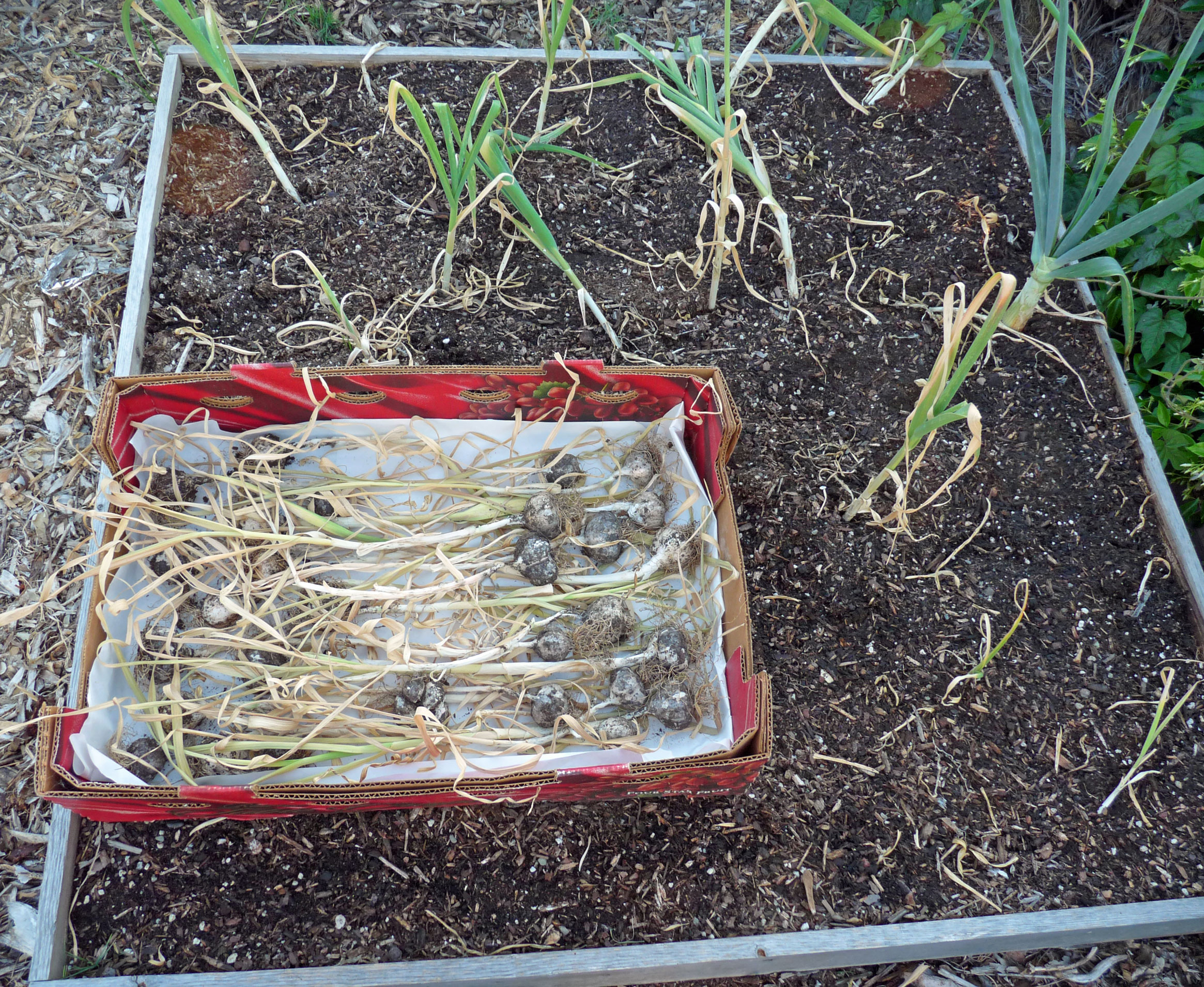
This year we did two patches of garlic, a softneck, ‘Chinese Pink,’ and a hardneck, ‘Music,’ both from Territorial Seed. The ‘Chinese Pink’ said it was an “extra-early-maturing variety” and to expect it to be drying down late-May to June. ‘Music’ has a mid-late harvest, which usually means late-July in our part of California. They were both planted on October 4th, 2010. The ‘Chinese Pink’ went into a 4’x4′ raised bed. I may have planted more than 50 cloves. I harvested 30 of them, there are another ten still in the ground and I “borrowed” quite a few out of the bed to use green.

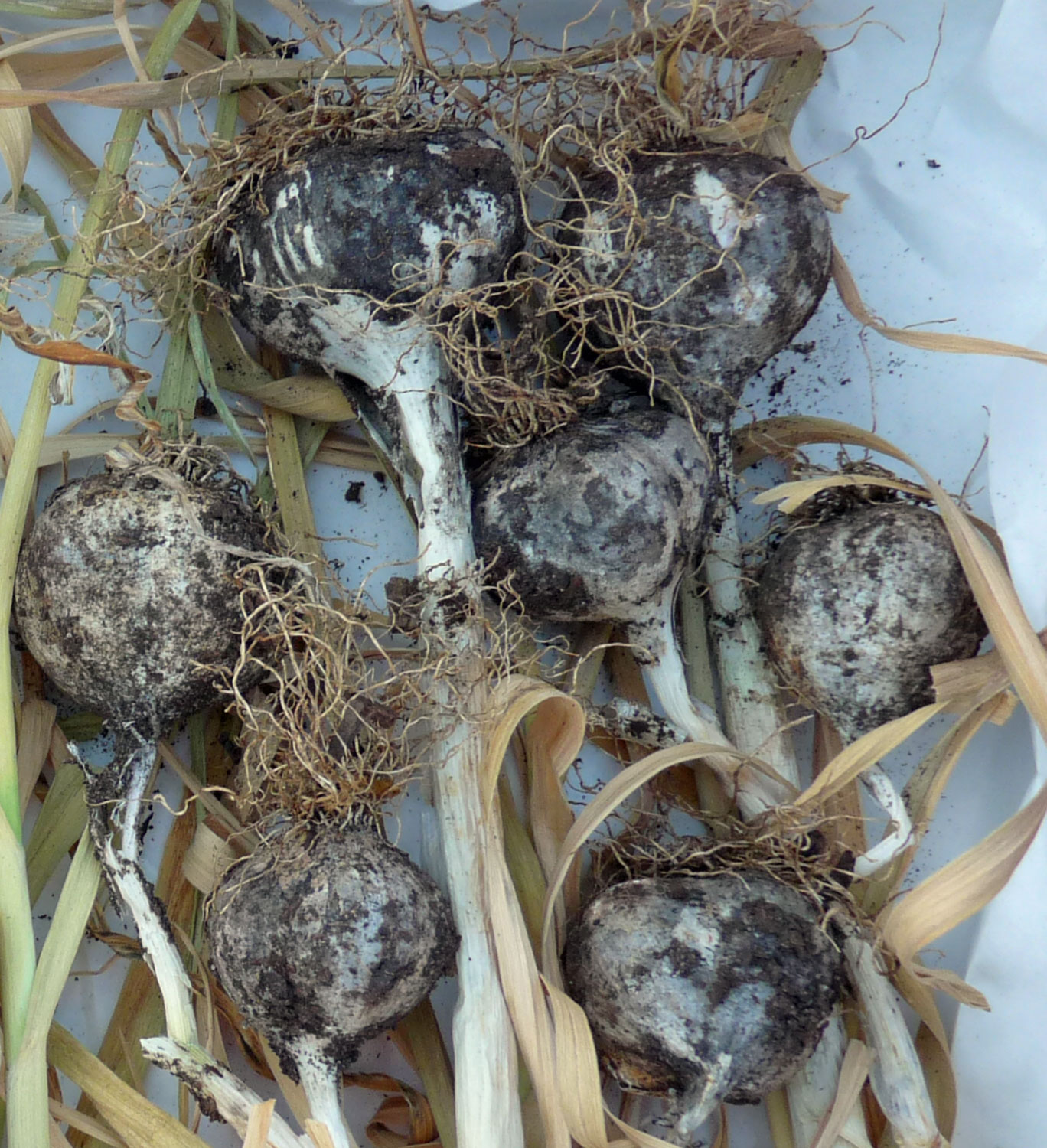
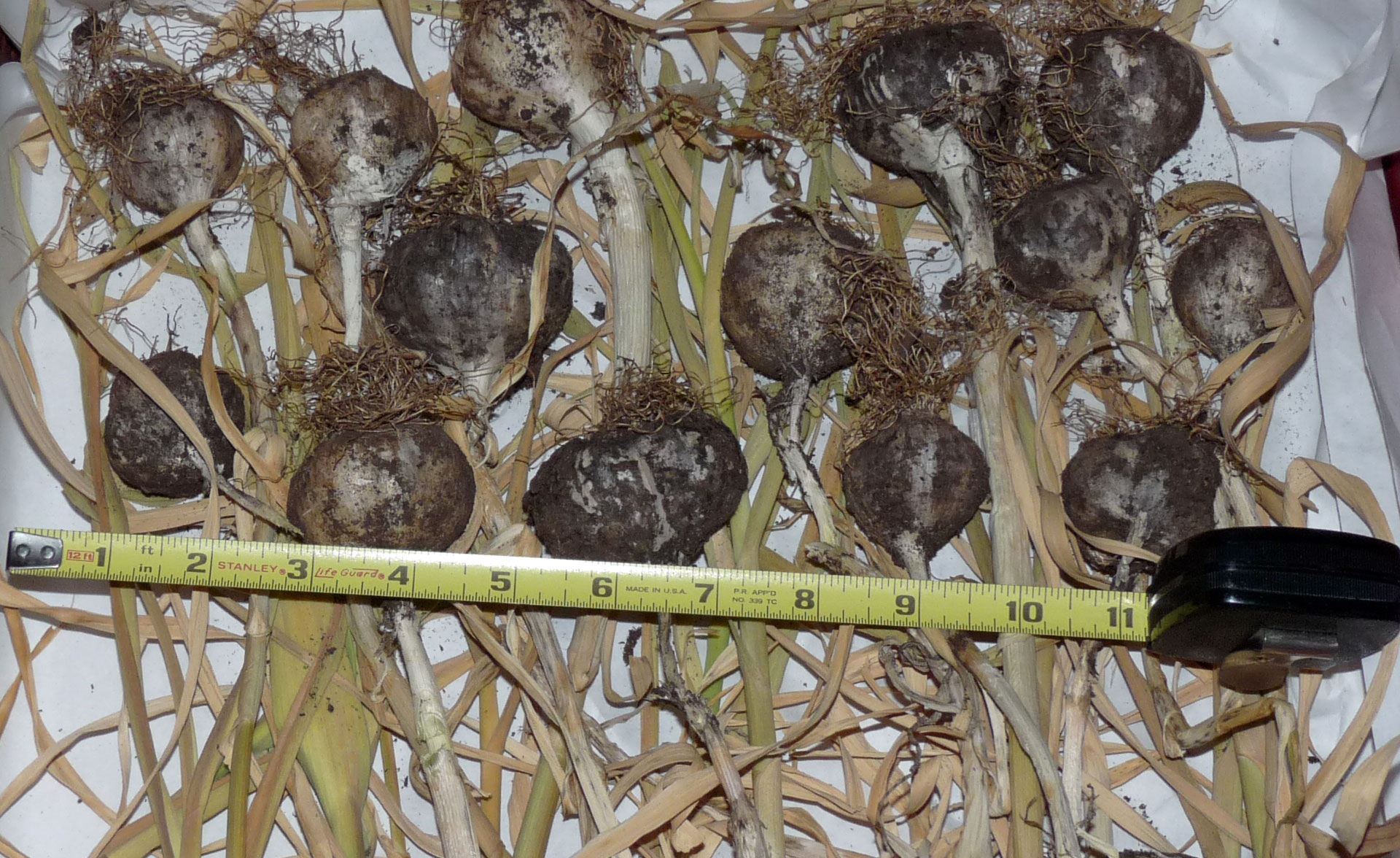
Measuring Garlic HeadsThe ‘Chinese Pink’ garlic has a mild, fresh flavor even after it has been cured. The heads, when they aren’t still covered in soil from the ground, have thin, pink vertical stripes on the outer wrappers. The ‘Chinese Pink’ was harvested even earlier than I could have imagined and rates as a big winner in our garden this year. Some of the heads are over 2″ across and the majority of the cloves in each head are a good size for peeling.

It looks like the ‘Music‘ is just starting to dry a few of it’s outer leaves. Better get out there and try some of it green before it’s too late!

Potato Progress

4 Comments
Potato Planting Map

April 1, 2011 Planning out the Planting Chart for Test Bed #1

The Great Rare Potato Grow Out Project begins!

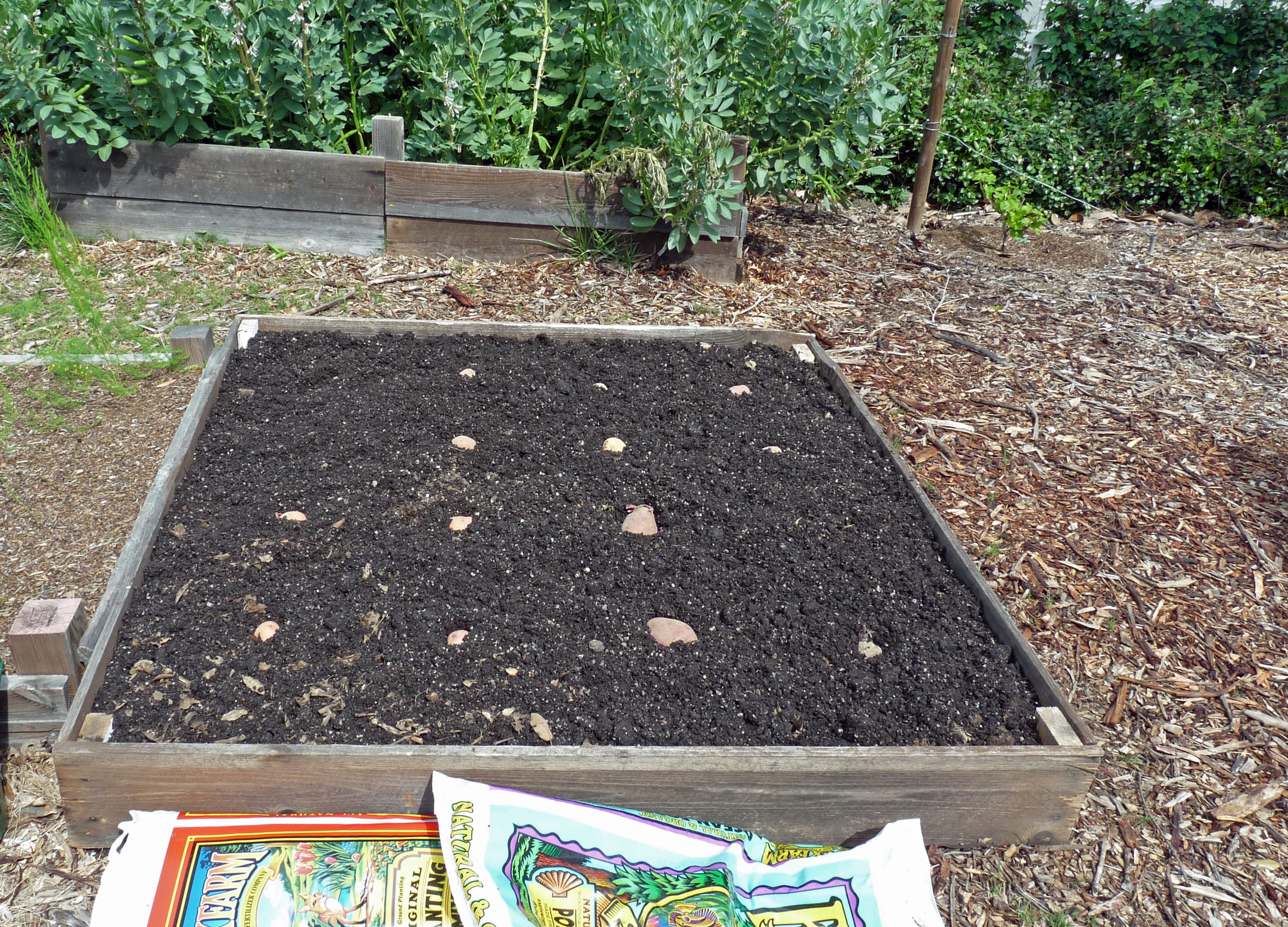
Raised bed potato planting

April 2, 2011 Planting the potatoes in Test Bed #1

The first Test Bed of potatoes is planted under 4″ of Happy Frog planting mixes.

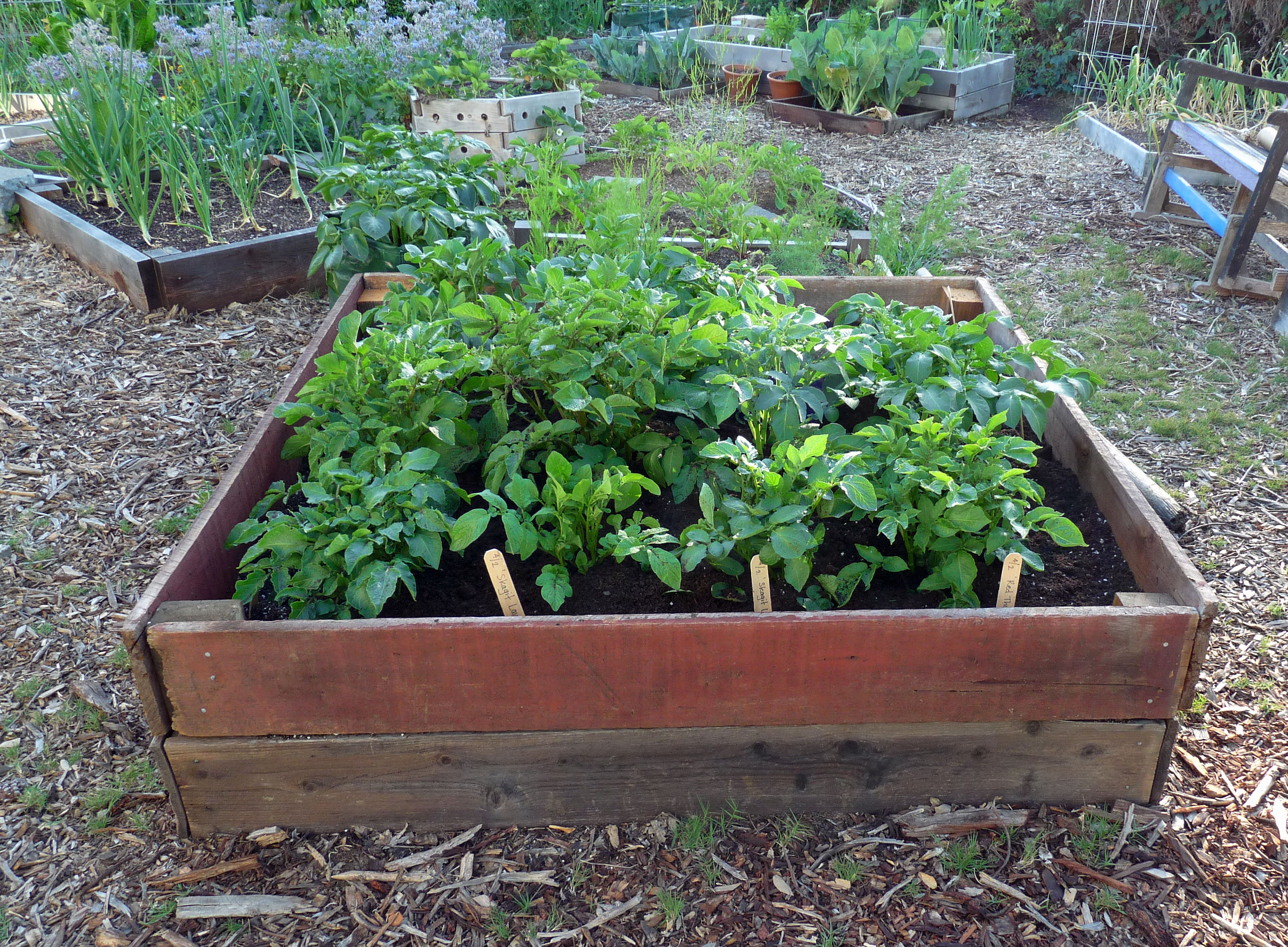
Potato Test Patch #1

April 24, 2011 All the potatoes in Test Bed #1 have sprouted

It took three weeks before we had all the different varieties sprouting in Test Bed #1.

Raising the potatoes raised bed

May 9, 2011 A second 8" tall frame is added to the Test Bed #1

A second frame was added to the Test Bed and filled in with more planting mix.

Raised bed potatoes growing

May 19, 2011 3rd 8" frame is added and potatoes are hilled again

The tallest variety so far is called ‘Toro Dude’ at ~28″ and the ‘Satina’ variety is close behind.

Potato Flowers

May 19, 2011 'Toro Dude' is preparing to flower

Flowering may indicate the end of setting stolons to form potatoes. We will continue to hill the potatoes until the first flowers bloom.

Tallest potato variety

Guisi Potatoes Topped out at 4' 8" tall

My charming 6-ft even husband volunteered as the human yardstick. The tallest variety in Test Bed #1, as measured on June 29th, was one of the four the white-flowered ‘Guisi’ plants. We will try to get more precise when we dig the vines, but for now we are calling it 4′ 8″.