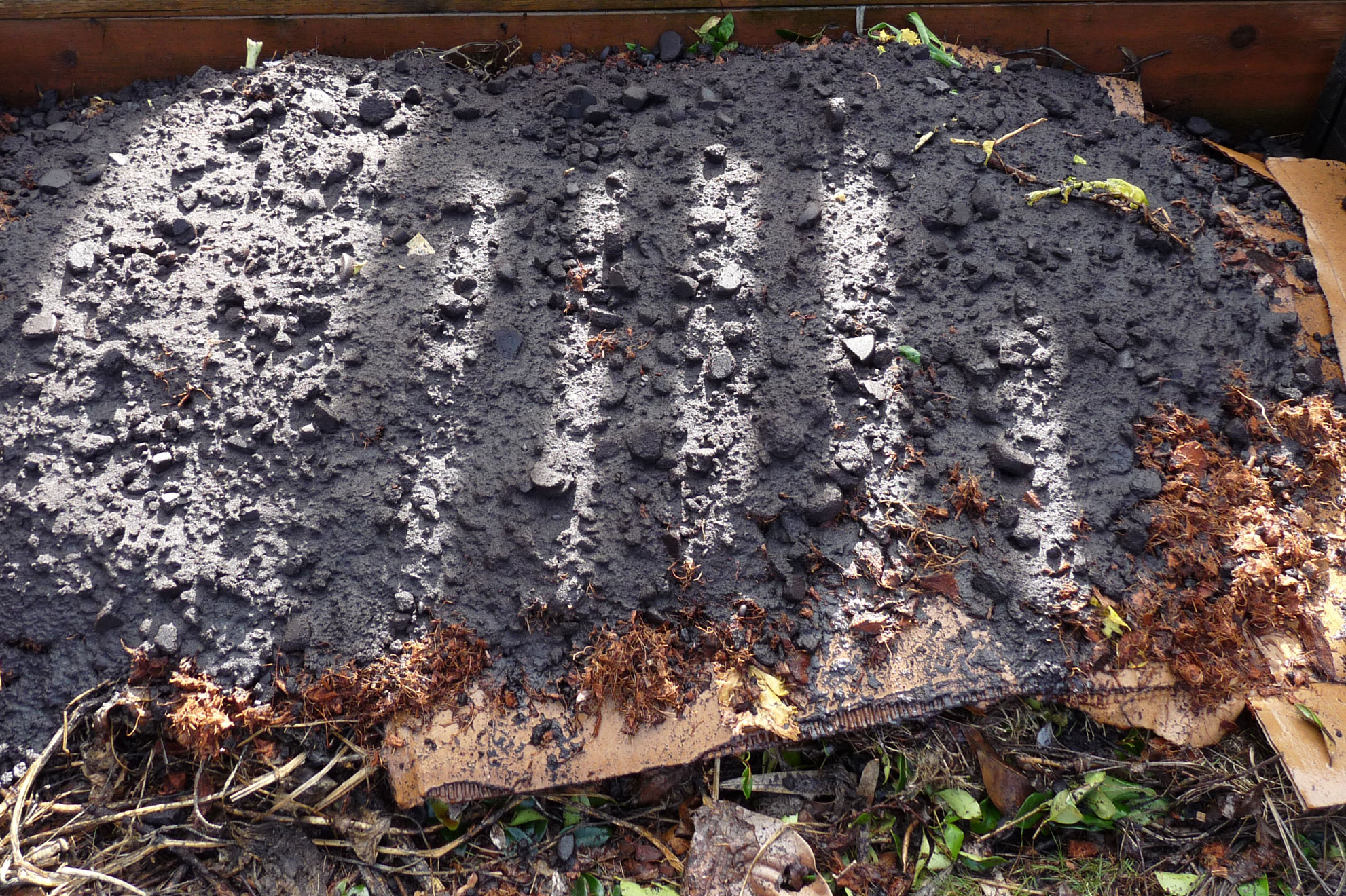
 Isn’t that beautiful? That’s what’s leftover after you get your morning Trenta latte. And now it’s all mine. Of course, I added a few things to the recipe. I started with a layer of sticks and stalks and brush bits that were laying around the yard. I topped that with pulled weeds, spent cole crop leaves and any soil leftover in flats that had been transplanted. Then a layer of cardboard saved from online holiday shopping. I topped it all off with a block of coir someone was throwing out and half a dozen bags of spent coffee grounds. Stir. Wait three months. Serve. Though halfway through I have been known to toss some good potting soil on top of the pile and plant into it ‘half baked’. Wouldn’t be the only thing around here…
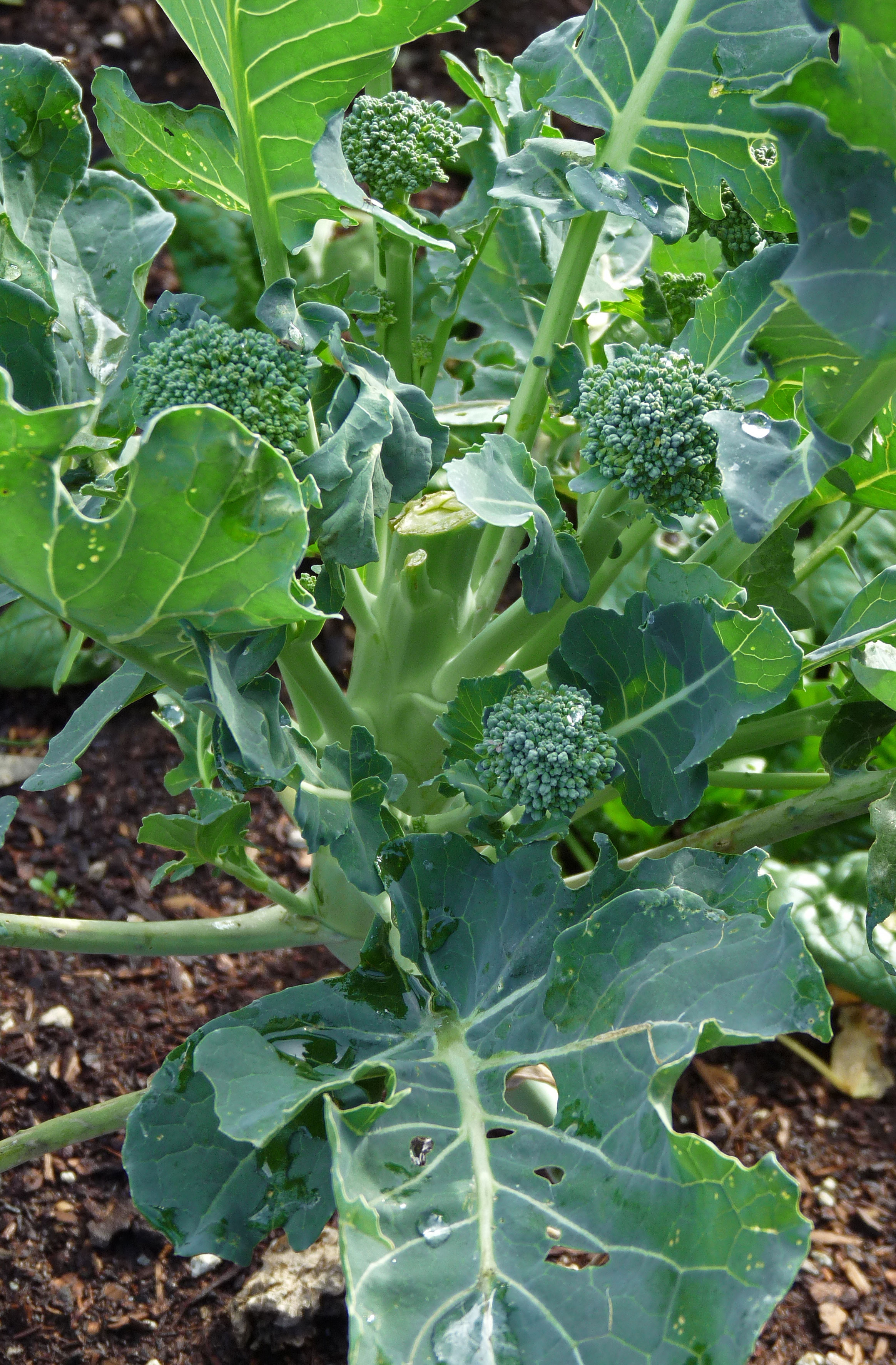
 I was surrounded with beauty in the garden today. Just look at this. Is it a broccoli or a cauliflower? I have no idea. It’s called ‘Romanesco’ Broccoli but all I know is it’s fascinating to watch the heads develop. It’s actually a spiral made up of other individual spirals. Think of the math lessons we could cook up with these things. And, broccoli in name or not, when it does cook up, it does so much more like a cauliflower. It has a very mild taste but holds it’s fun shape fairly well post stir-fry.
I planted the Romanesco within a week of the other broccoli starts in the same beds which have long since developed their central heads. So plan on it taking some extra time. Perfect for the family food garden.
 Of course, the other varieties of broccoli aren’t done. Most of them are just getting to the best part. In many varieties of broccoli, once the plant has produced a central head, which is then removed, it spends it’s energy pumping out lots of delicious side shoots. These perfect side shoots are slated to meet browned butter, garlic and Mizithra cheese right around dinner time tonight. Any shoots that get past the tightly formed stage before I catch them go into salads. Over last winter our fall-planted broccoli kept us in side shoots well into spring.
This year I think it’s going to be arugula that will be the plant that keeps on giving. Though it does eventually go to seed and stop producing edible leaves, it suddenly seems to be everywhere. It’s planted with the onions. It’s planted with the cabbages. It’s coming up in the old bean bed. It’s holding it’s own next to the ‘Purple Osaka’ mustard that is also going to seed for saving. I wonder if I can make pesto out of arugula.
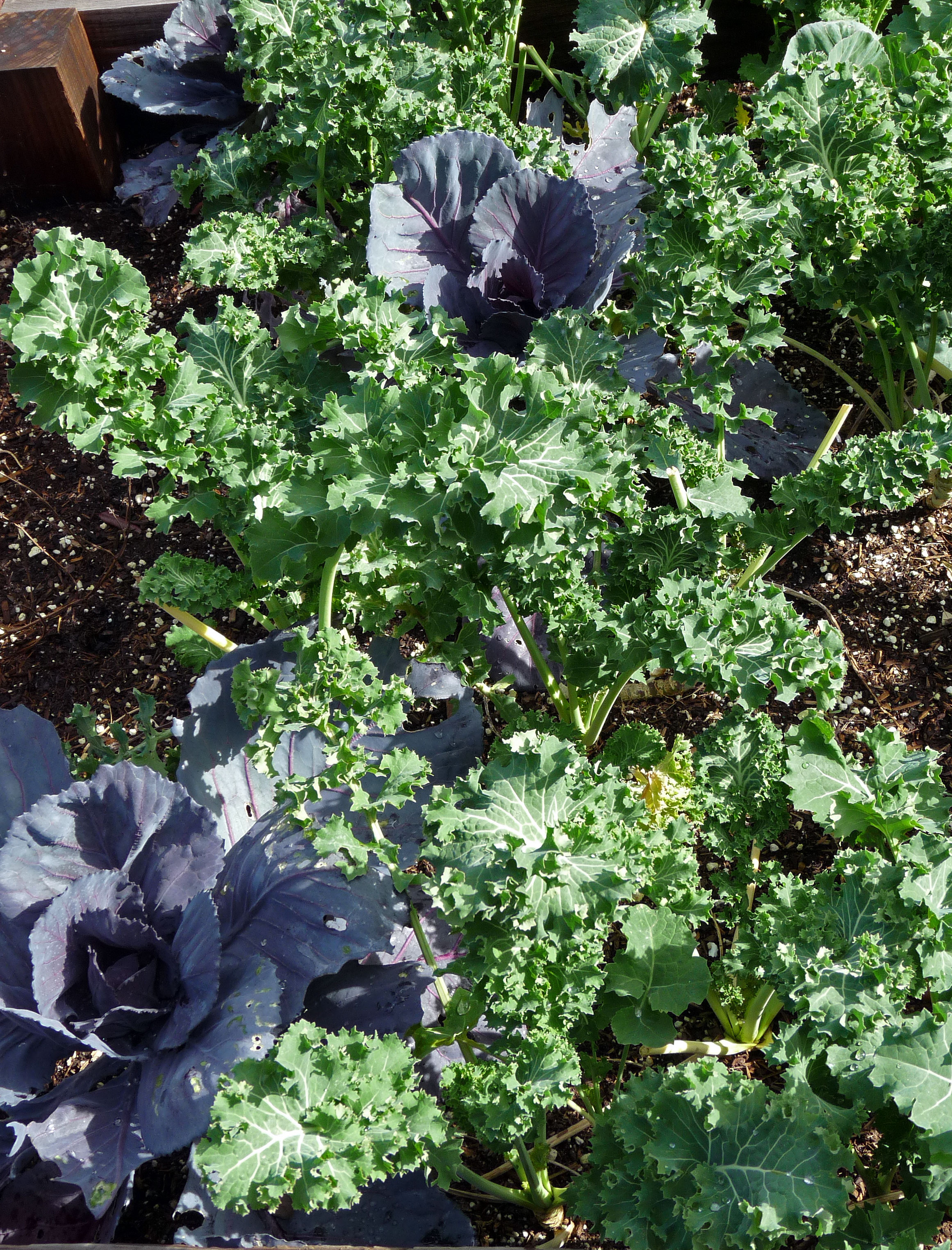
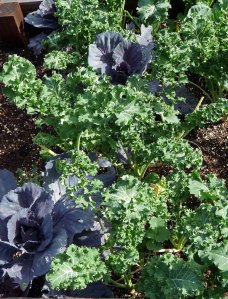 Another thing I need to start cooking more of is cabbage. Though I hate to pull these up, I do have a good recipe for borscht I’ve been meaning to try. I just love the way the deep purple leaves look with the ‘Dwarf Siberian Kale’. Not that they are probably good companion plants. They are both in the same family and have essentially the same growing requirements. I haven’t noticed any ill effects from growing them together. Certainly the kale is happy enough. But slugs will slime across hot cement to get to my red cabbages. I set out a bowl of beer under a patch of cabbages I was trying to save and I swore I could hear slugs laughing at me the next morning. They had ignored the beer completely and eaten the red cabbage leaves down to the leaf spines they left sticking out like bare bones. Remind me whether or not Sluggo is organic.
I may try The Melon Trick, since my husband is eating frighteningly out of season cantaloupe lately. You’re supposed to take a melon rind and lay it dome side up near the slug buffet. If they actually prefer it to my spinach and red cabbage, they should climb into the melon rind during the night and in the morning I can scoop the whole thing up and out of my vegetable patch. My worms certainly love cantaloupe rinds. I’ll let you know how it goes.
 Or maybe I just need to plant more carrots. These cabbages aren’t totally unblemished, but they have minimal slug damage, especially compared to the red varieties we tried. These are ‘Stonehead’ cabbages grown with ‘Amarillo Yellow’ carrots on one side and ‘Danvers 126 Half-Long’ on the other. They all seem very happy together. The carrots are even starting to size up enough to give us slender ‘baby’ carrots for salad when I thin the patch.
Maybe the red cabbages are just more delicious to slugs? Maybe carrots are hard to slime your way over in order to get to the cabbages? The next thing to test is the amount of slug damage to a patch of red cabbages planted with these same kinds of carrots. Sounds like a great project for next fall.
 I just calculated that we have 1,038 square feet under cultivation in the Dirt to Dinner garden, give or take the odd shaped growing bed here or there. Now, how do I divide that up to see how much of what we have room to grow this year? And how much seed do I start to grow that many square feet of a crop?
 So, how many peas do we want to eat over that six weeks? Sugar Daddy peas are really best eaten straight off the vine, but a light steaming and some butter work too. I don’t intend to can or freeze them, so we only need to calculate what we actually want to eat fresh. My notes from 2009 look like we grazed over at least four square feet of pea vines to get a family ‘serving’ for a day. In good weather, three or four days later, there were enough new peas to pick those same plants again. So, each four square feet of snap peas could give us two ‘servings’ a week. If we’d like twice that I better put in eight square feet of snap peas, maybe ten to allow for slug damage would be safer. Add to that a couple square feet of snow peas and another four square feet of Alderman shelling peas and we’re up to sixteen square feet of peas.
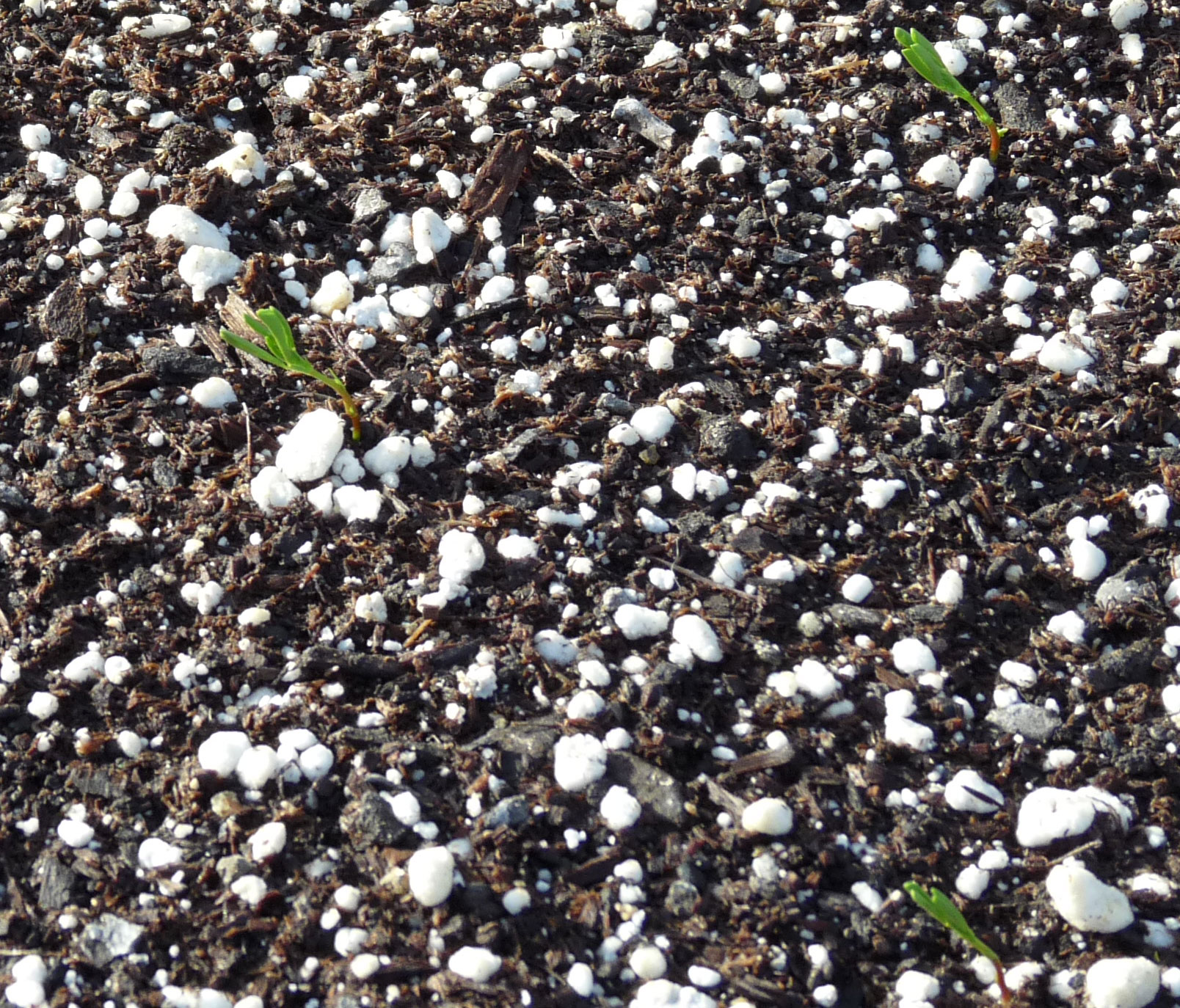
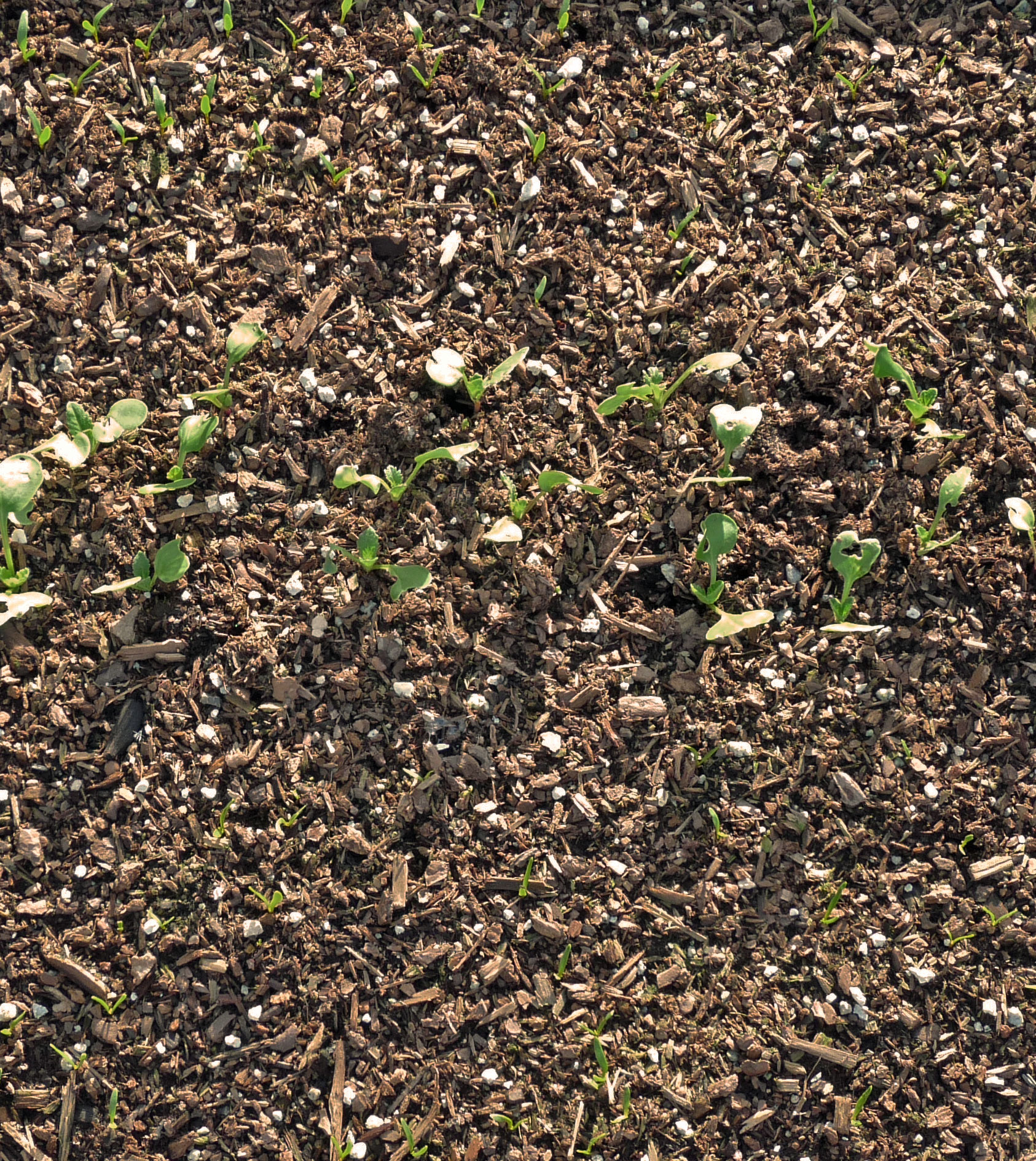
 On December 14th we seeded half a flat of ‘Guntmadingen’ Spinach in
  Back at the spinach transplanting…





 I plan to include spinach, mostly the
 From Dirt to Dinner