Leeks, Sweet Potatoes and When is Spring?

1 Comment

I started some sweet potatoes in Ball jars on the window sill to grow slips for planting later this spring. I used three sweet potatoes from the cupboard but I can’t tell you which varieties they are yet. I don’t imagine there are very many varieties in local commercial production so it should be easy to narrow down. I’ll ask around and see what I can figure out.

I also quickly started some leek seeds for the Dirt to Dinner kids to plant now that I have finally grasped the difference between summer leeks and winter leeks. I am using Sherwood Leeks from last year’s Seeds of Change seed donation for the summer planting. I hope they sprout. They were packed for 2007 so I planted about a third more seed than I actually wanted in case germination is spotty. I’ve read that onion seeds don’t keep well and these have been through less than ideal storage conditions since they arrived.

The big news here is that the Principe Borghese tomato seeds I planted on Christmas are sprouting! When I saw the first sprout I popped one of the few remaining dried tomatoes from last year’s crop into my mouth just so I could taste them again. I can already hear the dehydrator whirring. ;-)

The Cincinnati Market radishes are also sprouting nicely in a sheltered bed in the garden. I grew up in Cincinnati, so as soon as I saw them in the Seed Savers Exchange catalog I knew I had to grow them. I hope they taste good. I guess I can always pickle them if we don’t like them raw in salads. I would probably devour small disks of cardboard if they were pickled well.

Today was also the day for the first of the All Red and Red Gold potatoes to start heading into the soil. I think the problem with last year’s All Blue crop was that the plants didn’t have enough room. We only gave them roughly a square foot each because we were using a deep bed for planting. But this spacing produced lots of very small blue potatoes, which tells me the plants were too crowded horizontally in spite of the extra space we gave them along the vertical.

The reds are getting three square feet a piece–eventually. Right now there are Sugar Daddy snap peas planted in between the potato rows. Hopefully this won’t crowd them. The peas should be grown and out of the way by the time the potato plants need the space and the soil hilling gets deeper. Well, that’s the idea anyway.
Pea Trials Year 2

Leave a comment
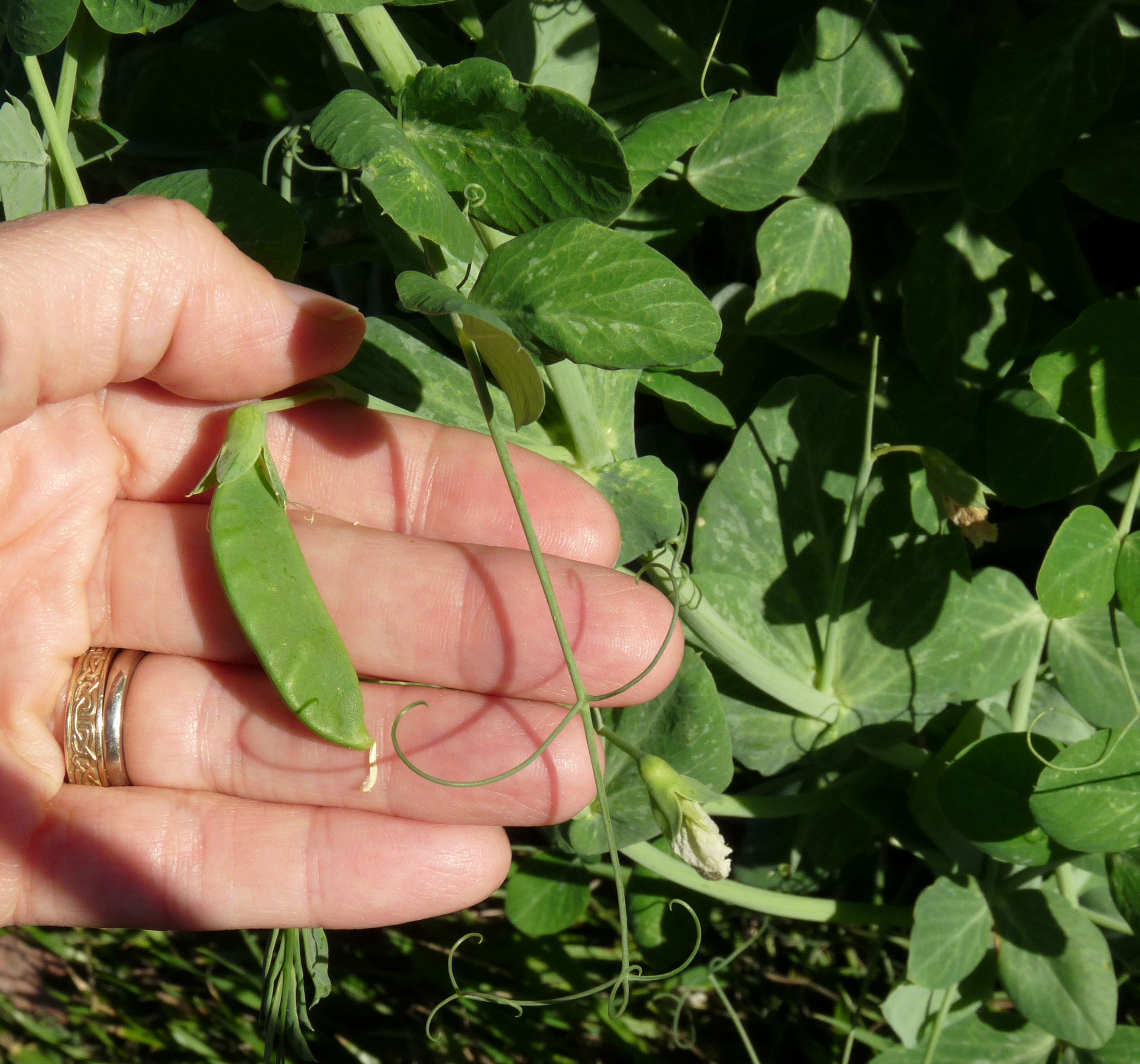
Pea pod in hand

Fall Wando Success

This year, rather than start the Pea Trial in January, I decided it might be worth while to try growing different varieties right through the winter. I started with a shelling pea that I always see mentioned along with it’s resistance to heat, Wando, and planted it on August 13th. I figured it had the best chance with our fall weather. Maybe it was just luck, but we have been eating peas in the garden from this small test patch since October right into December. Frost got some of them, but the plant has put out new flowers and started over.

In mid-September some of the Dirt to Dinner kids and I planted two more test patches of peas. One side is Cascadia snap peas and the other is Oregon Sugar Pod snow peas. Pea plantingThese have also survived the three or four frost days and the winter winds. If it gets too cold though, the pods on the vine are ruined. But we pick them off and toss them into the compost and the plant puts out more flowers. I put in a test patch of Thomas Laxton peas on October 31st but as soon as I thought it was safe to take the burlap off of them (11/15) the patch was decimated by whatever evil critter out there chews the leaves off all the sprouting vines. I have to remember that in the Dirt to Dinner garden peas planted directly in the soil need protection until they are well established.

We also have another small patch of Petit Pois peas put in on November 12th with starts from Yamagami’s in Cupertino.

These diminutive peas are authentic French petit pois and are ever so sweet, ready to use at miniature size, when the slim pods are just 3” to 4” long. Each pod contains six or seven tiny peas, less than half the size of regular shelling peas. Their buttery flavor and tenderness cannot be matched! Plentifully produces petit pois on disease-resistant, 18” to 24” vines. These small, delicate vines need support.

Block planted Petit Pois

Petit Pois Perfect

The plants are still pretty petite right now at the end of December. I haven’t seen any flowers develop but they are shaded by a massive tomato plant I was trying to winter over. Not sure that experiment is going to be worth the space or potential shade cast though. The tomato is a very unhappy grey-green right now that does not bode well. Maybe I will cut it back to whatever looks healthy and green and give the poor peas some more sunlight. I’ll check their color more closely when the rain lets up.

On Christmas, which was a gorgeous gardening day here, I put in about 50 Sugar Daddy snap pea seeds, under covers and started another 30 in the garage as back-up just in case those get destroyed. In January I plan to do some of the Italian pea varieties we liked from the trial last year and I swear there is a packet of Laxton’s Progress peas around here somewhere that are waiting to be planted. If only I could remember what I did with them!

Frozen Veggies Anyone?

Leave a comment

Frost on the Vegetable GardenLast night we experienced a record low in the Dirt to Dinner garden and this morning we woke up to lots of frost on the vegetables. I’m very curious to see how our winter vegetables respond. Many of the varieties we have growing are either ‘frost tolerant’ or ‘frost hardy’ and I bet you last night will tell us which ones are which! It’s also officially time to put all the ‘tender’ plants into the compost pile except for the one tomato we are keeping under row cover and anything we want to try growing under glass for our winter experiments. I just picked some really nice snow peas yesterday, maybe this morning I can find some frost peas to go with them. ;-)

Dark Days Dirt to Dinner Hunter’s Stew

1 Comment

Everything But the Huntee

For some reason the holidays and all the local eating have brought out a craving for Hunter’s Stew. I originally intended to do it with venison, but had a hard time finding the cuts that I wanted and the buffalo I was offered instead admittedly looked fabulous. It may have come from just outside the 100 mile radius we’re shooting for, but the duck and the rabbit were both local, as were all the vegetables.

The stew started with Dirt to Dinner garden-grown onions, carrots, potatoes and pumpkin, seasoned with thyme, rosemary and parsley, also out of the yard. I planned to add in the shallots we grew, but forgot and used garlic instead. I would have happily added parsnips or celery, but neither of them are ready yet. The peas you see in the picture never made it into the kitchen. They were delicious straight out of the pods.

Garden Snack

The stew will be served with a turnip-rutabaga mash to soak up the delicious broth. It has eight hours in the crock pot to go, but I’m not sure I’m going to make it that long. I was worried that the duck would give the stew a greasy feel to it, so I only added the browned duck legs and it is smelling just right.

The Thankful Garden

Leave a comment

Rutabaga

I’m amazed at all the things still going strong in the Dirt to Dinner garden at this time of year. In the Midwest, where I grew up, all I had in my garden in late November was frost.

If you’d like to see all the ingredients we have available this year for a Thanksgiving feast, I made a VoiceThread to share them with you.

If you just want the short-list of what is growing, it goes something like this: Ancho peppers, artichokes, arugula, asparagus, basil, beans, beets, broccoli, carrots, cabbage, cauliflower, chard, chives, chicory, collards, ginger, gourds, Hungarian peppers, kale, Komatsu, luffa, mustard, onions, parsley, parsnips, potatoes, radishes, rutabagas, tomatoes, turnips, sage, shelling peas, snap peas, snow peas, spinach, strawberries and a lone watermelon.