Melons by the Moon

Leave a comment
Melon varieties

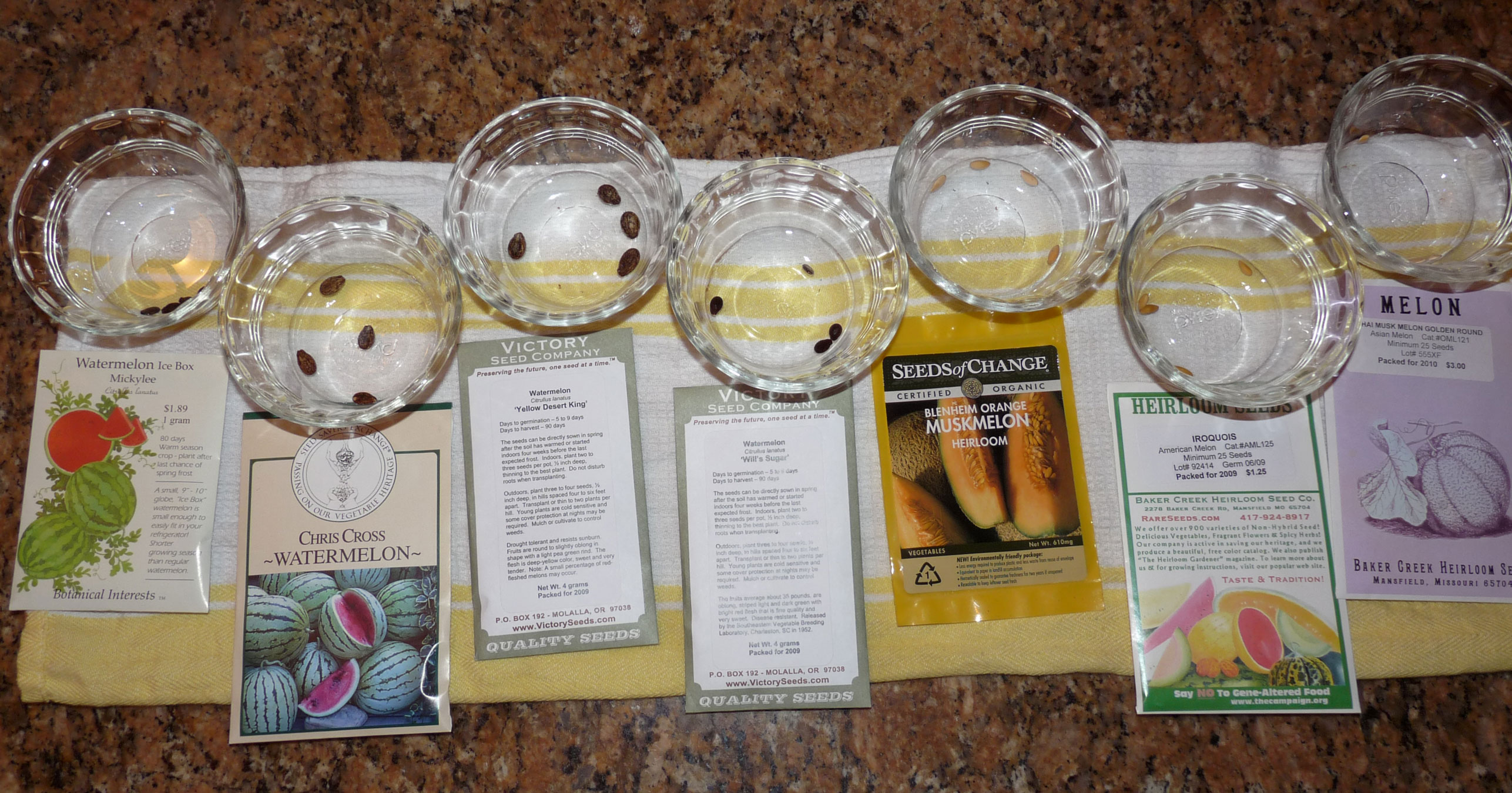
Seven Select Melons

The Old Farmer’s Almanac includes this weekend on the list of “Moon-favorable” dates to plant melons, which is a good enough excuse for me. Though I did check the soil temperature in the beds slated for the melons. Several hours after the sun was off the beds the temperature still held at over 65 degrees. Frank Tozer, in the Vegetable Growers Handbook, says we can expect germination in about 8 days at that temperature, though 70-90 degrees would be optimal. I’m soaking the seeds overnight to help improve germination. I figure with that, some good compost and all the moon power, we ought to be set.

This year’s melon trials will include ‘Will’s Sugar‘ and ‘Yellow Desert King‘, both donated by the Victory Seed Company, ‘Cris Cross‘ from Seed Savers, ‘Mickylee‘, an ice box watermelon sent to us by Botanical Interests which sounded perfect for our trellising, a ‘Blenheim Orange‘ heirloom muskmelon Seeds of Change sent us last year, ‘Iroquois‘ and Thai Melon ‘Golden Round‘ both donated by Baker Creek Heirloom Seeds.

Trellised Watermelon

2009 'Rainbow Sherbet' Icebox Watermelon

Melons need hot weather to be sweet and delicious, hotter than what we usually have in Northern California. Our average high temperature here even in July and August is only 84 degrees. But we were able to produce a dozen or more ice box style watermelons last year with excellent flavor which the kids really enjoyed. My sister is trying half of these same varieties in her garden in Union, Kentucky. Her latitude is pretty much the same as ours and her July average temperature is only two degrees hotter than ours, but the humidity there may affect the melon production. Or is it only humans who feel like it’s hotter when it’s humid out?

I don’t know how much the phase of the moon matters to the melon seeds–there seems to be some actual science on it, but not much in the way of conclusions. But I do know that melons like compost, so we’ll be digging in a 2″-3″ layer of compost mixed with our own earthworm castings where the melons will be growing. And, just in case it really is too early to be planting melon seeds outside, I think I will start half the seeds from each variety indoors, just in case. We also plan to start another group of these same seeds at the end of April so that we can compare the plantings.

3/26/2010 Update

‘Iroquois’  melons planted indoors, in the comfort and splendor of a heating mat and overhead lighting, started sprouting yesterday. Looks like we will have a few more of the indoor varieties up tomorrow. No sign of any of the outdoor seeds yet.

Growing the Perfect Pickle

1 Comment
cucumbers

A & C Pickling Cucumber

An important part of the perfect pickle, the crunch, is impossible to recreate unless you have fresh pickling cucumbers on hand and pickle them at peak freshness. Or so I have been told. My family’s pickling tradition consists of my mother doing whatever was printed in The Joy of Cooking and turning out a jar or two of kosher dills if the mood struck her and the cucumber harvest was cooperative that year.

In Dirt to Dinner, we like to teach the kids as much as possible about their food, where it comes from, how to grow it, what it’s history is, and how to preserve it for later. So today we started four different varieties of pickling cucumbers in the raised beds in the back garden, where the soil is well warmed. ‘Bushy Cucumber’, from Seed Savers Exchange, a variety from southern Russia where it is recommended for your dacha garden because it grows a compact “bushy” plant. ‘Double Yield Cucumber’, a variety from 1924, that we ate fresh last year. ‘A & C Pickling Cucumber’, also from Seed Savers Exchange, a variety introduced in 1928, that says it produces very uniform fruit but shows some healthy diversity in the photo. And ‘The Pickle of Paris’ or ‘Cetriolino Piccolo di Parigi’ which I hope will produce small gherkins for pickling, but we’re not totally sure of, because all the printing on the packaging is in Italian.

Lemon Cucumbers

There were also some slicing cucumbers that we couldn’t do without. We started a few seeds for some of the good old ‘Straight Eight‘ cucumbers that have been favorites here for the last few years. We also planted heirloom ‘Lemon‘ cucumbers, donated by Botanical Interest. These plants grew very slowly last year but the fruits were delicious when they finally came. That should probably be a lesson to us not to start them so early in the year, but here we go again, planting them in March. Maybe in a few weeks I will start a few plants from these seeds inside so we can do a comparison of the harvests. We also started ‘Armenian‘ cucumbers from seed donated by Territorial Seed Company. We had a variety of Armenian cucumbers last year that did well and were delicious. In fact, these are my personal favorites for quick-pickling with salt, vinegar and herbs, or for dipping in hummus. They were grown in a very protected spot last year and did well. I’ll be looking for another sheltered corner for them for this season.

This summer we plan to try the Pick-a-Vegetable Dill Pickle recipe from the Complete Book of Home Preserving and these Garlic Dills from Food in Jars.

3/26/2010 Update

Our first direct-seeded cucumbers sprouted today, the ‘Bushy‘ variety from Seed Savers. The slicing cucumbers all started in pots are starting to poke up their heads today as well, ‘Lemon‘, ‘Armenian‘, and ‘Straight Eight‘s which were first and look strongest out of the gate.

Dark Days Dining – Passing the Husband Test

2 Comments

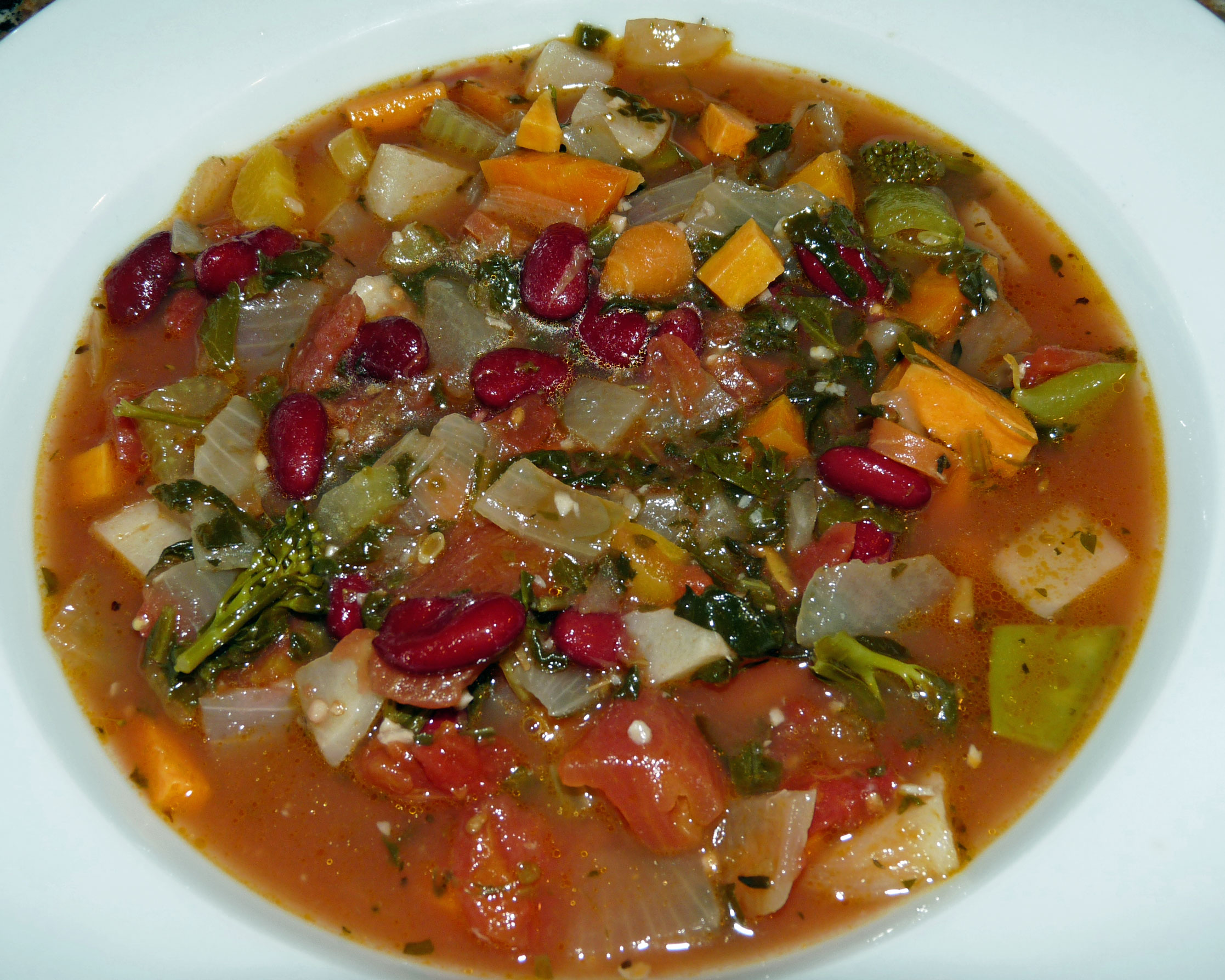
My husband has declared my most recent creation straight out of the garden to be, “The perfect vegetable soup.” (You can see why I keep him around.) But the secret was actually a little trick I borrowed from his mother.

Vegetable Soup

The "Perfect" Vegetable Soup

I took my harvesting basket and a knife into the garden to see what I could find. We have dozens of broccoli shoots on plants I would have pulled out after the first head if the folks at Full Circle Farm hadn’t taught us better during our volunteer work day this winter. There’s also a nice crop of snap peas and snow peas–if you happen to find a time to pick them when the kids aren’t in the garden. ;-) I found beets, rutabagas, turnips and three or four different kinds of carrots. I am especially partial to the yellow ones in my winter cooking. They are a bright spot in the bowl that is surprisingly cheering this time of year. I also found plenty of oregano, thyme, chives, parsley and rosemary. And celery loves the wet weather we’ve been having.

I started with the traditional olive oil, carrots, onions and celery in the big stock pot and added in the rest of the root vegetables as I chopped. I also had some potatoes that needed to be used and I tossed in some sweet potato, trying not to waste that either. When the vegetables started to soften, I added in some chopped garlic. A few minutes later, I added two cups of chopped tomatoes, with the juice, half a cup of cooked kidney beans, the herbs, salt, pepper and four cups of chicken stock.

I let that simmer for half an hour while I cleaned and prepped the peas, broccoli and greens. Some of my broccoli plants are perfectly clean and healthy, but some of the flowerettes I have been picking are over-run with aphids, requiring a good wash and even a quick soak in salt water to clean them. I need to get out there with some soap and then go buy the kids a tub or two of ladybugs. ;-)

After the flavors had settled a bit, I brought the soup to a low boil and added in the rest of the vegetables and covered the pot for two minutes. But it still tasted too tomato-y. It was a bit harsh like Summer Sauce when you haven’t cooked it down yet. This is where my mother-in-law comes in. I consult with her on all culinary mysteries. She told me to slowly add some more herbs and red wine, tasting in between each addition until the soup was more balanced. Well, certainly never noticed *that* on the back of a Campbell’s label. I had a nice Cabernet in the cupboard that served well.  Three pours and some oregano later, I rested the soup overnight in the refrigerator.

And then I fed it to my husband. The same husband who, when presented with my recent homemade creamed chicory, burst out with, “That is truly awful!” Luckily the vegetable soup went over better. He liked it, Hey Mikey!

Frozen Veggies Anyone?

Leave a comment

Frost on the Vegetable GardenLast night we experienced a record low in the Dirt to Dinner garden and this morning we woke up to lots of frost on the vegetables. I’m very curious to see how our winter vegetables respond. Many of the varieties we have growing are either ‘frost tolerant’ or ‘frost hardy’ and I bet you last night will tell us which ones are which! It’s also officially time to put all the ‘tender’ plants into the compost pile except for the one tomato we are keeping under row cover and anything we want to try growing under glass for our winter experiments. I just picked some really nice snow peas yesterday, maybe this morning I can find some frost peas to go with them. ;-)

Dark Days Dirt to Dinner Hunter’s Stew

1 Comment

Everything But the Huntee

For some reason the holidays and all the local eating have brought out a craving for Hunter’s Stew. I originally intended to do it with venison, but had a hard time finding the cuts that I wanted and the buffalo I was offered instead admittedly looked fabulous. It may have come from just outside the 100 mile radius we’re shooting for, but the duck and the rabbit were both local, as were all the vegetables.

The stew started with Dirt to Dinner garden-grown onions, carrots, potatoes and pumpkin, seasoned with thyme, rosemary and parsley, also out of the yard. I planned to add in the shallots we grew, but forgot and used garlic instead. I would have happily added parsnips or celery, but neither of them are ready yet. The peas you see in the picture never made it into the kitchen. They were delicious straight out of the pods.

Garden Snack

The stew will be served with a turnip-rutabaga mash to soak up the delicious broth. It has eight hours in the crock pot to go, but I’m not sure I’m going to make it that long. I was worried that the duck would give the stew a greasy feel to it, so I only added the browned duck legs and it is smelling just right.