Winter Potatoes

Leave a comment
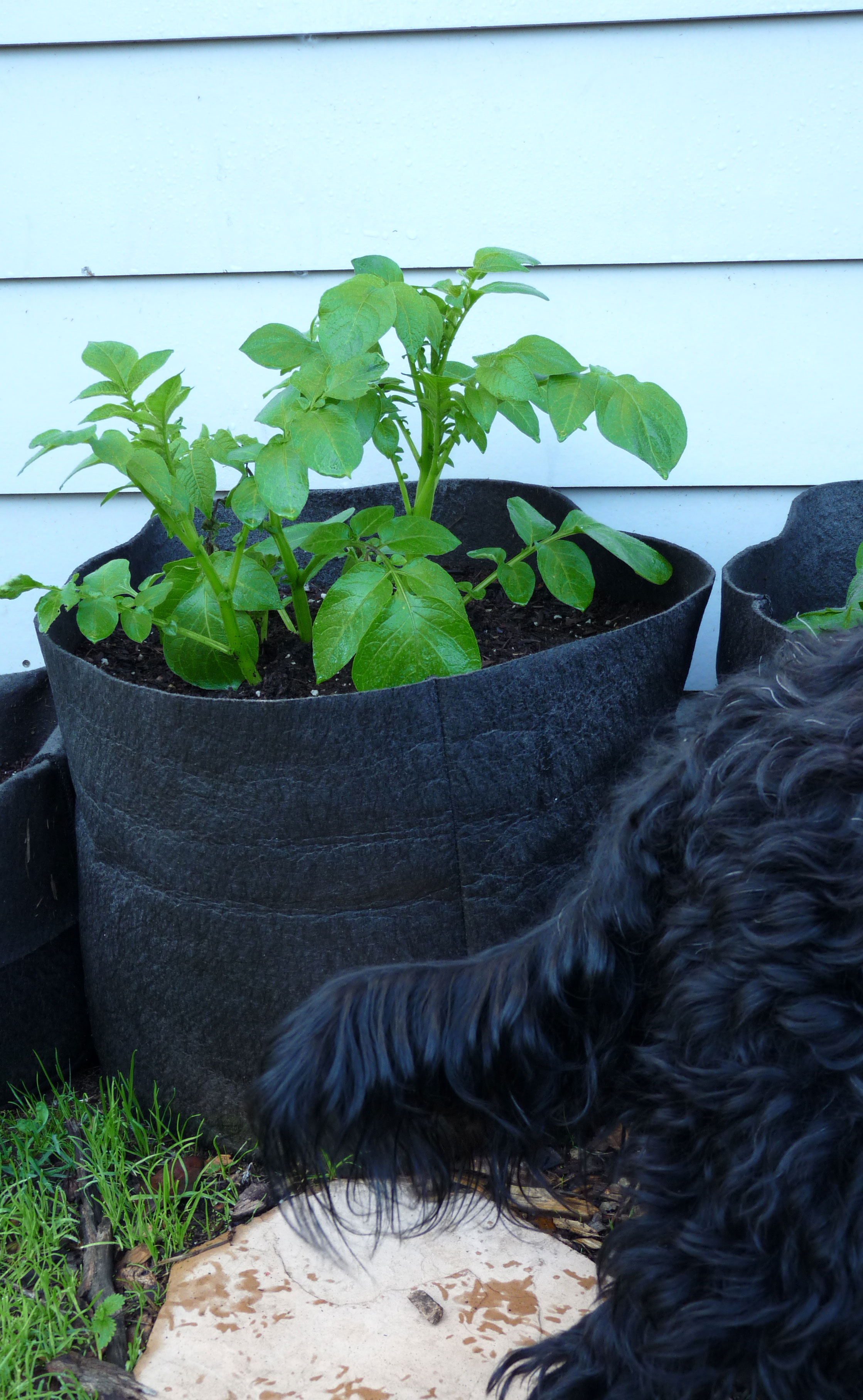
Potatoes in Grow Bag

Tail End of Potato Season

I’m growing potatoes through the winter as an experiment. They don’t look too bad in the bags in the back garden. Though the planting in the front garden got hit by a little frost and was looking pretty ragged before it hit me that I should just hill them deeper and protect them with soil until it warms a bit.

I think if I timed it right, I could have potatoes growing year round. It’s only December and January that are tricky. If I had them ready for the plants to start dying back by December anyway, the potatoes in the ground would be safe here. The ground doesn’t freeze even if we do get a little frost. Then I could get new seed potatoes in the ground in January and could easily cover the sprouts for a few weeks after they were up to keep the frost off, letting them grow up after Valentine’s Day or so.

If each planting took ~100 days between seed potatoes and potato salad, I could plant January through September. Of course, it’s tough to get seed after March or so. I would need to store the seed or save my own for the April through September plantings. And some seed potatoes, though I honestly don’t know which varieties, need to rest before they will sprout, so I can’t just immediately reuse the potatoes I’d be harvesting. I’d have to set aside seed staggered three or four months before I wanted to plant it. (I’m gonna need a spreadsheet here in a minute.)
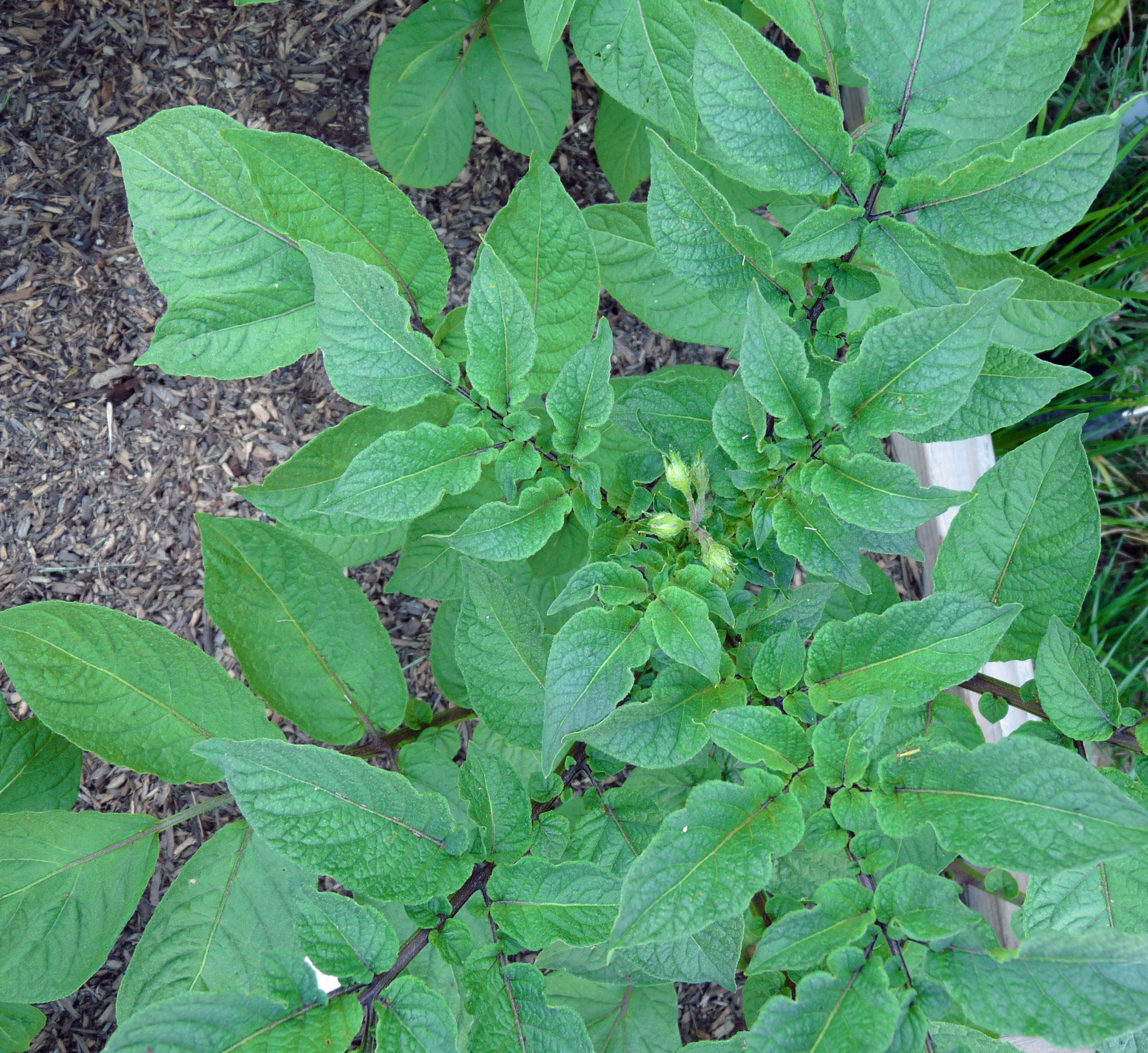
Seed Balls forming on Potato Plants

True Seed for Potatoes

I have some Desiree seed potatoes I bought for the fall planting that I haven’t used yet and they are barely starting to sprout now that it’s January. So, saving through that part of the year clearly could work. And I might try growing some potatoes from actual seed. This plant from the 2010 summer garden bloomed and formed seed balls. I know the seed may not breed true for the variety, but it could give us a variety that we like or maybe even one that would adapt to the conditions here over the years. Several gardening authors have information available on how to do those sorts of experiments. Though I can already tell from the current potatoes growing in the front garden that we’ve got at least one variety out there that has weathered the frost better than the others. Maybe it will make seeds and give us some material to start with that already shows an advantage for my year-round potato planting scheme.

January Blooms

Leave a comment
Thyme and 'Negreta' Fava Beans

Thyme for Favas

OK, fine. I broke down and grew a flower. Sure, the blooms might be technically edible, but I admit it, I am growing something in the garden that’s not for eating. Those of you who know me might suspect that it’s not actually just one flower. It’s a lot of flowers. More on that in a minute. First, these beauties, surrounded by my Extra Thyme plants, are ‘Negreta’ fava beans that are about ready to transplant into the garden. That will make three varieties of favas on the place, growing lots of biomass, holding the soil together and deflecting some of the compaction from the rains, fixing nitrogen, and making winter beans for the crock pot. And they do make really nice black and white flowers. But those aren’t the flowers I’m talking about.

Flat of Blue Borage, Rutabagas and Spinach

Baby Blue Borage

This year, for the first time, we’re growing over a dozen beneficial or “insectary” plants that are either good companions for crops we especially like, are good food for pollinators or insects we like having around the garden or do good things for the garden soil.  The first one we started, shown here on the right, is Blue Borage which is supposed to have flowers that taste like cucumbers but we’re trying it as a companion for beans, spinach, strawberries and maybe one of the tomato patches as well. It should bloom a good part of the year and we can always toss it in a salad in an emergency cucumber shortage.

We’ve also got some nice looking Calendula coming up from Seeds of Change seed I’ve been hanging onto since 2007. I had no idea it would still sprout but it looks fine so far. We’re also trying ‘Tangerine Gem’ and ‘Pesche’s Gold’ Marigolds, which are supposed to be bad for the bad nematodes, Cleome, Zinnias, Echinacea, Cosmos, Mexican Sunflowers, ‘Texas Hummingbird’ Sage and Alyssum.

Persian Cress Sprouts

Is Persian Cress like English Watercress?

And that doesn’t take into account the herbs, like my Extra Thyme, which is growing in several spots in the garden. We’re also starting Sweet Marjoram, Italian Flat-Leaf parsley, Mexican Tarragon and I’m not sure which category to put the Sesame in. I thought it would be fun to try to grow our own sesame seeds. Does that count as an herb? And does anyone know the difference between ‘Persian’ Cress and English Watercress? Are they related? That’s gardening for you. It always brings up more questions than it answers!

First Up in the 2011 Garden

Leave a comment
Asparagus Seedlings

Asparagus Sprouts

My friends at Common Ground Garden Supply may have shaken their heads at me a bit when I told them we were starting asparagus from seed.  Apparently most people get dried-out, nasty looking year-old roots, soak them in warm water for several hours to rehydrate them and somehow configure the poor, spidery things over a cone of soil, bury them over the winter and hope for the best come spring. I actually tried this! But, no luck. The year-old ‘Mary Washington‘  roots from Yamagami’s didn’t take. I lost the year I would have gained by starting with year-old roots waiting for dead roots who had no intention of sprouting into asparagus ferns. So, when I saw the heirloom ‘Precoce d’Argentuil‘ asparagus seed, I figured it couldn’t  go any worse than the roots had.

First-Year Asparagus Ferns

First-Year Asparagus Ferns

In fact, it went well, I guess. The seeds sprouted. The seedlings grew slowly but by fall they were big enough to set into their composted horse manure amended permanent bed. The stems are fairly spindly, but all asparagus ferns are like that, aren’t they? This picture was taken around Thanksgiving, just before our first frost,  so I think it’s normal that the ferns were starting to yellow. I had expected them to start dying down before then. The books say to clip the dried ferns in the fall but these young’uns were still pretty green at Thanksgiving, so I left them standing where they were.

I checked in on them on New Year’s Day, thinking it would finally be time to clip off the old ferns and clean the bed up a bit, and here’s what I found.

Winter asparagus

Eat It or Leave It?

The first year after the roots are in their permanent bed, you are supposed to take nothing. Let the spears that form grow into ferns to feed the roots. The second year after they’ve been in the ground, you can take any spears that form thicker than a pencil for something like a few weeks. This monster is as thick as a Sharpie, and year-one in the ground or not, I’m thinking about eatin’ him.

Got any recipes that call for a single asparagus spear?

My Little Seed Data-Bank

Leave a comment

In my quest to achieve new heights of garden nerdom, I have begun to compile a database of the seeds I am planning to use for 2011.   The first 122 hopefuls are listed by seed source, type, variety, year the seed was packaged for and any comments I have to add from previous years of growing them. Most of the seed is open pollinated, from small operations owned and run by actual people wherever possible. Some of the seed I purchase from a couple different sources so I can compare how each performs in the garden under our growing conditions.

Seed to Seed

I’m growing open-pollinated seeds from Bountiful Gardens and Adaptive Seeds because I like the idea that I could save seed from year to year and eventually end up with a variety that has adapted to perform better in this area in the ways that matter to us. My mother-in-law handed down some of the family fava bean seeds to me this Christmas Eve. They have been adapting to growing in our Zone 9b location for at least 35 years, and to growing in nearby Santa Cruz for several generations before that.

The United Nations Food and Agriculture Organization estimates that 75% of agricultural crop diversity was lost during the 20th century. Think about that for a minute. The climate is changing at the same time the diversity of crops we are going to need to meet the challenge of that changing climate is being lost. Farmers all over the world used to save their own seeds, seeds that adapted to the local conditions, just like my in-laws saved their favas and basil seeds. But now enormous amounts of seed diversity are being lost and huge corporations are controlling, patenting and hybridizing seed resources. 25% of the world’s seed supply is already controlled by just three agro-chemical corporations. I think they can manage without the seeds growing in my yard too.


Hybrid vs. Open-pollinated


The December Garden

Leave a comment
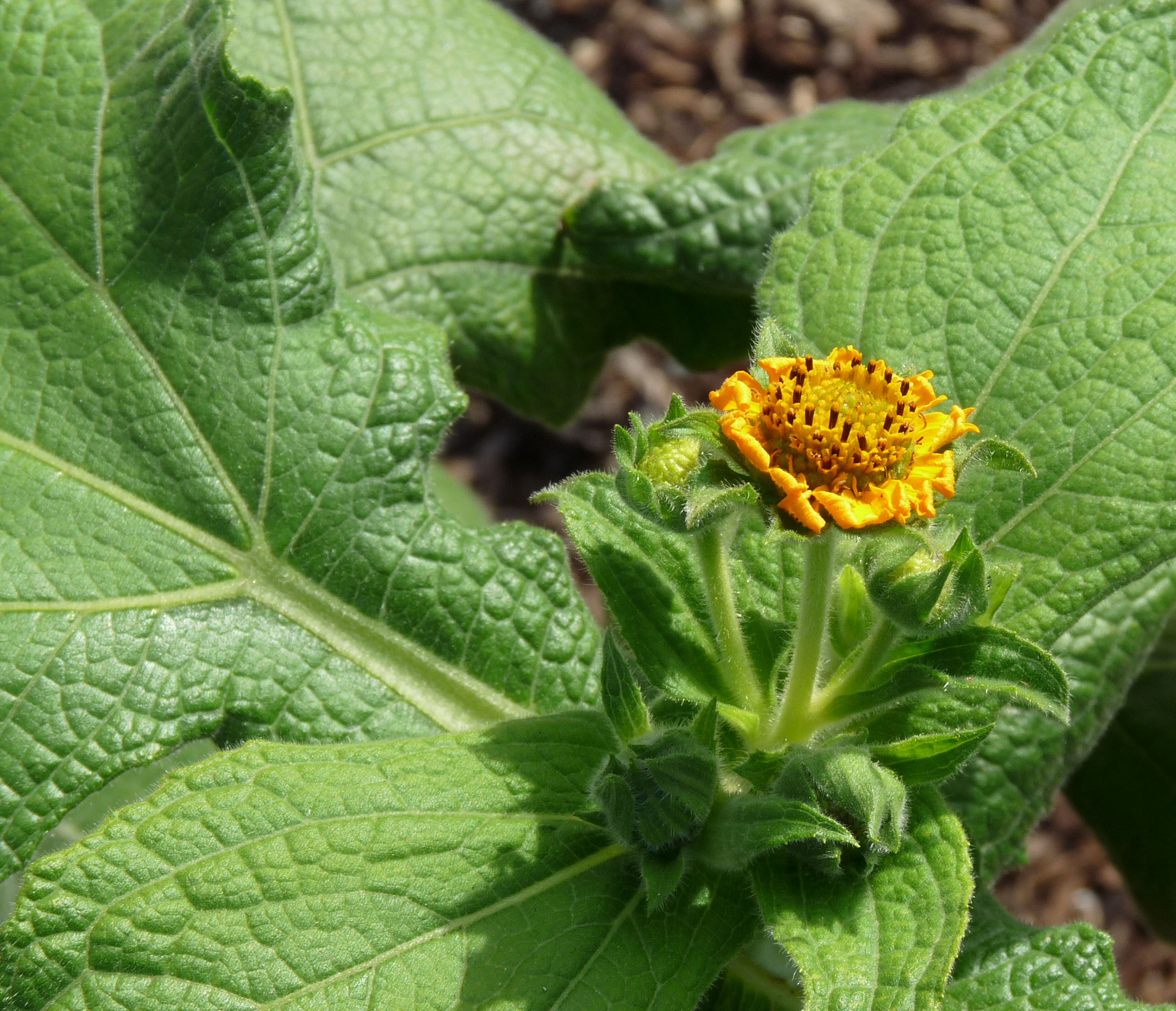
Yacon Flowers

The tasty tubers are much bigger than the bright flowers

I apologize if it sounds a little sad to say that the yacon plant’s reward for making these sweet little flowers was that we ripped it out of the ground, ate it’s tubers and cut it’s roots into five separate sections before replanting them.  I couldn’t help it. It was delicious. Yacon, also called “Bolivian Sunroot,” has a crisp, fruity tuber that ads a satisfying crunch to salads and can be prepared a number of different ways. I bought this one on a lark from Pam Peirce when she was visiting Common Ground. Now that I have tasted them, I hope to have a stand of five plants next year. They can get as tall as 6′ and should make a nice visual break between the front garden beds and the street.

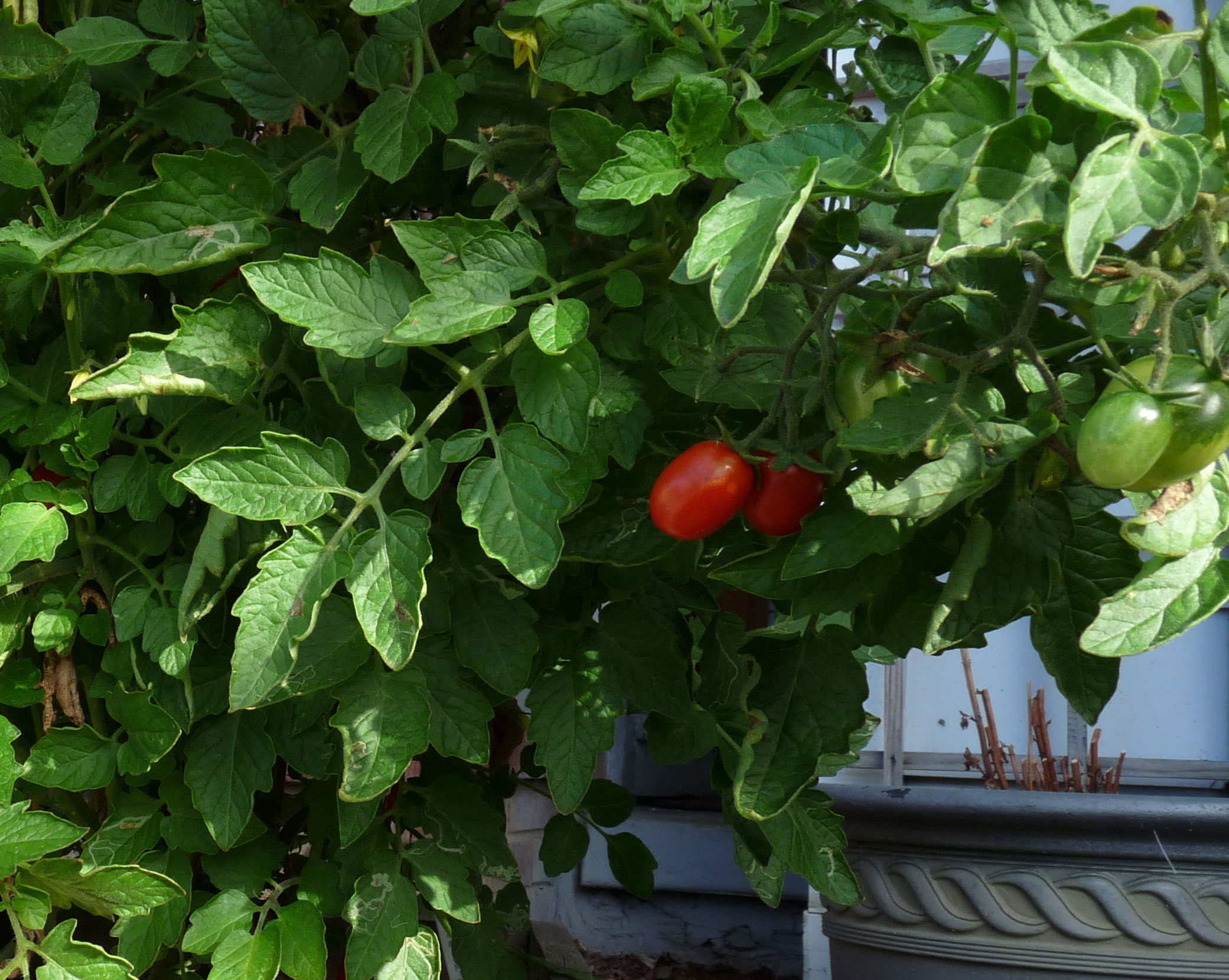
Red and green tomatoes in December

Glacier Tomatoes ripening in December

I brought in the last of the peppers, eggplant and Armenian cucumbers right after Thanksgiving. If you had to eat out of the garden right now in mid-December, you could have spinach, kale, chard, arugula, lettuce, green onions, a couple snap or snow peas, mustard greens, broccoli, cabbage (the loose leaf kinds anyway), rutabagas, turnip greens, chicory, sorrel, radishes, rosemary or thyme, and tomatoes. Seriously. I have tomato plants flowering and setting fruit, in December. I put the ‘Glacier‘ tomatoes my mother-in-law sent over in large pots, uncovered so pollinators could get to them, on the patio set against a south-facing wall. It’s a cozy spot, sure, but we had frost for days running a week or two ago. These tomato plants do not care. And who am I to argue?

Seed flat

Keep 'em coming

This week the plan is to set out transplants we have grown of more arugula, chard, kale, Osaka Purple mustard, Chinese asparagus, winter leeks and mesclun mix. And to seed new flats of rutabagas and spinach. If I get to it before the rains come back, I’m going to try a stand of Alderman shelling peas near where I put in the Green Beauty snow peas. They aren’t in a well protected spot, but last year I had both snow and snap peas grow right through the winter. Frost got some of the pods, but the plants survived and flowered again.

All the weather folks keep telling me to expect an unusually wet and cold winter, which sounds an awful lot like the summer we just had, but I’ll believe it when I see it. Yesterday it was 65 degrees. Those tomatoes were probably sweating. ;-)