Fifteen Square Feet Equals Twenty Pounds of Potatoes

2 Comments

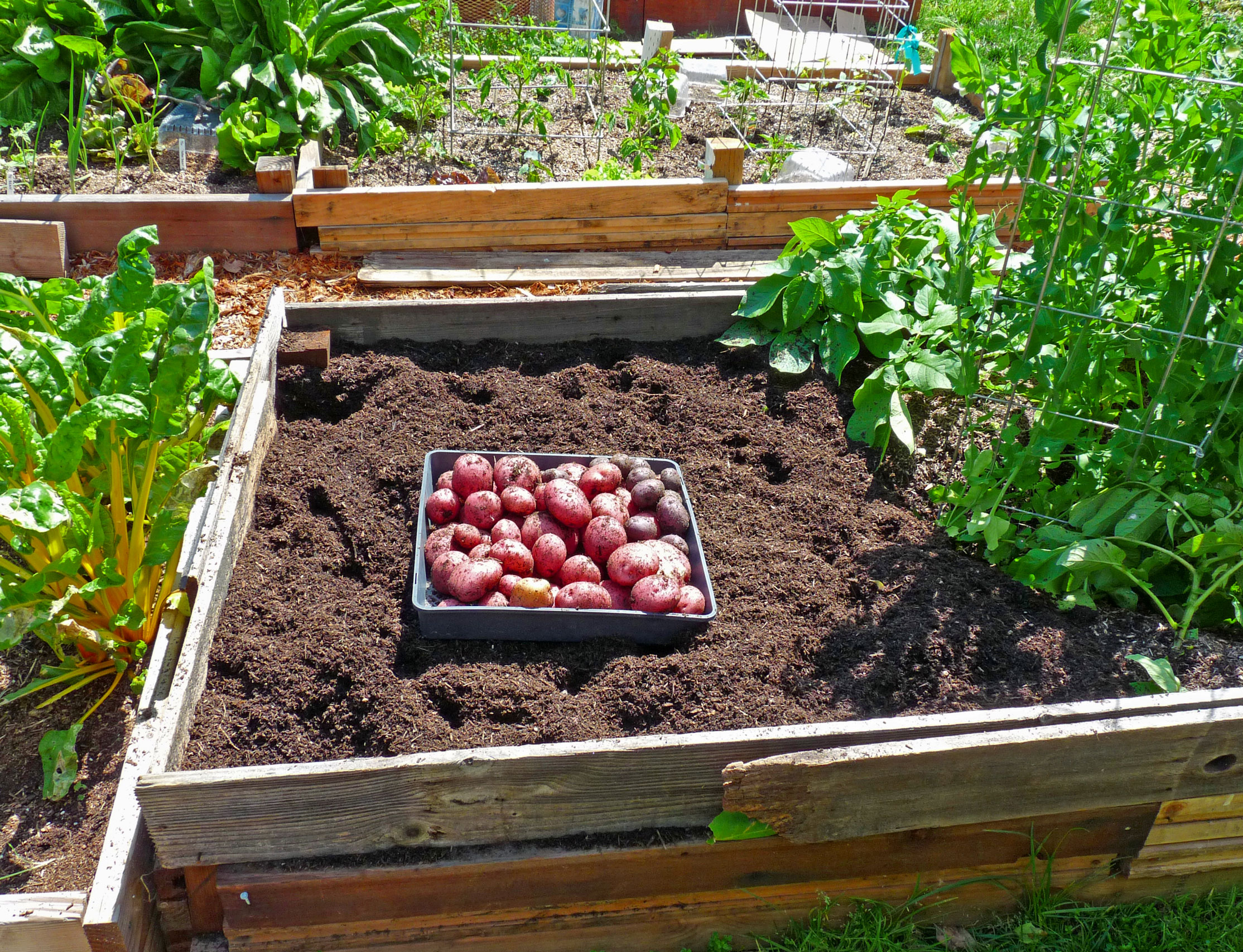
Red-skinned potatoes in the space that grew them

The Santa Clara Master Gardeners new Growing Charts list potatoes as a cool weather crop that should be planted in March or April. Which is great. I’ve got a few around here I’ve been meaning to tuck in somewhere. But, let’s just say it was November and you happened to find some red-skinned potatoes in the pantry sprouting their hearts out. And you also happened to have about 15 square-feet available in a bed that could be hilled pretty easily. Well, you couldn’t just toss the poor potatoes into the compost pile and leave that space bare ground, could you? Of course not! It’s worth a try isn’t it? And then when it was March or April, as your friends and neighbors were planting their potatoes, maybe you could be harvesting some of your own.

Potatoes and Peas

Potatoes and Peas

In other words, I planted potatoes at the exact opposite time of year that I was supposed to. I eventually tucked in some Sugar Daddy snap peas between the rows and hoped for the best.

And it was cold and wet this winter, more so than usual. And we had frost for several days in a row in January. And something chewed some of the leaves. And at the end there was a Blight panic which turned out just to be some sort of brown spots on the potato leaves from all the spring rain.

Of course, they also grew nearly 20 pounds of beautiful, delicious red-skinned potatoes. I also had one or two All Blue potatoes mixed in from seed I saved from last year. I gave the blues a lot of room because I think we got a disappointing harvest from them in 2009 because they were too crowded together.

Red-skinned potatoes“The Vegetable Growers Handbook” says that if you do things right you can expect 1 to 2 pounds of potatoes per square foot of potato plants grown. We ended up with nearly twenty pounds out of a scant fifteen or so square-feet. So I think that means the potato plants were happy and healthy enough even though they were planted to grow through the winter.

Certainly an experiment I would be happy to cook up again.

Wednesdays – Education You Can Eat

Leave a comment

Where does our food come from? How does it grow?  How does the way we grow food affect us, and the world around us? What is sustainable farming? What can we grow ourselves? How do we cook it? And, especially, how does it taste?

Education You Can Eat is a garden-centered hands-on program about food, nature, life cycles, cooking and nutrition. The program encourages participants to explore full food systems (“seed-to-table”) through both individual and group learning such as compost chemistry, bee gardening, nature journaling, botany experiments and cooking and preserving the harvest. Click here for a tour of the garden.

The program will meet on Wednesdays from 10:00-1:00 in the garden in the Santa Clara/Cupertino area starting April 28th, with a possible field trip to Full Circle Farm or Veggielution by arrangement with the group. (A June 9th Olivera Egg Ranch Tour will also be a wonderful addition to what we will be learning.)

The lead instructor for the program is Mackenzie Price, with assistance from, Joanna, a UCSC intern, and Gardener Juli. Parent participation is welcome and encouraged.

We have five spots available in the Wednesday program for kids working around the 2nd-4th grade level in Science. Please let us know by email if you would like a spot for your child. Send your message to dirt2dinner at gmail dot com.

We look forward to seeing you in the garden!

Spring Soup a la Dark Days

Leave a comment

OK, the Dark Days Challenge is over now that we’ve made our way to the Spring Equinox and beyond, but in the spirit of those inventive and inspiring cooks, I offer you my Spring Soup.

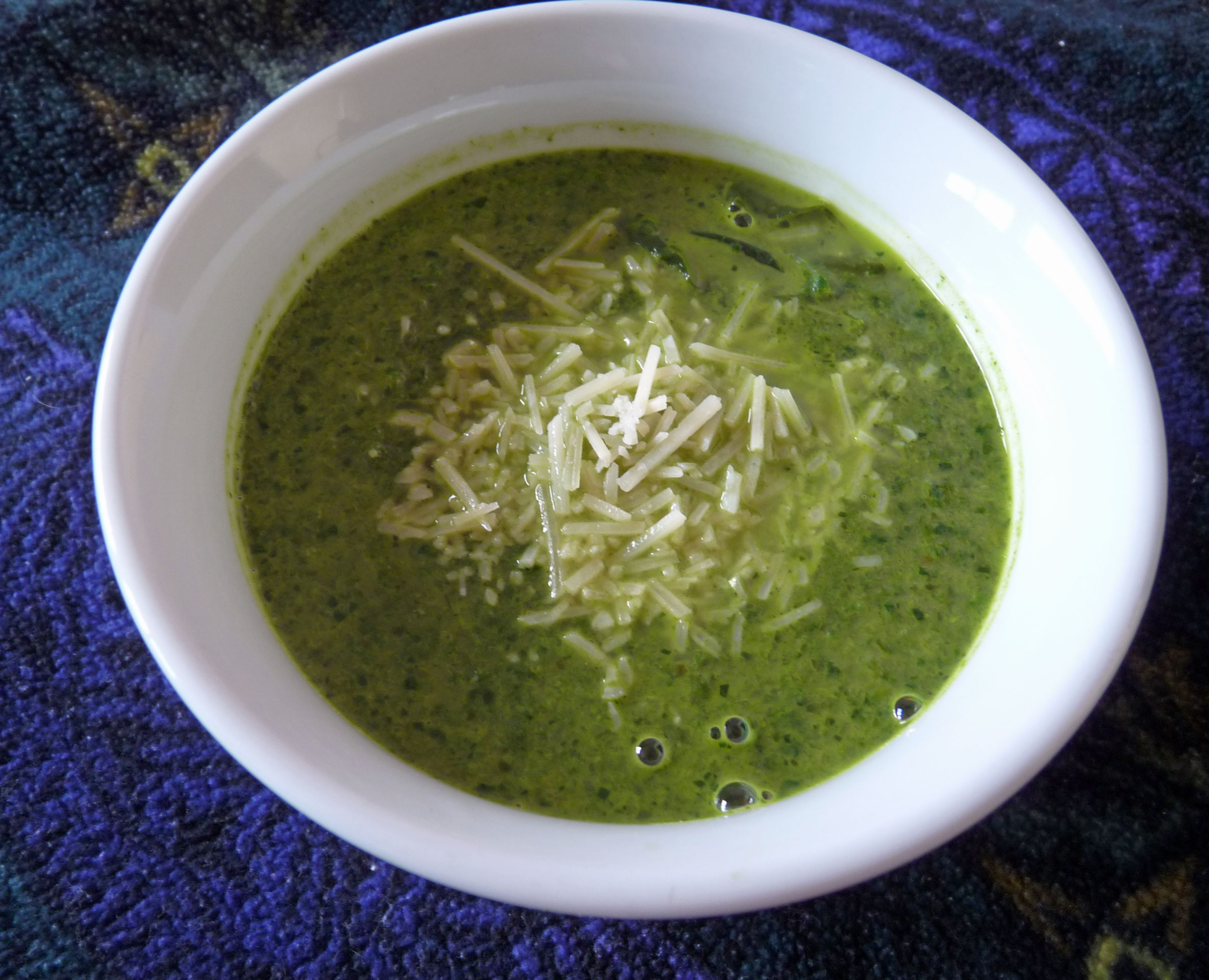
Spring in a Bowl

One of the many things I have left over from the Dark Days is a chest cold that will not give up and go away. This morning I was reading in the new issue of Clean Eating about some recent research from UCLA on the anti-inflammatory effect of Brassicas on the respiratory tract.  Kale is a Brassica and there is kale in the Dirt to Dinner garden pretty much year round. I also had some nice chicken stock waiting for a good use. A delicious and curative soup began to simmer in the back of my mind. A quick tour through the garden turned up beautifully red Cincinnati Market radishes, Yellowstone carrots, a few small Nantes carrots, celery, Italian parsley, Tokyo Market turnips, a parsnip that looked a bit worse for wear and plenty of broad-leafed kale.

I saved half of the radishes for a braise I have been waiting to try with them, chopped up the rest and sautéed them in olive oil with an onion, a tablespoon of garlic and everything but the kale. When the vegetables were tender, I added the stock, turned up the heat a bit and quickly finished cleaning and chopping the kale. As soon as the stock was at a healthy simmer, I tossed in the kale and covered the pot for three minutes while I dug out the food processor.

With the kale wilted but still a nice bright green, I turned the soup down to Low and processed batches of it in the food processor until it was a lot smoother, but still a bit chunky. If you want more of a cream of kale soup, process until smooth. The finished product called out to me for a dusting of nice Parmesan. Sadly, not local, but I have to admit it was delicious. A dash of hot pepper might be tasty. I plan to try that in my next bowl. Enjoy!

Bridging the Hungry Gap at Dirt to Dinner

1 Comment
Fresh peas

No Time to Cook These Peas

Historically speaking, this time of year was often referred to as the ‘hungry gap’ when food stored for the winter was running low–or running out–and spring crops had yet to produce. But this year the Dirt to Dinner garden is doing its best to bridge the hungry gap.

Yesterday we picked a big bowl full of ‘Petit Pois‘ shelling peas so sweet we ate every last one of them before we even started cooking. Today we tried the ‘Telephono‘ peas.  And there are four other varieties of peas ready to pick and six coming on soon.

There are lettuces for salad, along with celery, spinach and the last of the wintered-over kale, arugula, scallions and snow peas. There are still some carrots, parsnips, rutabagas, turnips and radishes in the ground. And the potato patch planted on Christmas is just starting to pass its peak of leaf growth. If we reached around under those slightly weathered branches, I’m sure we could find some new potatoes. And we may have to, as the last Dirt to Dinner ‘All Blue’ potato accompanied a pot roast into the slow cooker earlier this week.

Mini Purplette Onions

'Purplette' Onions Before the Dryer

There are plenty of herbs around to flavor whatever we do find to eat. We have chives, sage, thyme, oregano, rosemary and parsley all doing well, and some marjoram trying to fight its way back to full vigor. Some of the herbs are already finding their way into the dehydrator. Today we did three full trays of thyme leaves. Tomorrow I plan to add slices of green onion to the drying list as there are beautiful stems of ‘Purplette Bunching’ onions ready in the middle of the asparagus bed. There are also bulbing onions tucked here and there around the garden that we could pull and eat if we needed to.

But, thankfully, we don’t. We can wait and plot and plan for summer’s tomatoes, basil, beans, cucumbers, squash and melons. And sip fresh lemonade as we count the blossoms on the apricot, cherry, nectarine and apple trees. For this year at least, no one will be hungry in the Dirt to Dinner garden.

Melons by the Moon

Leave a comment
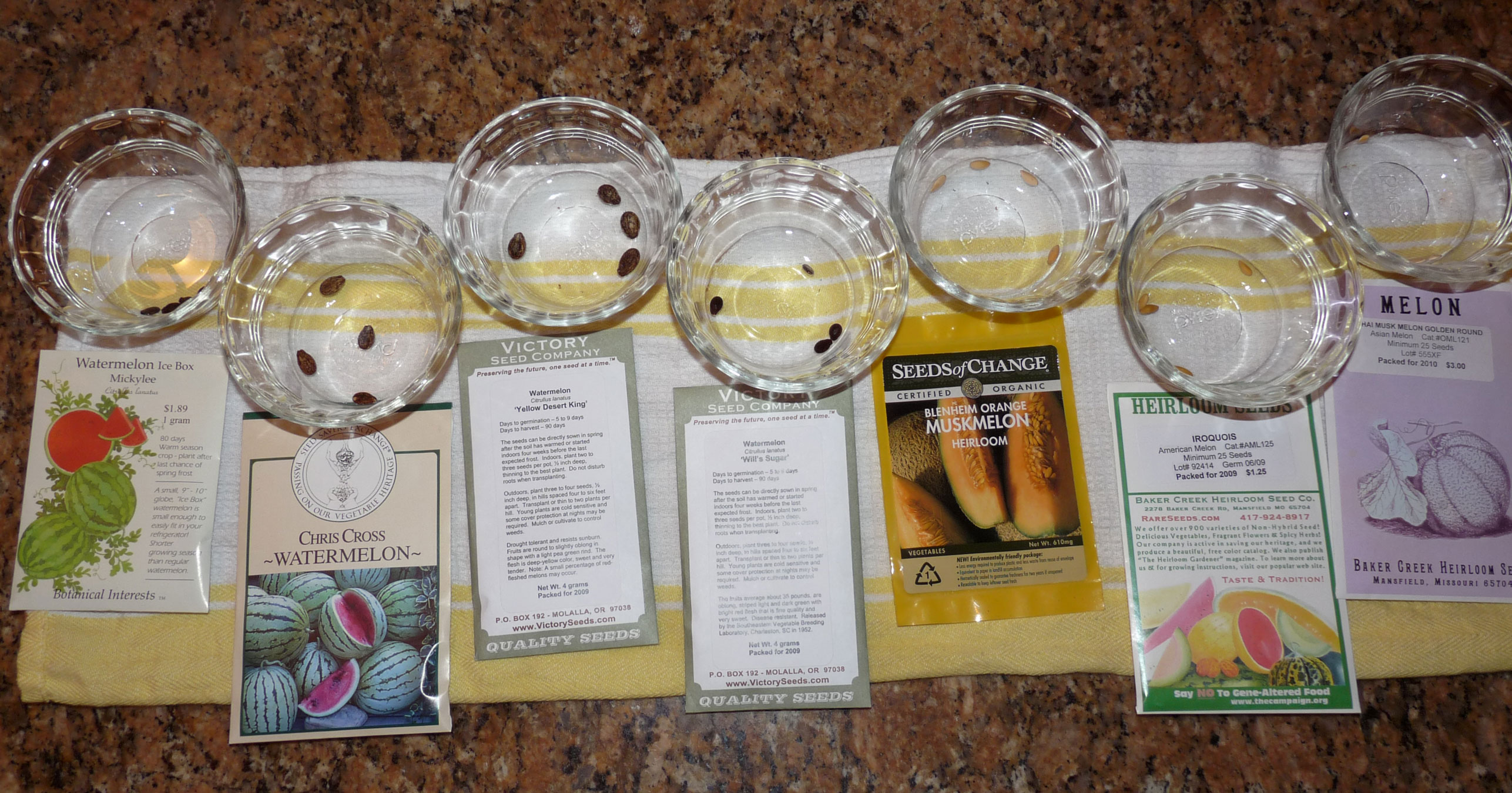
Melon varieties

Seven Select Melons

The Old Farmer’s Almanac includes this weekend on the list of “Moon-favorable” dates to plant melons, which is a good enough excuse for me. Though I did check the soil temperature in the beds slated for the melons. Several hours after the sun was off the beds the temperature still held at over 65 degrees. Frank Tozer, in the Vegetable Growers Handbook, says we can expect germination in about 8 days at that temperature, though 70-90 degrees would be optimal. I’m soaking the seeds overnight to help improve germination. I figure with that, some good compost and all the moon power, we ought to be set.

This year’s melon trials will include ‘Will’s Sugar‘ and ‘Yellow Desert King‘, both donated by the Victory Seed Company, ‘Cris Cross‘ from Seed Savers, ‘Mickylee‘, an ice box watermelon sent to us by Botanical Interests which sounded perfect for our trellising, a ‘Blenheim Orange‘ heirloom muskmelon Seeds of Change sent us last year, ‘Iroquois‘ and Thai Melon ‘Golden Round‘ both donated by Baker Creek Heirloom Seeds.

Trellised Watermelon

2009 'Rainbow Sherbet' Icebox Watermelon

Melons need hot weather to be sweet and delicious, hotter than what we usually have in Northern California. Our average high temperature here even in July and August is only 84 degrees. But we were able to produce a dozen or more ice box style watermelons last year with excellent flavor which the kids really enjoyed. My sister is trying half of these same varieties in her garden in Union, Kentucky. Her latitude is pretty much the same as ours and her July average temperature is only two degrees hotter than ours, but the humidity there may affect the melon production. Or is it only humans who feel like it’s hotter when it’s humid out?

I don’t know how much the phase of the moon matters to the melon seeds–there seems to be some actual science on it, but not much in the way of conclusions. But I do know that melons like compost, so we’ll be digging in a 2″-3″ layer of compost mixed with our own earthworm castings where the melons will be growing. And, just in case it really is too early to be planting melon seeds outside, I think I will start half the seeds from each variety indoors, just in case. We also plan to start another group of these same seeds at the end of April so that we can compare the plantings.

3/26/2010 Update

‘Iroquois’  melons planted indoors, in the comfort and splendor of a heating mat and overhead lighting, started sprouting yesterday. Looks like we will have a few more of the indoor varieties up tomorrow. No sign of any of the outdoor seeds yet.