Hot Weekend with Hot Peppers

Leave a comment

I had to transplant the new hot peppers into their bed in the fading evening light because of the unseasonably hot weekend, but they don’t seem to have minded. There are six of them spread out across a 3′ x 4′ bed with a few Nasturtiums. I edged the planting bed in with a dozen ‘Chandler’ strawberries because my daughter can’t seem to get enough of them and they won’t mind a little shade from the growing peppers when things heat up for real. But I’m afraid to look at any of my companion planting books now that I’ve mixed strawberries and peppers.

The peppers for this bed include a ‘Manzano Orange’ which has soft, fuzzy leaves that look more like an eggplant’s. The Manzano pepper is one of the few chilies that are not in the Capsicum annuum species. Instead, it’s a Capsicum pubescens from the Andes. Maybe that’s where the fuzzy leaves come in. Wilipedia says pubescens means hairy. The thick-walled peppers are supposed to look like small apples and make nice hot salsa.

I’m hoping to over-winter the ‘Manzano Orange,’ though it’s going to need to be replanted somewhere with a lot more space because Wikipedia also says, “They grow into four-meter woody plants relatively quickly, and live up to 15 years, which gives them, especially with age, an almost tree-like appearance.” Sounds wonderful! This winter I was able to keep two sweet pepper plants going on in pots on the semi-protected patio. They are each several feet tall and leafing out fully with lots of flower buds right now. I’m very interested to see if, and how, they produce this year. I think they are a ‘King of the North’ and a ‘Corno di Toro.’

My Hot Pepper Have to Have list has been trimmed, due to my uncanny ability to kill pepper seedlings. I can grow asparagus from seed. I can grow potatoes from true seed for God’s sake! But I cannot seem to manage to keep pepper seedlings alive long enough to make it into the garden. Out of the dozens of pepper seeds I have started this year, only one ‘Fish’, one ‘Matchbox’ and one ‘Joe’s Long’ have survived. They are heading out into the garden along with the purchased starts of ‘Pasilla,’ ‘Red Cherry Bomb,’ ‘Ancho Poblano,’ ‘Ethiopian Brown Berbere,’ ‘Pimento Super’ and the ‘Manzano Orange.’

Suddenly that seems like it might be a whole lot of peppers. What’s your favorite way to use peppers? Fresh, dried, pickled or something else I haven’t thought of? Please share!

Hot Pepper Have-to-Haves

7 Comments

The first of this year’s pepper seedlings has sprouted! It’s a Pizza pepper from several year-old Territorial Seeds meant for planting in 2009. After my recent trials with onions seeds, I was glad to see that these held their viability.

On February 15th, I planted six seeds each of  Pizza, Fish, Joe’s Long, Matchbox, and Chervena Chujski peppers. In a few weeks I’ll compare the germination rates and seedlings of the varieties.

Pizza peppers from this same pack of seeds did well for us in 2010, growing late into the fall and producing lots of thick-walled peppers with a little zip to them, but none of the sting some of our hotter peppers bring. I love these for fresh eating in dips, in salsa and in summer pasta dishes.

The Fish peppers grow on beautiful multi-colored plants and carry an irresistible  bit of heirloom history. William Woys Weaver, author of Heirloom Vegetable Gardening, says, “the Fish Pepper…was an African-American heirloom that began as a sport or mutation of a common serrano pepper sometime during the 1870’s…raised almost exclusively in the black community for use in oyster and crab houses…It was one of those “secret” ingredients favored by cooks and caterers to spike a recipe with invisible heat, for the Fish Pepper was used primarily when it was white, and it could be dried to retain that color. This feature was a culinary plus in the days when cream sauces reigned supreme.”

Fish peppers were prolific on very small plants through our unusually cool summer last year. The six seeds I have started came from Mike the Gardener, and I also plan to start a few more plants from saved seed to compare the fruits at harvest. I like these dried and ground into pepper flakes or powder and added to stews, chili, or barbecue sauces. I may even sneak one or two into the homemade ketchup recipe this year.

Another heirloom, Joe’s Long peppers, are listed as having came over from Italy with the Sestito family. My husband’s family is Italian and that gives me an excuse for lots of wonderful varieties I grow, including this one. Plus they look so darn cool. Check them out on the Bountiful Gardens website where I ordered my seeds. I’m looking forward to trying these fresh and also experimenting with them dried.

I’m planning to grow peppers in containers on the patio this year, a warm and protected spot they should like, and the Matchbox peppers are often recommended as a container variety. I received seeds from the Hudson Valley Seed Library in an Edible Garden gift basket during the holidays. I’m looking forward to the “sugary-hot” spiciness of these guys. I enjoy adding hints of sweetness to stir-fries, braises and sauces and plan to try these in chili as well. And I hope the plants will complement the colors of the Fish peppers I plan to have growing nearby.

The last pepper in this early batch is a sweet pepper, the Chervena Chujski from Landreth. I was tempted by this variety because it is supposed to be good for both fresh eating and roasting, which we love. Last year I could have used a whole lot more peppers that were good for roasting. I plan to try the Chervena Chujski grilled, hand-roasted over a gas burner, and smoked. If they are productive, I will also pickle some of them.

Which peppers will get space in your garden this year? I’d love to hear what you are growing and what you turn them into once they get to the kitchen!

Beaning In the New Year

1 Comment

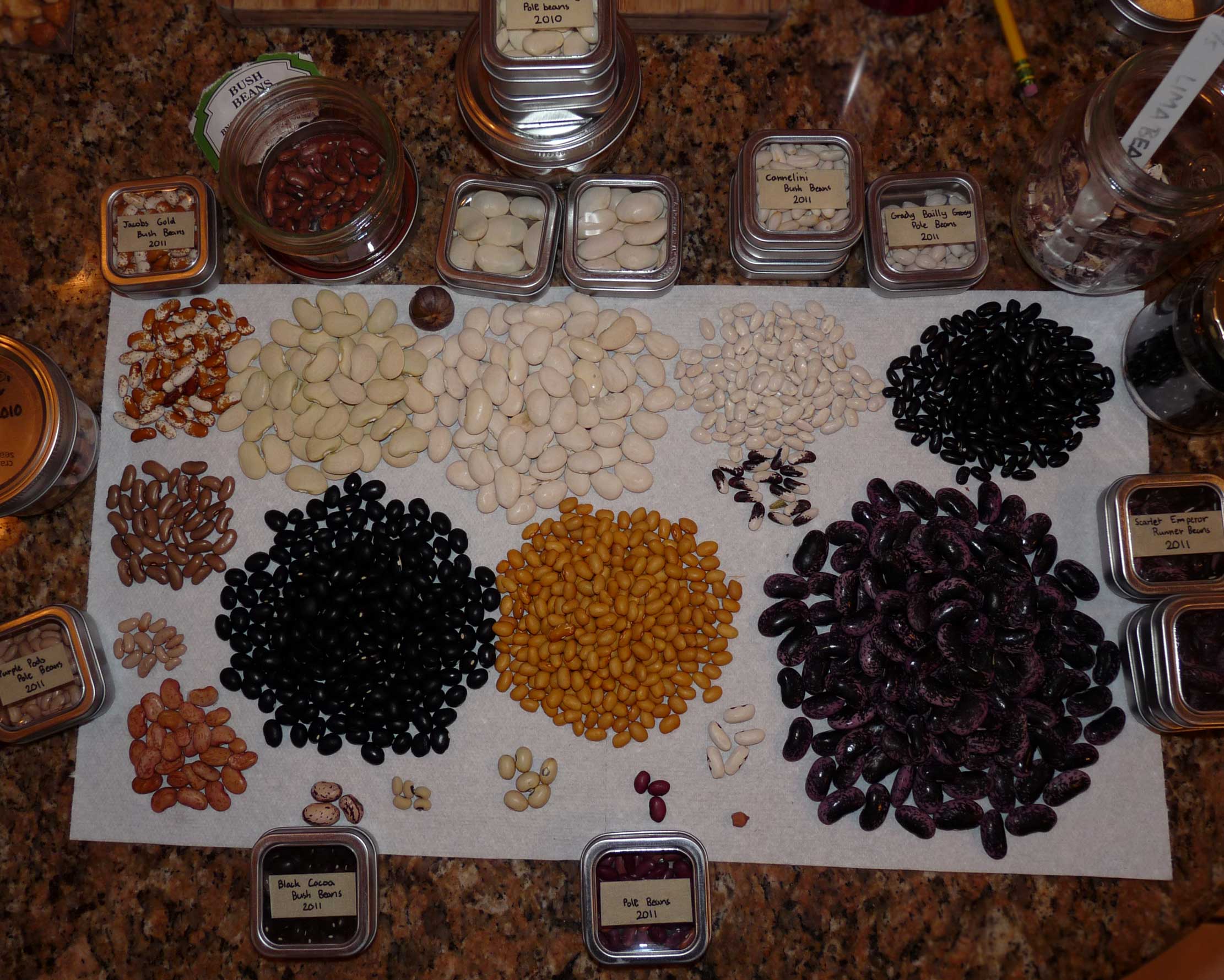
Home grown dried beansIt’s done! In honor of the New Year I have finally shelled, frozen, sorted and stored all the beans from the 2011 growing season. Well, all the ones we didn’t eat, that is. We’ve already made chili with 2 cups of the ‘Scarlet Emperor’ beans and had baked beans out of another cup of the ‘Jacob’s Cattle’ beans.

We grew a mix of pole and bush drying beans, runner beans and garbanzo beans. What you see here is ‘White Emergo’ at twelve o’clock, with cut-short greasy beans to their right. The top right corner are ‘Cherokee Trail of Tears’ pole black beans and below them are the ‘Scarlet Emperor’ runner beans we like so much. The big pile in the center is ‘Yellow Indian Woman’ bush beans. I want to try them in this soup recipe. The black beans on the left are ‘Black Coco’ bush beans from Bountiful Gardens. I wanted to try them because Carol Deppe talks about them in the Resilient Gardener. I’m planning to eat half of them and save the other half for seed, unless we don’t like them that is.

I also managed to save a few of lots of other kinds of beans, though it took me a while to sort them all. I’ve been trying to see which types would do best in our climate–whatever that is these days! The ‘Cannelini’ did well, though I’ll have to plant a lot more of them to have enough for dinner. This year I didn’t have much luck with ‘California’ black-eyed peas, ‘Hutterite’ soup beans, or the ‘Borlotti’ beans I wanted for a family recipe.

Here they are matched up with the rest of the harvest. Let me know if you have a favorite drying beans that grows well for you.

Dried Bean Varieties

New Year in Potatoes

2 Comments

Now that the onions and fava beans are planted, I’ve started in on the potatoes. I know it’s not even January yet, but our average January temps are 42˚ F at night and 58˚ F during the day, so potato growing isn’t totally out of the question. I’m growing in containers, mostly grow bags, on the patio against a south-facing wall and I’m going to track the soil temperature, if I can find a gentle way to get the thermometer down there without spearing the developing potatoes.

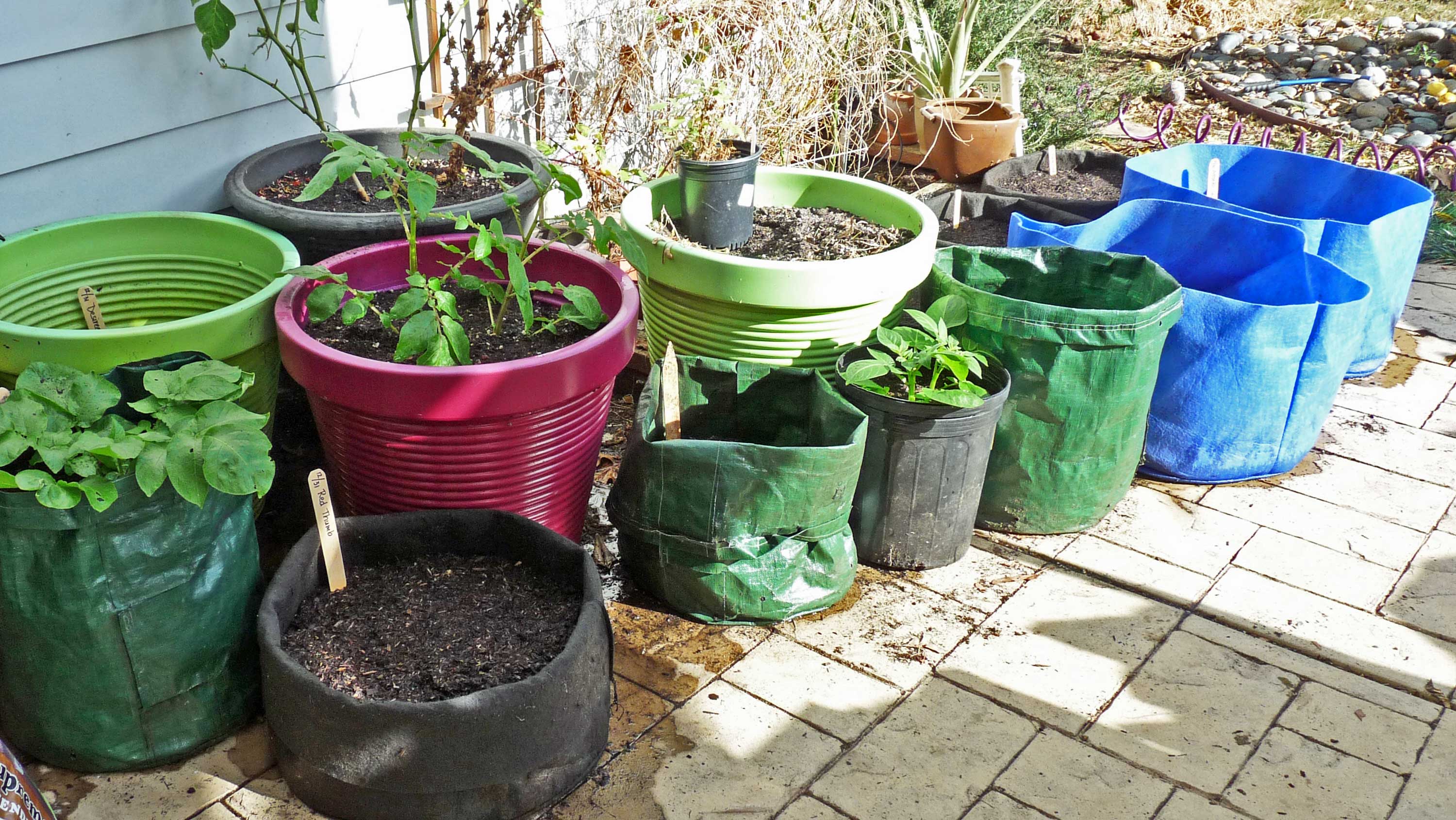
Potatoes in grow bagsI planted two large blue grow bags with ‘Atlantic’ potatoes. One bag got planting mix and compost, the other bag got acid mix and compost. I want to compare the two plants and their production because I suspect the soil mix I used last year may have been more alkaline than potatoes like. I did a similar test with the smaller black grow bags of ‘Yukon Gold’ set behind the ‘Atlantic’ bags. I’m also testing some red-skinned potatoes in the green grow bags the same way. I’ll do my best to water and feed them all consistently.

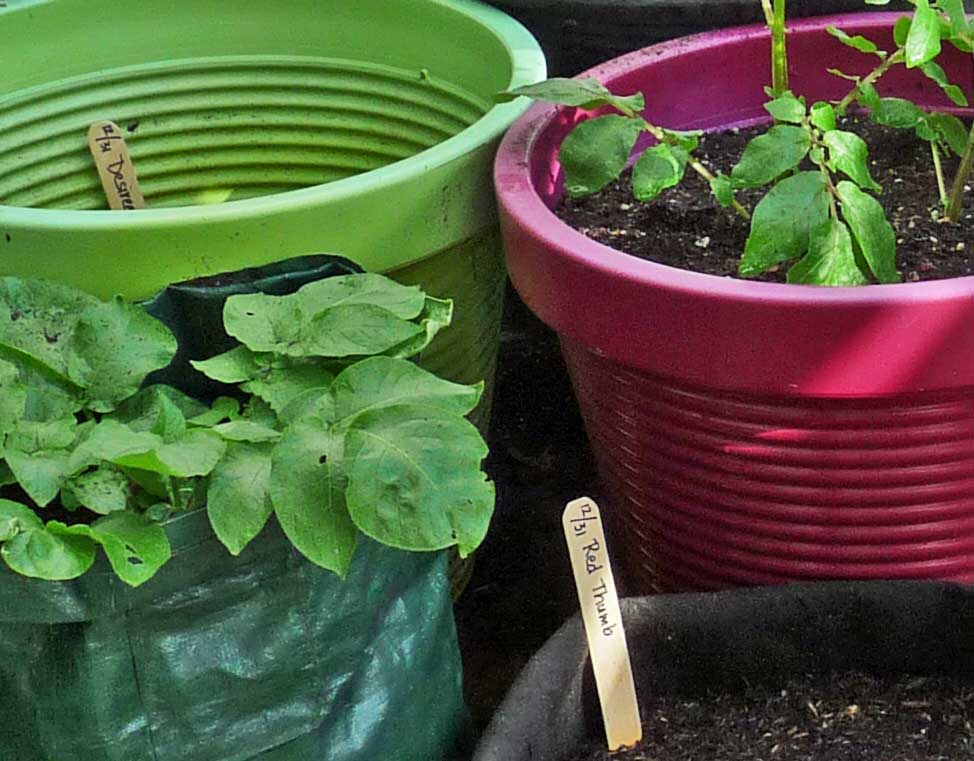
I also started an unidentified blue that I believe is leftover from the ‘All Blue’ planting several years ago in the front garden. There’s a bag of ‘Red Thumb’ fingerlings because they were sprouting so nicely I couldn’t leave them out. And a ‘Desiree’ seed potato in the large green container in the back.

Conatiner grown winter potatoesThe first group of patio container potatoes were started October 30th, so they have been out there  nine weeks already. The potatoes in the green grow bag that are already leafing out nicely are ‘Amey Russet’ potatoes grown from potatoes I saved in 2011. This variety originally came from Tom Wagner at New World Seeds and Tubers. The leggy variety in the purple-ish container may be ‘Caribe’, though I won’t be really sure until we harvest them. The label must have slipped down into the container when I was adding soil mix. The black gallon container is growing an earlier planting of the mystery blues. I used the restrictive container because I am hoping to get lots of small potatoes for planting in the spring.

This is my third year growing potatoes through the winter. I chose a sheltered location this winter because last year the harvest was very small and there was considerable frost damage. But in 2010 we had a wonderful harvest in March from winter-grown potatoes.

Have you ever grown potatoes through the winter? Please share how you did it and which varieties worked well for you in the comments.

Five New Onions for the Holidays

Leave a comment

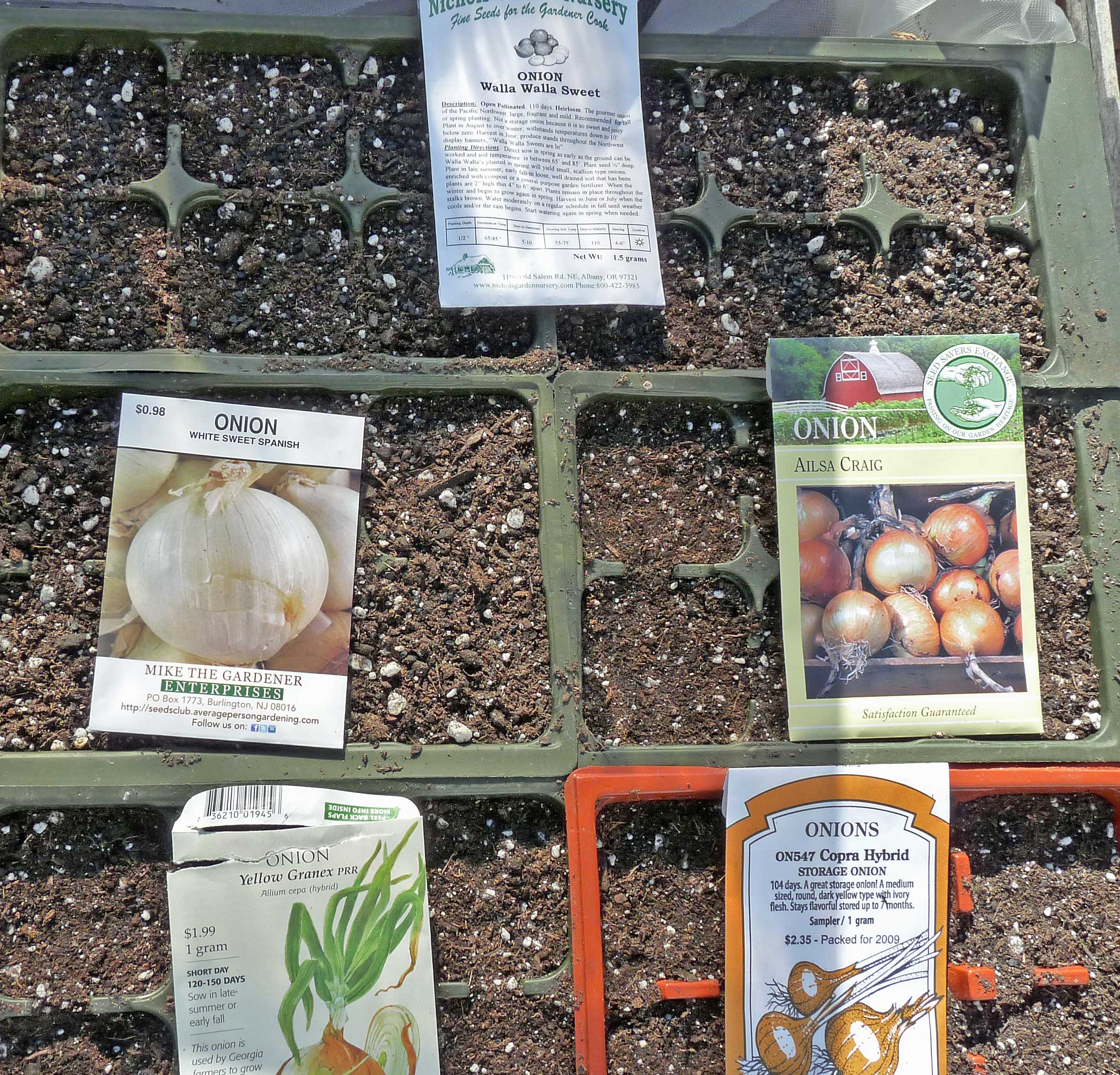
It was 59 degrees and sunny in the garden today, at the end of December. I couldn’t resist planting something and the onions were first in line. I saved seeds from last year’s onions, several different varieties of them–all in the same grocery bag. I didn’t even realize my mistake until I wanted to get the early white onions started. Oops. Turns out seeds for white onions look pretty much like seeds for every other kind of onions. I forced myself to make a trip to the local garden store for seeds I could identify. ;-)

Planting onions from seedI chose ‘Walla Walla Sweet’ from Nichols, even though I probably should have planted them much earlier for overwintering. They will still be delicious even if they are small. Mike the Gardener sent me some ‘White Sweet Spanish’ onion seed. It’s a long-day variety, and my garden is pretty much on the dividing line where you should grow short-day onions south of my house and long-day onions north of my house, so I figure I might get away with either one. The ‘Ailsa Craig’ onions from Seed Savers Exchange are another long-day variety that I’m hoping will work for fresh eating through the summer. I’m also trying ‘Yellow Granex’ from Botanical Interests. It’s a short day onion that should have been planted in the early fall, but some years that just doesn’t happen. I’m going to try it anyway and see how it fares compared with the ‘Walla Walla Sweet’. Hopefully one of them will be happy enough to bulb.

I’m also experimenting with ‘Copra Hybrid’ storage onions. The seed is old, packed at Territorial Seed for 2009. No hard feelings if it doesn’t sprout. I know onion seed isn’t supposed to keep well. The other storage onion I’m thinking about trying is the ‘Gold Princess’ onion, but it’s a cipollini onion and they seem to need space around them to develop well. I’m going to wait until things warm up again before making a good spot for them.

What’s the first thing you’ll plant for the 2012 garden? I think my next project will be beets, then it’ll finally be time to get some of the tomato and pepper seeds going.