Winter Solstice, 2011

Leave a comment

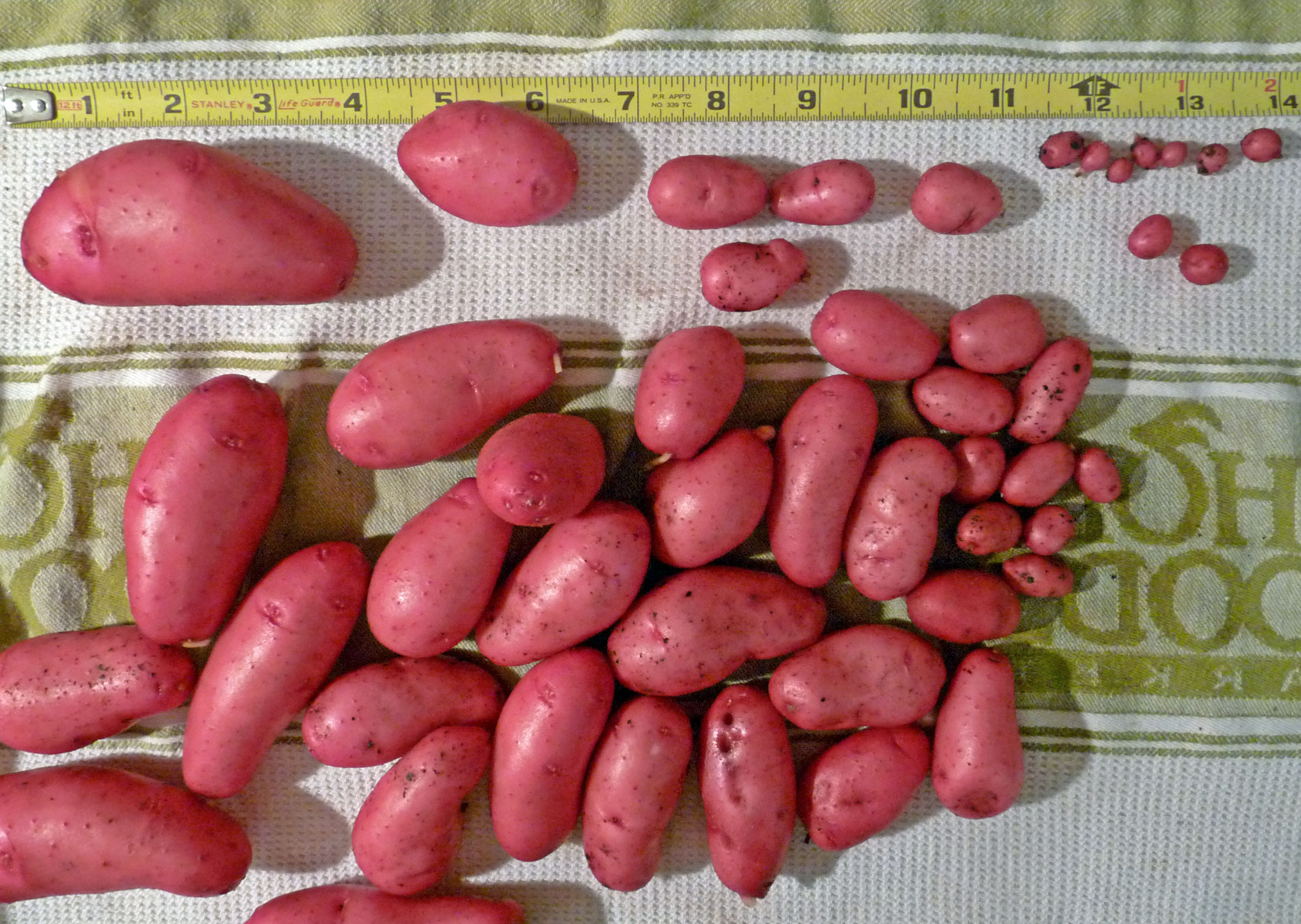
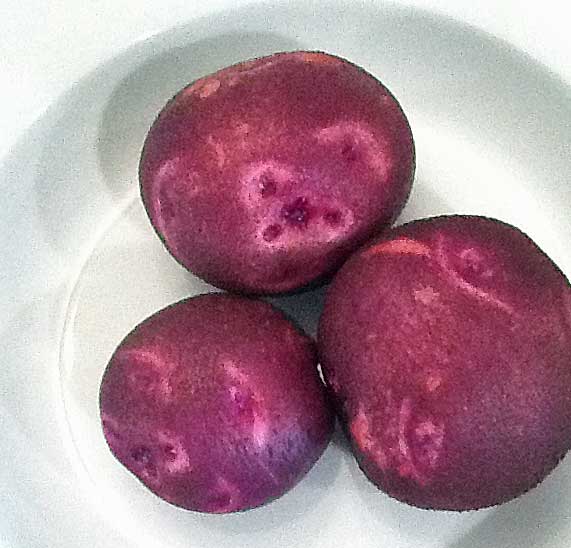
While I was working in the garden this afternoon, I unearthed some gorgeous, purple-skinned, ‘Caribe’ potatoes–the second or third generation of them we’ve grown. Even this late in the year, grown in a small bag, I was still able to pull out three large potatoes, a couple smaller ones, and four mini-tubers I’m hoping to use as seed for this spring. (Since we’ve already mashed and eaten the larger potatoes!)

Other known varieties of potatoes currently in the ground in the garden include ‘Amey Russet’, ‘Rose Gold’, ‘Red Thumb’ and ‘Harlequin’. I’m also nursing along four different potato seedlings grown with TPS from a ‘Toro Dude’ mother. We’ll see if any of them make it through to tuber production. I started with ten seedlings and I’m already down to 40%. They are growing in pots that I set outside during the day and bring inside at night. If any of these tiny plants produce a tiny tuber, I’ll try growing it out this spring to produce enough tubers for tasting. If one of them does well and tastes good, we’ll have a whole new variety to propagate.

TPS Potato PlantsOn this Solstice, I also harvested a handful of yams (the sweet potatoes were all eaten up several weeks ago) and a couple of carrots from a bed I was preparing for the new potato varieties I just ordered from PotatoGarden.com. I’m going to try their ‘Lehmi Russet’ which is supposed to yield better than the ‘Russet Burbank’. I’ll see how it compares with our ‘Amey Russets’ which the TaterMater boards say is a better yielder than ‘Russet Burbank’. (Poor ‘Russet Burbank’, why does everyone pick on that variety?) I’ll also be growing ‘Crackled Butterball’ to compare with the ‘German Butterball’ potatoes that have been very popular with us. I chose ‘Mountain Rose’ to expand my reds, since ‘Red Thumb’ is the only red that has done much of anything in the Dirt to Dinner garden so far. And ‘Purple Peruvian’ is a blue fingerling I’ll be trying to expand on the blues. There are still ‘All Blue’ potatoes popping up here and there around the garden, but the straggly volunteers have never really produced much of anything. I gave their mini-progeny a bed of their own for this year to see what we can do to revive them.

Two different types of spinach, many colors of chard, two kinds of kale, several lettuces, arugula, collards, carrots, mustard and turnips are all coming up in nursery beds or flats or volunteering in odd corners of the garden. There’s a whole patch of arugula seedlings in the middle of one of the paths that I’ve been trying to transplant as space opens up. And yesterday I started a big patch of ‘Sugar Snap’ peas. I started them under a trellis just in case they really do grow on 6′-8′ vines like the seed package said.

Just 80 Pounds of Potatoes to Go

Leave a comment

20 Lb Box of PotatoesThere was certainly no danger of me winning the 99 Pound Potato Challenge with this year’s ‘Rose Gold’ crop even though it is a new Personal Best for us here in the Dirt to Dinner garden. In 2010, we harvested 20 lbs of potatoes from a fifteen square foot raised bed and this year we managed the same weight of harvest in only nine square feet. That’s almost an extra pound of potatoes harvested per square foot in 2011. And this patch of potatoes also produced flowers and potato berries that were harvested so that we can experiment with growing from seed.

The ‘Rose Gold’ potatoes were planted March 29th and harvested July 19th, 112 days later. They were planted in new ground that started out as a compost pile and was covered in a layer of rice straw and top soil. Potatoes were hilled to just over 24″ with alternating layers of straw and potting mix. They could have been hilled much deeper. Vines were over four feet tall and some stolons grew at least two feet long. With their excellent taste and this respectable harvest, ‘Rose Gold’ potatoes will probably gain a spot in our deep hilling trials this fall or next spring.

Rodent Teeth Marks?Unfortunately, I was not the first one to harvest the ‘Rose Gold’ patch. Just the other day the dog was chasing something and digging along the edge of the patch. I shooed her away and went back to watering the tomatillos. But today in that corner, I found at least six potatoes that were very strangely shaped and clearly no longer at their full weight when it came time for the count. Do squirrels eat raw potatoes? Who eats raw potatoes, can climb the fence into the yard and is faster than a streaking Labradoodle? Those potatoes started fist-sized, if you have small hands like me, and a good chunk of them has definitely been chewed off!

Potato vines starting to die backThe ‘Rose Gold’ potato vines were brown and fallen over and mostly dried up so I knew they were ready to harvest. I might have liked to allow the potatoes a few weeks undisturbed in the soil to harden their skins for storage but I pulled the patch before any more unauthorized feasting took place. I have two more patches and several potatoes in bags growing in that area. The patch shown here was planted April 6th and contains a broad mix of varieties for the Great Potato Grow Out Project.  The bulk of the varieties still have lots of mostly upright, green vines. They wilt in hot weather but with water and evening cool they stand most of the way back up again.  Except for the plant in the bottom right corner.

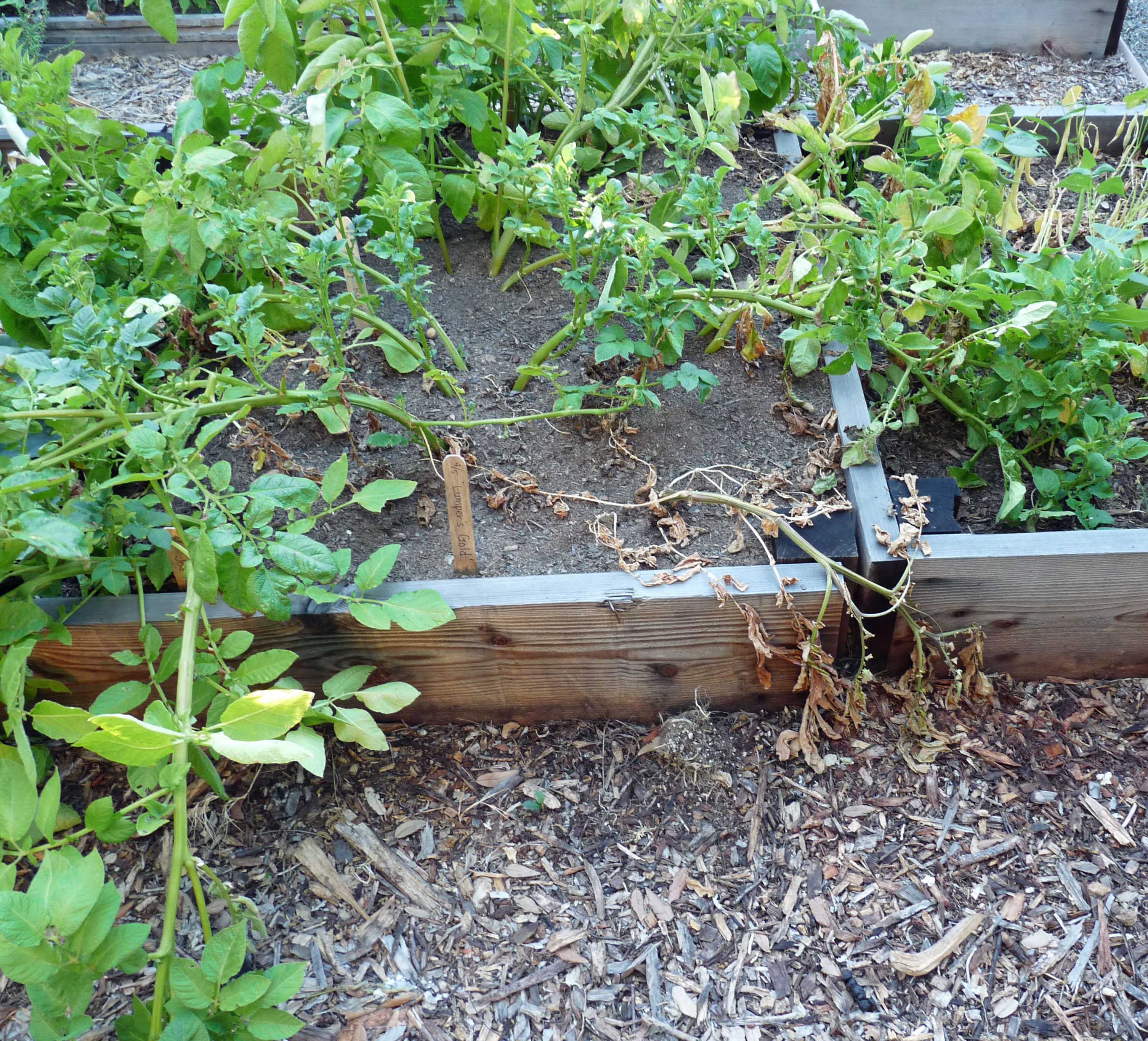
Potato vine finished dryingPotato varieties grow for a unique number of days before they finish setting tubers and the vines die back. Some early varieties are ready in as few as 75 days. The ‘Red Thumb’ potatoes have been the first in this trial to be ready for harvest at about 90 days. This vine is a ‘Caribe’ potato that is done growing and I plan to pull these potatoes very soon before anyone else starts to harvest them for me!

Why You Need “The Quarter-Acre Farm”

2 Comments

Garden Bed PrepIt’s been over two years now since we took up the front lawn, mulched the entire yard and started growing our own fruits, vegetables and sundry other crops. Along the way I’ve looked for some good company. Novella Cartenper’s “Farm City” was close, in a satisfyingly grungy and carnivorous way. “Animal, Vegetable, Miracle” by Barbara Kingsolver and family certainly inspired, if on another scale and at a geographical and practical distance.

But “The Quarter-Acre Farm” could have been written about my yard–if Spring Warren hadn’t already done so in such a charming way, it might well have been written about my yard. Now, thankfully, I can cross book writing off my To-Do list and go back to my latest Potato Project as I direct you to get your own copy of “The Quarter-Acre Farm”, complete with hypnotic illustrations and delicious recipes designed to be prepared by mere mortals.

Front Yard Vegetable GardenNot only that, but it’s funny! And I can so relate. Spring Warren writes about gardening in her bathrobe without the “die-trying” seriousness of many other books in the expanding I-can-grow-more-food-in-hardly-any-space-than-you-can genre. Not only does the book leave you with the understanding that you do, in fact, need your own Quarter-Acre garden, but you’ll also want to set it down just out of goose-honking range of Ms. Warren’s so you can continue to enjoy her neighborly garden camaraderie and share the delicious produce excess  it will surely bring you.

Run out now and get your own copy. I’ll be watering the potato patch, in my bathrobe. ;-)

Red Thumbs for the 4th

Leave a comment

Red Thumb PotatoesI’m making Red & White potato salad for the 4th this year. Red, White & Blue potato salad sounds fun, but I know from last year that all three kinds of potatoes need to be cooked separately and the blues especially are complemented by different flavors than regular potatoes. Patriotic-looking food for July 4th is great, but if it doesn’t also taste good, forget it. And my ‘Red Thumb’ potatoes are already going to look pink at best as it is.

These 2.5 pounds of potatoes are part of the Great Potato Grow Out project, though it doesn’t look like this variety is going to be a candidate to move forward in our tests. The ‘Red Thumb’ potatoes were planted April 10th in Test Bed #3 and at their tallest stood maybe 32″ from seed potato to flowers. The highest stolons were lucky if they were set a foot above the seed potato. I pulled these particular potatoes for my potato salad because one of our other testers harvested their ‘Red Thumb’ planting today and found just a dozen grape-sized potatoes, weighing in at 3.25 ounces. I’m guessing some potatoes don’t like to be buried up to their necks in dirt after all.

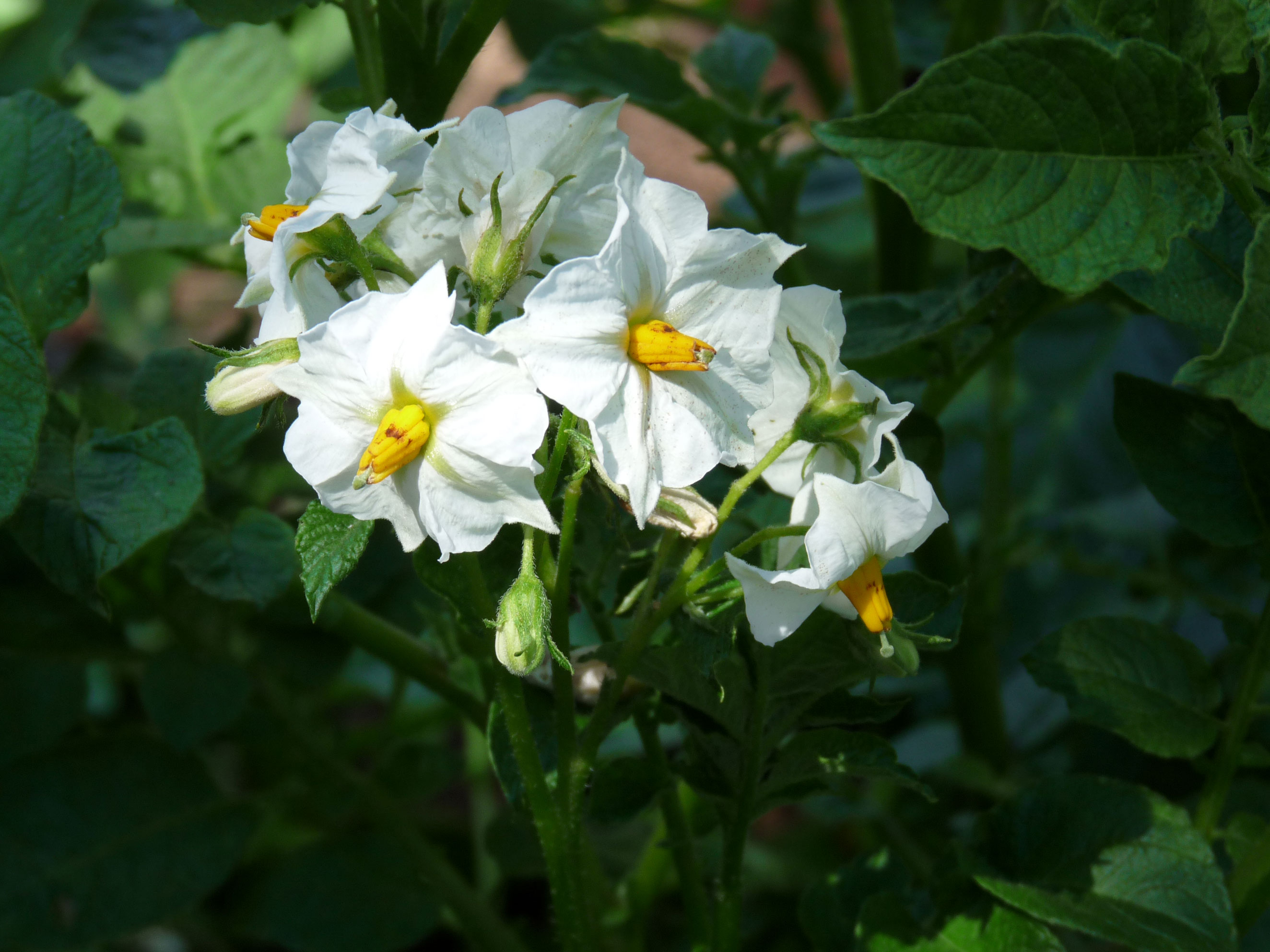
Tall-vined 'Guisi' PotatoesThe tallest potato vines we’ve recorded here for the trial are ‘Guisi’ potatoes. Their beautiful white flowers are about 56″ from the seed potatoes below. I’m afraid there are actually longer vines in the trial but the ‘Guisi’ have such a nice, upright growing habit that it makes them easiest to measure. ‘Lumper’s Gold’ and ‘Satina’ are solid contenders in our patch as well. Then there are the ‘Muruta’ potato vines.  This trial plant is reported to be 62″ tall at this point with about 36″ inches of it covered in soil. That’s a good long section of stem to be setting stolons–if we’re lucky! No idea how it’s producing yet. Apparently it did flower but the vines are still strong and green eleven weeks after planting.

A number of my potato vines are dying down. The ‘Red Thumb’ vines were so limp they were hard to find. The latest  heat wave is certainly helping. But I should have harvested the ‘Norkotah’ potatoes before today. About a third of the potatoes in one of the bags were already sprouting while still firmly attached to their stolons underground! I’m planning to put them straight into potato bags of their own and let them keep growing in a spot that gets some afternoon shade to keep them cooler.

If you’ve got tall potato vines growing this year, I’d love to know what kind and how they’re producing for you in all this weird weather.