Pea Trials Year 2

Leave a comment
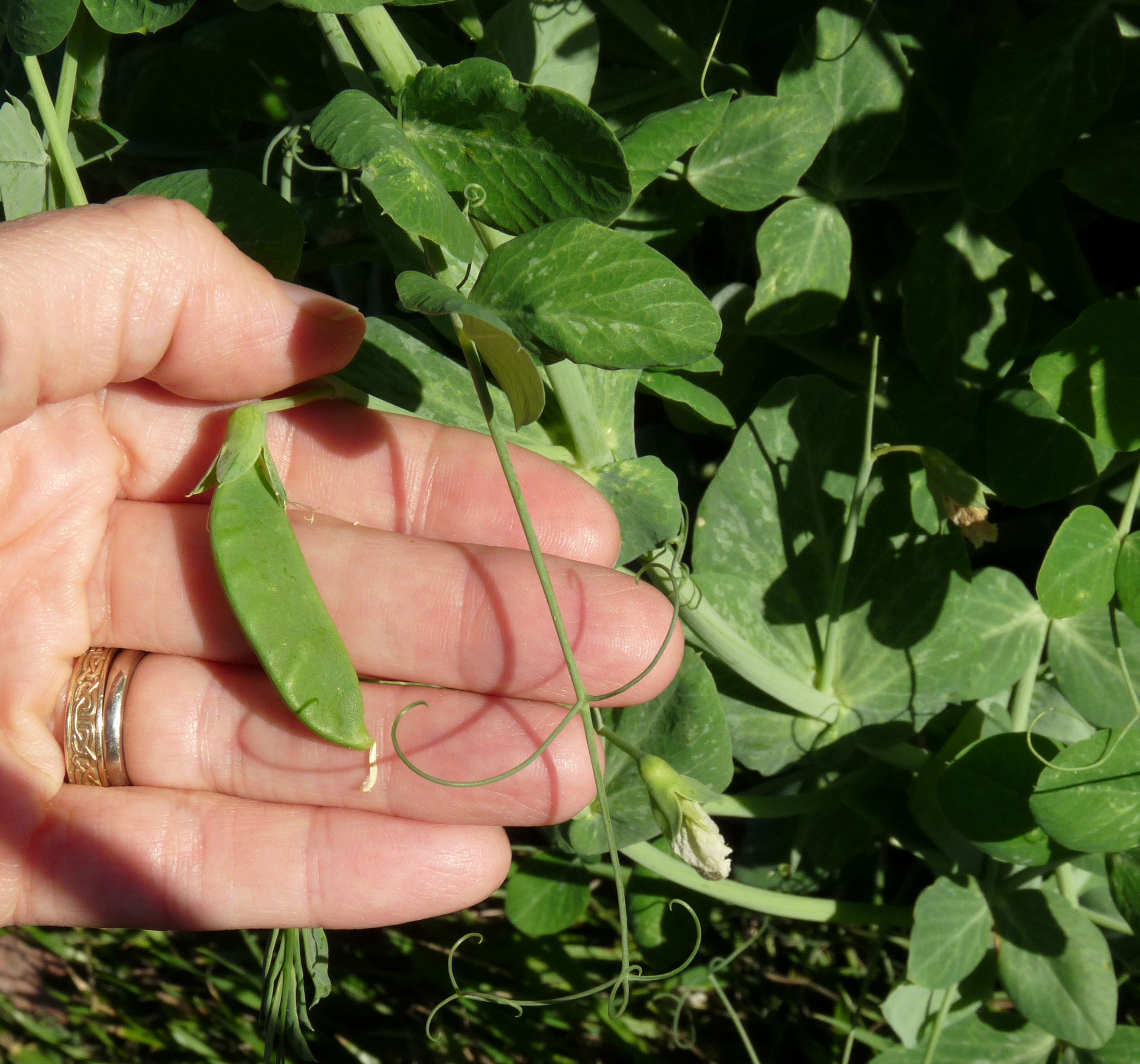
Pea pod in hand

Fall Wando Success

This year, rather than start the Pea Trial in January, I decided it might be worth while to try growing different varieties right through the winter. I started with a shelling pea that I always see mentioned along with it’s resistance to heat, Wando, and planted it on August 13th. I figured it had the best chance with our fall weather. Maybe it was just luck, but we have been eating peas in the garden from this small test patch since October right into December. Frost got some of them, but the plant has put out new flowers and started over.

In mid-September some of the Dirt to Dinner kids and I planted two more test patches of peas. One side is Cascadia snap peas and the other is Oregon Sugar Pod snow peas. Pea plantingThese have also survived the three or four frost days and the winter winds. If it gets too cold though, the pods on the vine are ruined. But we pick them off and toss them into the compost and the plant puts out more flowers. I put in a test patch of Thomas Laxton peas on October 31st but as soon as I thought it was safe to take the burlap off of them (11/15) the patch was decimated by whatever evil critter out there chews the leaves off all the sprouting vines. I have to remember that in the Dirt to Dinner garden peas planted directly in the soil need protection until they are well established.

We also have another small patch of Petit Pois peas put in on November 12th with starts from Yamagami’s in Cupertino.

These diminutive peas are authentic French petit pois and are ever so sweet, ready to use at miniature size, when the slim pods are just 3” to 4” long. Each pod contains six or seven tiny peas, less than half the size of regular shelling peas. Their buttery flavor and tenderness cannot be matched! Plentifully produces petit pois on disease-resistant, 18” to 24” vines. These small, delicate vines need support.

Block planted Petit Pois

Petit Pois Perfect

The plants are still pretty petite right now at the end of December. I haven’t seen any flowers develop but they are shaded by a massive tomato plant I was trying to winter over. Not sure that experiment is going to be worth the space or potential shade cast though. The tomato is a very unhappy grey-green right now that does not bode well. Maybe I will cut it back to whatever looks healthy and green and give the poor peas some more sunlight. I’ll check their color more closely when the rain lets up.

On Christmas, which was a gorgeous gardening day here, I put in about 50 Sugar Daddy snap pea seeds, under covers and started another 30 in the garage as back-up just in case those get destroyed. In January I plan to do some of the Italian pea varieties we liked from the trial last year and I swear there is a packet of Laxton’s Progress peas around here somewhere that are waiting to be planted. If only I could remember what I did with them!

Frozen Veggies Anyone?

Leave a comment

Frost on the Vegetable GardenLast night we experienced a record low in the Dirt to Dinner garden and this morning we woke up to lots of frost on the vegetables. I’m very curious to see how our winter vegetables respond. Many of the varieties we have growing are either ‘frost tolerant’ or ‘frost hardy’ and I bet you last night will tell us which ones are which! It’s also officially time to put all the ‘tender’ plants into the compost pile except for the one tomato we are keeping under row cover and anything we want to try growing under glass for our winter experiments. I just picked some really nice snow peas yesterday, maybe this morning I can find some frost peas to go with them. ;-)

The Thankful Garden

Leave a comment

Rutabaga

I’m amazed at all the things still going strong in the Dirt to Dinner garden at this time of year. In the Midwest, where I grew up, all I had in my garden in late November was frost.

If you’d like to see all the ingredients we have available this year for a Thanksgiving feast, I made a VoiceThread to share them with you.

If you just want the short-list of what is growing, it goes something like this: Ancho peppers, artichokes, arugula, asparagus, basil, beans, beets, broccoli, carrots, cabbage, cauliflower, chard, chives, chicory, collards, ginger, gourds, Hungarian peppers, kale, Komatsu, luffa, mustard, onions, parsley, parsnips, potatoes, radishes, rutabagas, tomatoes, turnips, sage, shelling peas, snap peas, snow peas, spinach, strawberries and a lone watermelon.

Confounding the Peas

1 Comment
Planter box or cat box?

Not the peas we had in mind!

A major issue in observation studies is that we often don’t always know what the potential confounding factors may be. In the soil fertility experiment we started a few weeks ago the confounders have overcome the experiment to the point that it was almost impossible to tell what was happening.

First, the planter was visited by our resident rodents, the hopping mice that peek out at us from the bushes and love to steal tasty treats. They dug out many of the seeds and presumably ate them.

Next, maybe due to the delicious rodent perfume worn by our mice, a cat visited the planter and dug through one side of the box creating a large mound containing who-knows-what sort of catly gifts. And that was before the huge storm that blew everything around and even washed some of the soil right out of the planter and onto the plastic around it.

Sprouts

Who's That Growing in Our Bed?

In spite of all of this, a few things did actually sprout. If you look carefully at the East side of the soil test bed, the “Tomato Soil” side, you can see how we counted twelve sprouts the last time we recorded data from this experiment. But 12 sprouts of what, exactly?

At least three of the sprouts were squat, strong-looking stems with rounded leaves on them. The rest were spindly stems with elongated, pointed leaves on them. Only the first three were a match to the pea patches growing in two nearby planters.

Tomato Sprouts

Pea Patch Volunteers

So, since this a really great experiment concept, and we already have the nicely amended (thanks for all your help, Cat!) soil on one side and the do-nothing-to-it “Tomato Soil” on the other side, we decided to replant this experiment to see if we can get a less confounded idea of what happens.

The bed was smoothed on the West side, and the cat pile was carefully removed. The bed was then replanted with 1 oz. of ‘Alaska’ (Earliest of All) peas, also known as Pisum sativum var sativum, packed for 2009. These were planted equally on the two sides but we decided to allow the existing pea sprouts to stay. They were marked so we can take them out of the data if we choose to.


Holes in burlap row cover

Burlap Fail

Then the bed was carefully covered with burlap and cages to discourage visitors. Unfortunately, this morning there seem to be a whole lot of holes in the burlap that weren’t there when we put it on! Kids weren’t the only ones out trick-or-treating last night. We’ve been raided by varmints! (I”m sorry about all those things I said, Cat. Please come back to the garden. We need you! We’ll plant more catnip, I promise!)

It looks like at least a dozen holes were dug into the planting area last night. There’s no way to tell if the mice are eating the new seeds or the old seeds that might be still left in the soil. But there are certainly some of the seeds still undisturbed in the planting area.


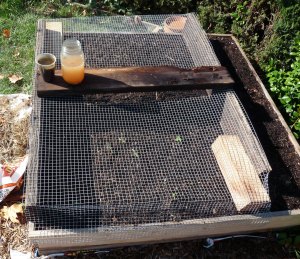
Mesh cover for garden bed

Pea Prison

In order to try to salvage this experiment we grabbed a few things we had around the garden and built a mesh wire cage over the planter like the one we use for the carrots’ Fort Knox. Hopefully this will give the peas a chance to sprout and grow through the tender and delicious stage. We noted that the peas that we started weeks ago who were sitting nearby in their nursery packs waiting to be planted are undisturbed.

We didn’t have a large enough piece of hardware cloth to cover the entire bed so we covered an equal amount of each side and will leave the area with the most rodent damage exposed for now. Maybe that will help keep the mice from breaking into the seeds we are trying to save and then we can plant it with another crop in a week or two when we see how things germinate.


Dispersing Seeds

Leave a comment
Ready to Thresh

Ready to Thresh

This week during Open Garden, we collected the bean seeds that have been drying on the plants for several weeks and examined the soy bean seeds that had been left to undergo their natural dispersal process. At the final stage of drying the bean pods will twist until they burst, allowing the beans inside to pop out of the shells and spread out in the surrounding around.

Ready to Store

Ready to Store

The trick to collecting your soup beans is getting to them just before they hit this stage. You want the pods to be dry and brittle, but not at the point of starting to twist. I usually have to find one that has already twisted and flung out its seeds before I realize it’s time to pick the rest of them. Once the dried seed pods are collected, you can put them into a paperbag and shake the closed bag to break open the pods and free the beans. Then lift out the dried shells to toss into the compost bin and what’s left in the bag is your beans.

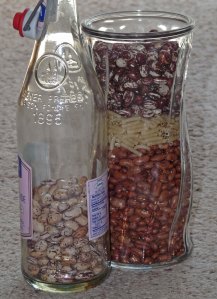
Ready for Soup

Ready for Soup

Just to be sure that they are really dry, I sometimes add a commercial desiccant packet to the bottom of the container I keep them in, but a little dried milk in a folded piece of paper towel will also do the trick.

To use the beans, I soak them overnight with a good size piece of kombu (seaweed) to make them easier to digest. Then I throw out that soaking water but save the kombu to cook with the beans. In the Spring I definitely plan to try more varieties of drying beans for soup all Winter long.