Fresh in February: 22 Things We’re Eating Right Now from the Family Food Garden

3 Comments

It takes some planning. And, depending on your growing zone, it may take some straw, row covers or cold frames. But it really is possible in most USDA Zones to eat something out of your garden year round.

That’s easy for me to say, I live in Northern California and garden in Zone 9b. So, don’t take my word for it. Grab The Winter Harvest Handbook by Eliot Coleman. He’ll tell you everything you need to know to grow through the winter—and he’s farming in Maine!
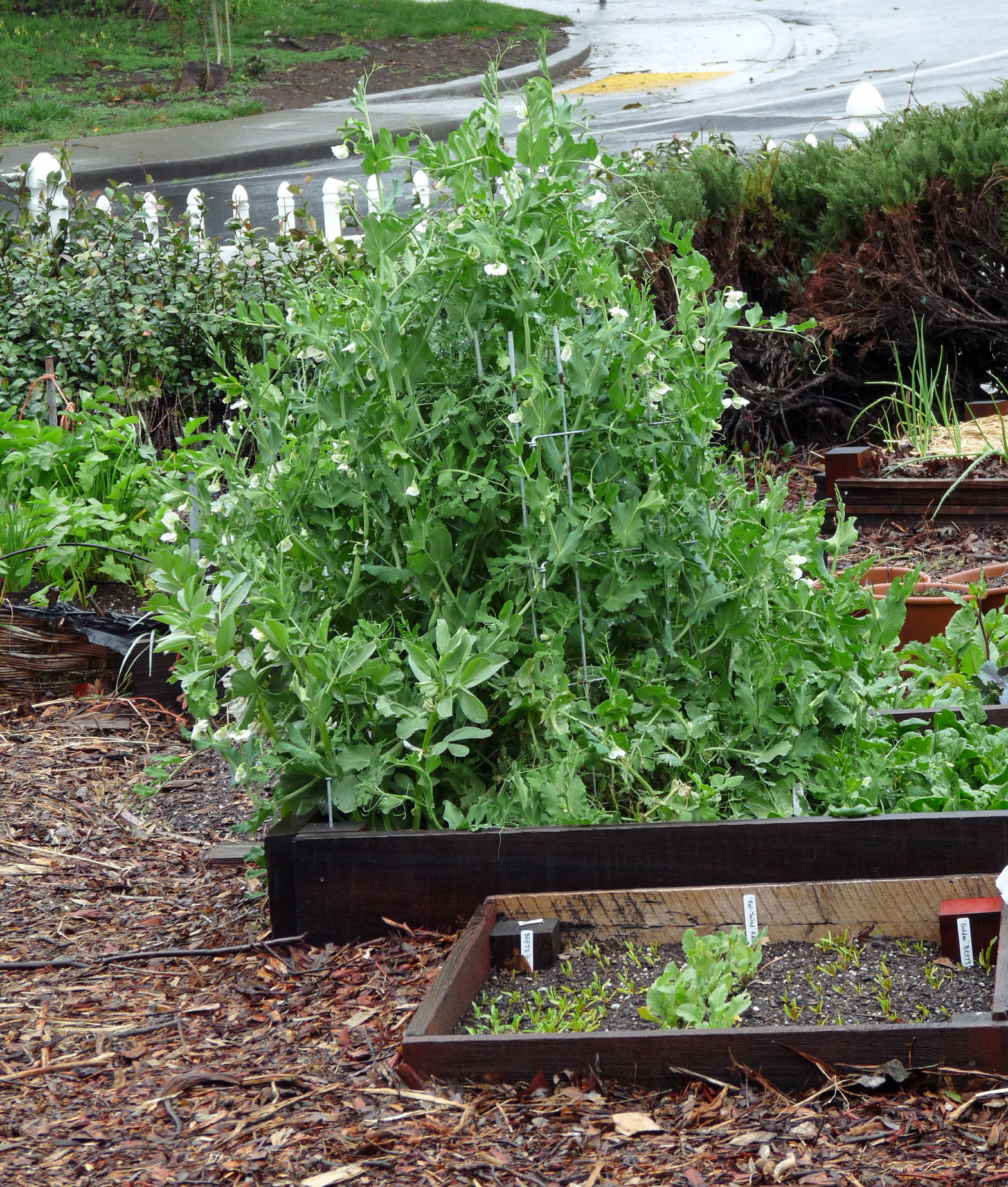
Peas, Spinach and ParsnipsOur favorite snap pea, ‘Sugar Daddy’, is delicious this time of year, sweet, crisp and productive. It’s growing alongside ‘Catalina’ spinach which is producing a surprising amount of salad greens and stuffing for omelettes. In the bed behind, you can see the tops of parsnips ready for pulling. Get your digging trowel ready though, those roots are deeper than they look.

One of the joys of winter food gardens is that the wet weather waters for you. Try to be sure that you position plants that are sensitive to too much moisture, like these peas, in raised beds with good air circulation around the plants so you don’t have to fight mold for the delicious pods. Even though pea plants will grow happily when crowded, consider spacing the seeds a bit farther apart in the winter to give them good air circulation and also so they are better able to share the available sunlight.

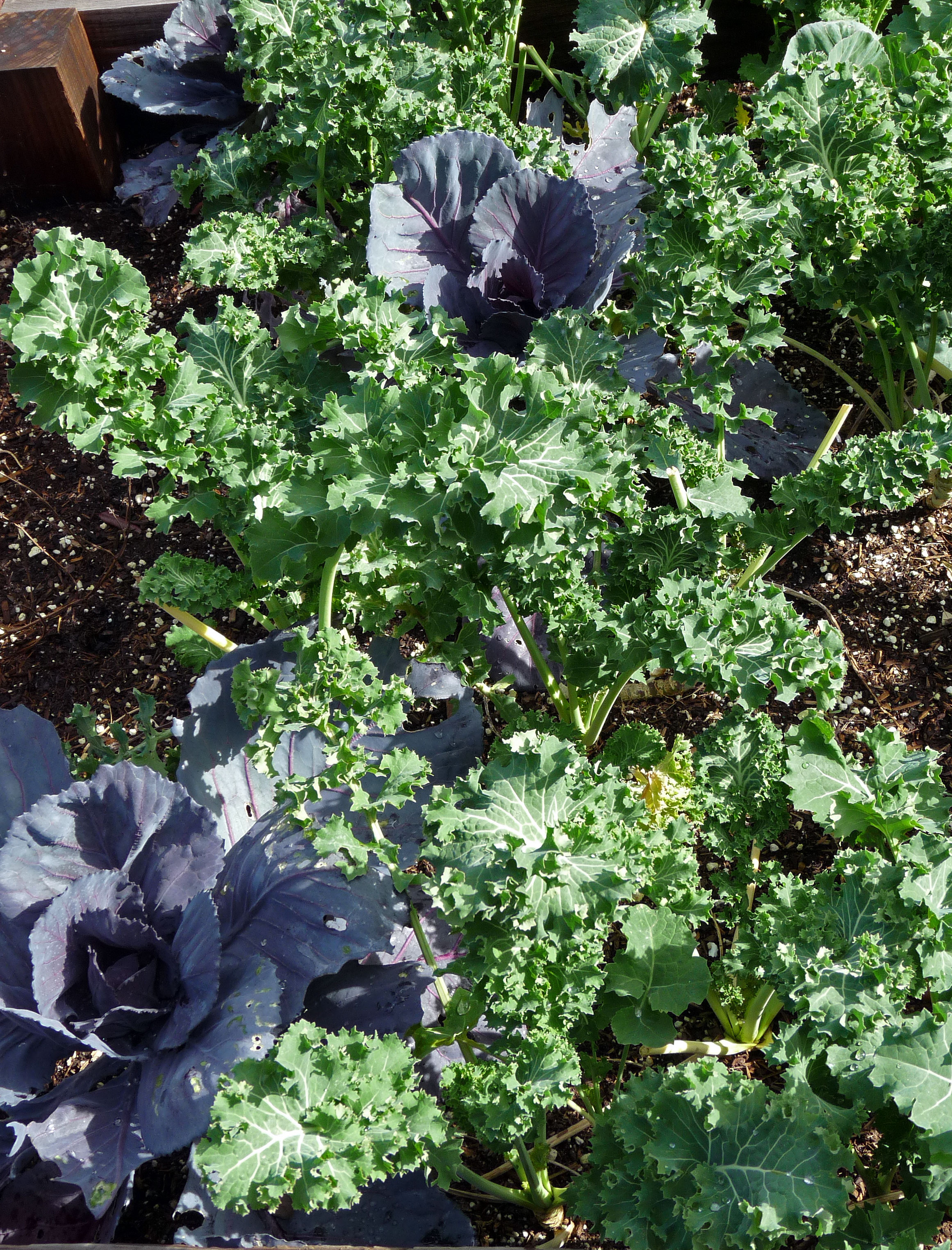
Kale, spinach and collards prefer the cool winter weather. The spinach that I am growing will not do a thing for me in warm weather even when I shade it with tomato plants. But it grows well in the winter and doesn’t fall apart when exposed to a light frost. The ‘Dwarf Siberian’ kale and ‘Vates’ collards actually improve their flavor after exposure to colder temperatures. Most of the red cabbages growing among them have been ripped apart by slugs, but the green cabbages are doing much better and providing us with slaw and sauerkraut galore.

Here are the 22 fresh foods we can eat out of our yard this February:

1. Spinach
2. Mustard Greens
3. Snap Peas, Snow Peas and Shelling Peas
4. Chard
5. Parsnips
6. Cabbage
7. Collards
8. Carrots
9. Rutabagas
10. New Potatoes
11. Beets
12. Fava Beans
13. Arugula
14. Celery
15. Lettuce
16. Radishes
17. Turnips
18. Bok Choi
19. Green Garlic
20. Broccoli
21. Cauliflower
22. Kale

Do you have a favorite winter-grower in your food garden? Let us know about it in the comments section. We’d love to hear what works for you and give it a try next year.
Compost and Cabbages

1 Comment

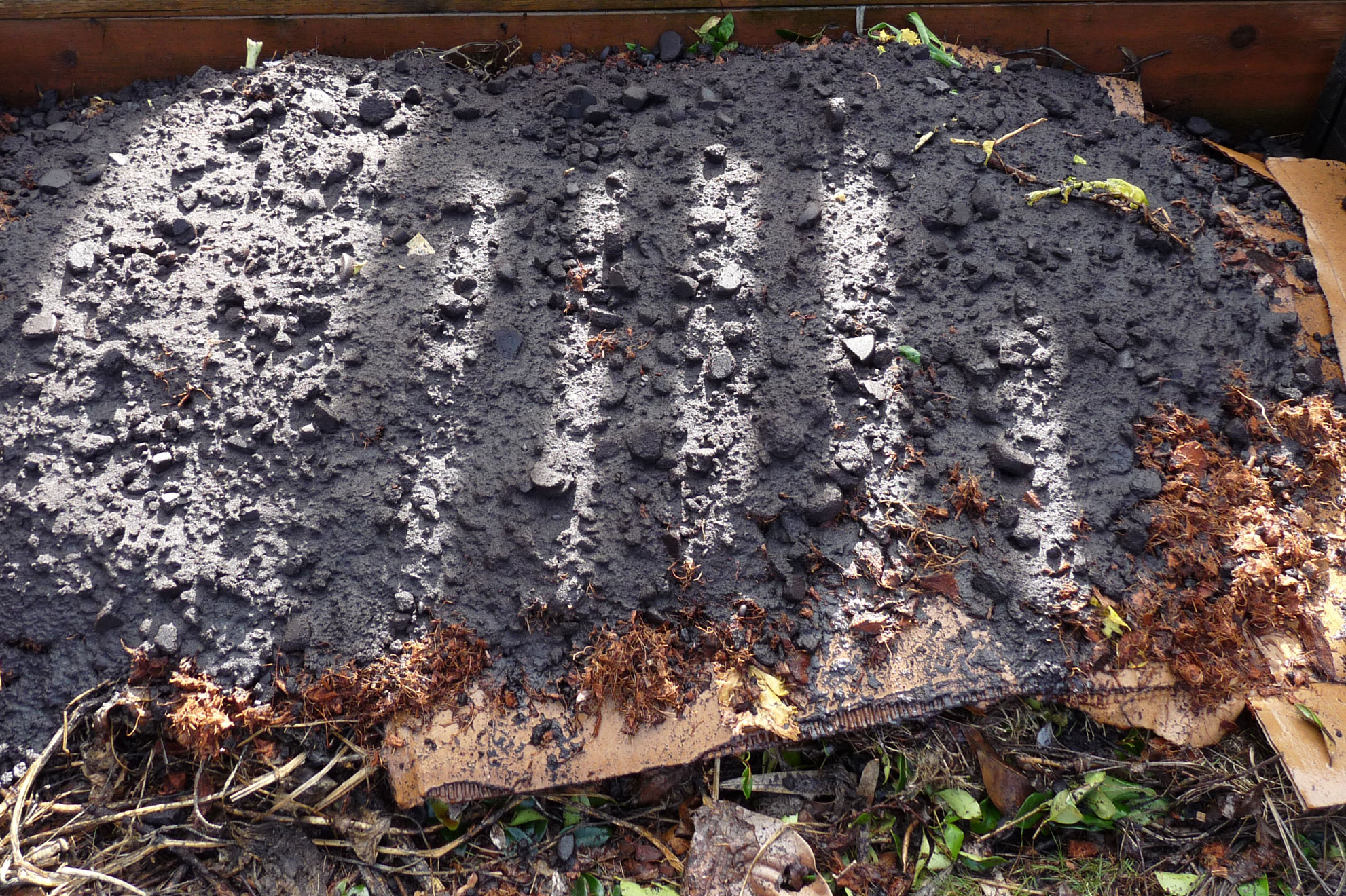
Coffe Coir Cardboard CompostIsn’t that beautiful? That’s what’s leftover after you get your morning Trenta latte. And now it’s all mine. Of course, I added a few things to the recipe. I started with a layer of sticks and stalks and brush bits that were laying around the yard. I topped that with pulled weeds, spent cole crop leaves and any soil leftover in flats that had been transplanted. Then a layer of cardboard saved from online holiday shopping. I topped it all off with a block of coir someone was throwing out and half a dozen bags of spent coffee grounds. Stir. Wait three months. Serve. Though halfway through I have been known to toss some good potting soil on top of the pile and plant into it ‘half baked’. Wouldn’t be the only thing around here…

Broccoli Sprial 'Veronica'I was surrounded with beauty in the garden today. Just look at this. Is it a broccoli or a cauliflower? I have no idea. It’s called ‘Romanesco’ Broccoli but all I know is it’s fascinating to watch the heads develop. It’s actually a spiral made up of other individual spirals. Think of the math lessons we could cook up with these things. And, broccoli in name or not, when it does cook up, it does so much more like a cauliflower. It has a very mild taste but holds it’s fun shape fairly well post stir-fry.

I planted the Romanesco within a week of the other broccoli starts in the same beds which have long since developed their central heads. So plan on it taking some extra time. Perfect for the family food garden.

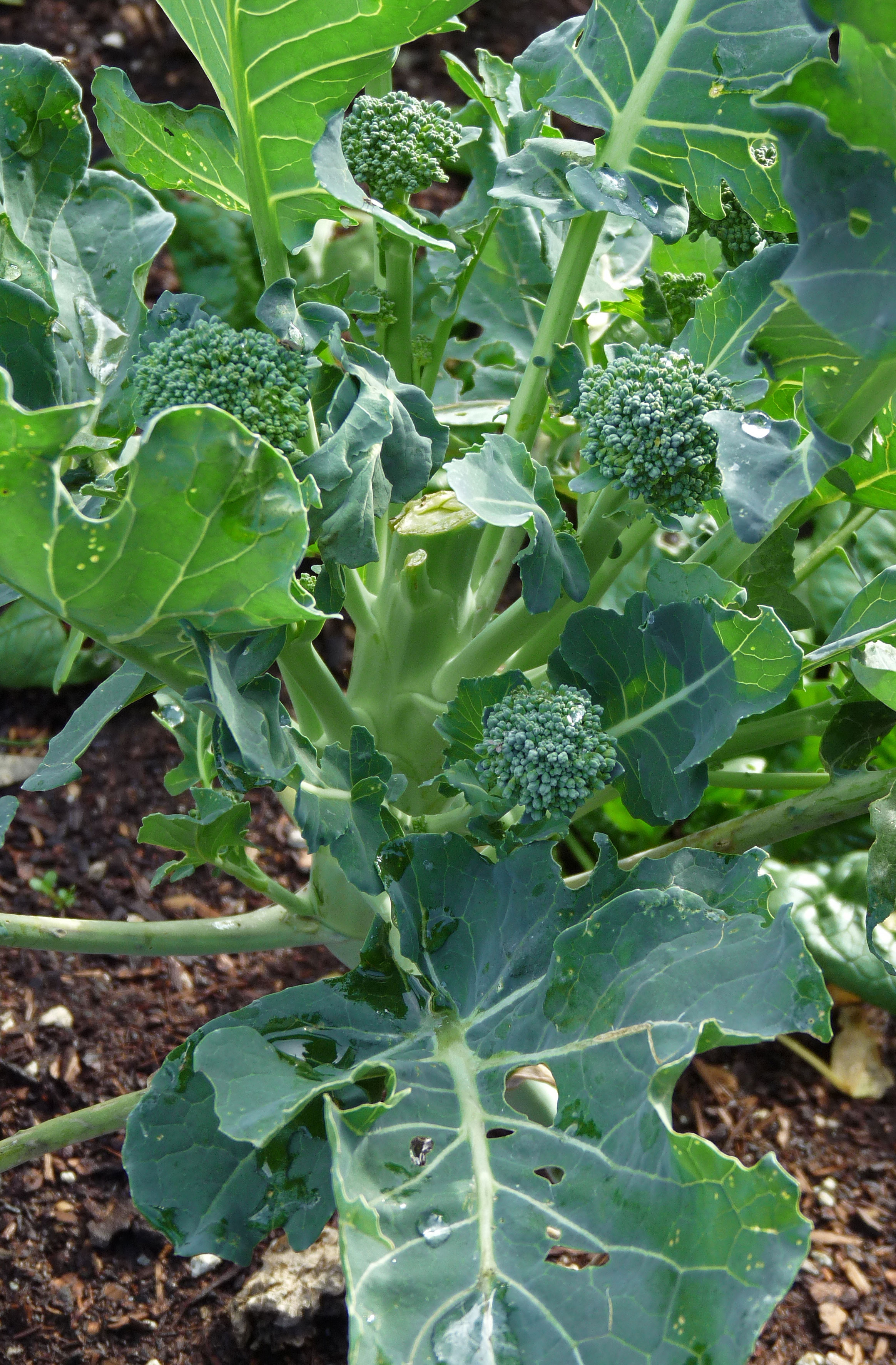
Broccoli Side ShootsOf course, the other varieties of broccoli aren’t done. Most of them are just getting to the best part. In many varieties of broccoli, once the plant has produced a central head, which is then removed, it spends it’s energy pumping out lots of delicious side shoots. These perfect side shoots are slated to meet browned butter, garlic and Mizithra cheese right around dinner time tonight. Any shoots that get past the tightly formed stage before I catch them go into salads. Over last winter our fall-planted broccoli kept us in side shoots well into spring.

This year I think it’s going to be arugula that will be the plant that keeps on giving. Though it does eventually go to seed and stop producing edible leaves, it suddenly seems to be everywhere. It’s planted with the onions. It’s planted with the cabbages. It’s coming up in the old bean bed. It’s holding it’s own next to the ‘Purple Osaka’ mustard that is also going to seed for saving. I wonder if I can make pesto out of arugula.

Red Acre Cabbage and Dwarf Siberian KaleAnother thing I need to start cooking more of is cabbage. Though I hate to pull these up, I do have a good recipe for borscht I’ve been meaning to try. I just love the way the deep purple leaves look with the ‘Dwarf Siberian Kale’. Not that they are probably good companion plants. They are both in the same family and have essentially the same growing requirements. I haven’t noticed any ill effects from growing them together. Certainly the kale is happy enough. But slugs will slime across hot cement to get to my red cabbages. I set out a bowl of beer under a patch of cabbages I was trying to save and I swore I could hear slugs laughing at me the next morning. They had ignored the beer completely and eaten the red cabbage leaves down to the leaf spines they left sticking out like bare bones. Remind me whether or not Sluggo is organic.

I may try The Melon Trick, since my husband is eating frighteningly out of season cantaloupe lately. You’re supposed to take a melon rind and lay it dome side up near the slug buffet. If they actually prefer it to my spinach and red cabbage, they should climb into the melon rind during the night and in the morning I can scoop the whole thing up and out of my vegetable patch. My worms certainly love cantaloupe rinds. I’ll let you know how it goes.

Cabbages and CarrotsOr maybe I just need to plant more carrots. These cabbages aren’t totally unblemished, but they have minimal slug damage, especially compared to the red varieties we tried. These are ‘Stonehead’ cabbages grown with ‘Amarillo Yellow’ carrots on one side and ‘Danvers 126 Half-Long’ on the other. They all seem very happy together. The carrots are even starting to size up enough to give us slender ‘baby’ carrots for salad when I thin the patch.

Maybe the red cabbages are just more delicious to slugs? Maybe carrots are hard to slime your way over in order to get to the cabbages? The next thing to test is the amount of slug damage to a patch of red cabbages planted with these same kinds of carrots. Sounds like a great project for next fall.

Salad Days

Leave a comment

Green onionWe actually managed to over-winter a few loose-leaf varieties of lettuce and a surprisingly hardy French chicory whose leaves turned a gorgeous deep burgundy in the cold weather. But most of our winter salads are made of chard, spinach, mustard greens, beet greens, radish sprouts, arugula and green onions we discovered bursting out of a compost pile. Now that we are on the far side of the Winter Solstice, I’m starting the Asian greens–the Pac Chois and Chinese Asparagus–and a much more expansive salad garden.

I chose High Mowing Seeds ‘Beta Mix’ to anchor the salad garden this spring. It’s a blend of beet and chard varieties that should have no trouble germinating even if we have a cold February. Of course, that’s anybody’s guess. The next ten days of weather here call for Sunny and 60’s which will make a wonderful germination window for just about anything I want to plant as long as I can keep all the seedbeds moist enough.

I plan to include spinach, mostly the Guntmadingen from Adaptive Seed, several Romaine varieties and some ‘Rubin’ lettuce they gave me yesterday when I made the pilgrimage to Baker Creek Heirloom Seeds in Petaluma. The ‘Rubin’ leaves have a warm red-gold color that just has to be good for you.

If I can bear to cut and compost more of the favas and other cover crops, I’ll also put in some of Territorial Seeds Italian Saladini blend. But the problem with lettuces is that you really don’t want them all at once, you want them over time. Unfortunately, the window of optimal eating for any individual lettuce plant is actually very short. I’m using two different strategies to try to keep the family in salads this spring. First, I’m planting mixed varieties, so not all the plants in the mix are ready at once. And, second, I’m planting in small sections every couple of weeks from here until the weather gets settled and really warm and we switch over to eating orach and other summer greens and tomatoes and cucumbers fill our salad bowls.

Are you starting the spring salad garden yet? What are you putting in this year?

The December Garden

Leave a comment
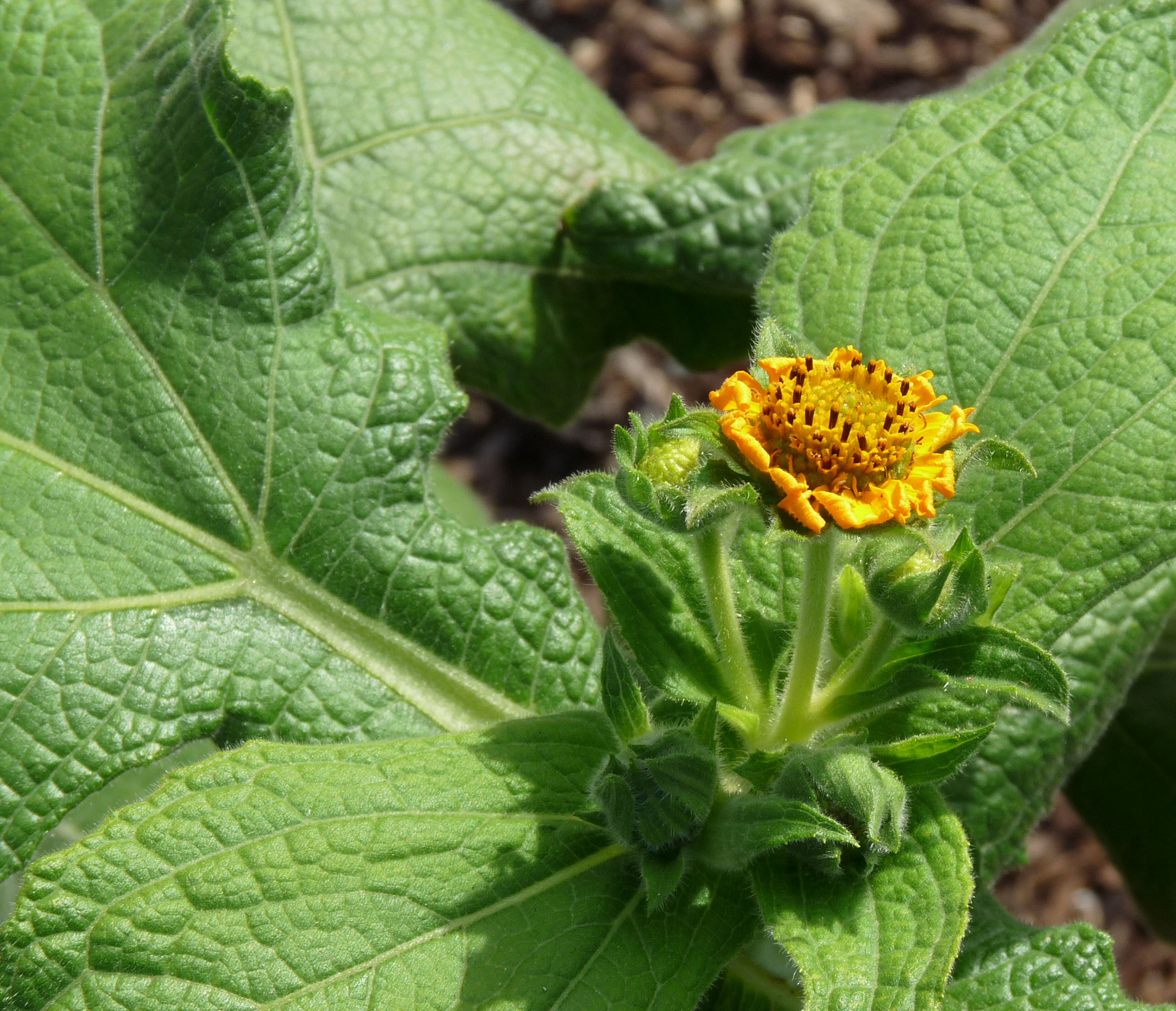
Yacon Flowers

The tasty tubers are much bigger than the bright flowers

I apologize if it sounds a little sad to say that the yacon plant’s reward for making these sweet little flowers was that we ripped it out of the ground, ate it’s tubers and cut it’s roots into five separate sections before replanting them.  I couldn’t help it. It was delicious. Yacon, also called “Bolivian Sunroot,” has a crisp, fruity tuber that ads a satisfying crunch to salads and can be prepared a number of different ways. I bought this one on a lark from Pam Peirce when she was visiting Common Ground. Now that I have tasted them, I hope to have a stand of five plants next year. They can get as tall as 6′ and should make a nice visual break between the front garden beds and the street.

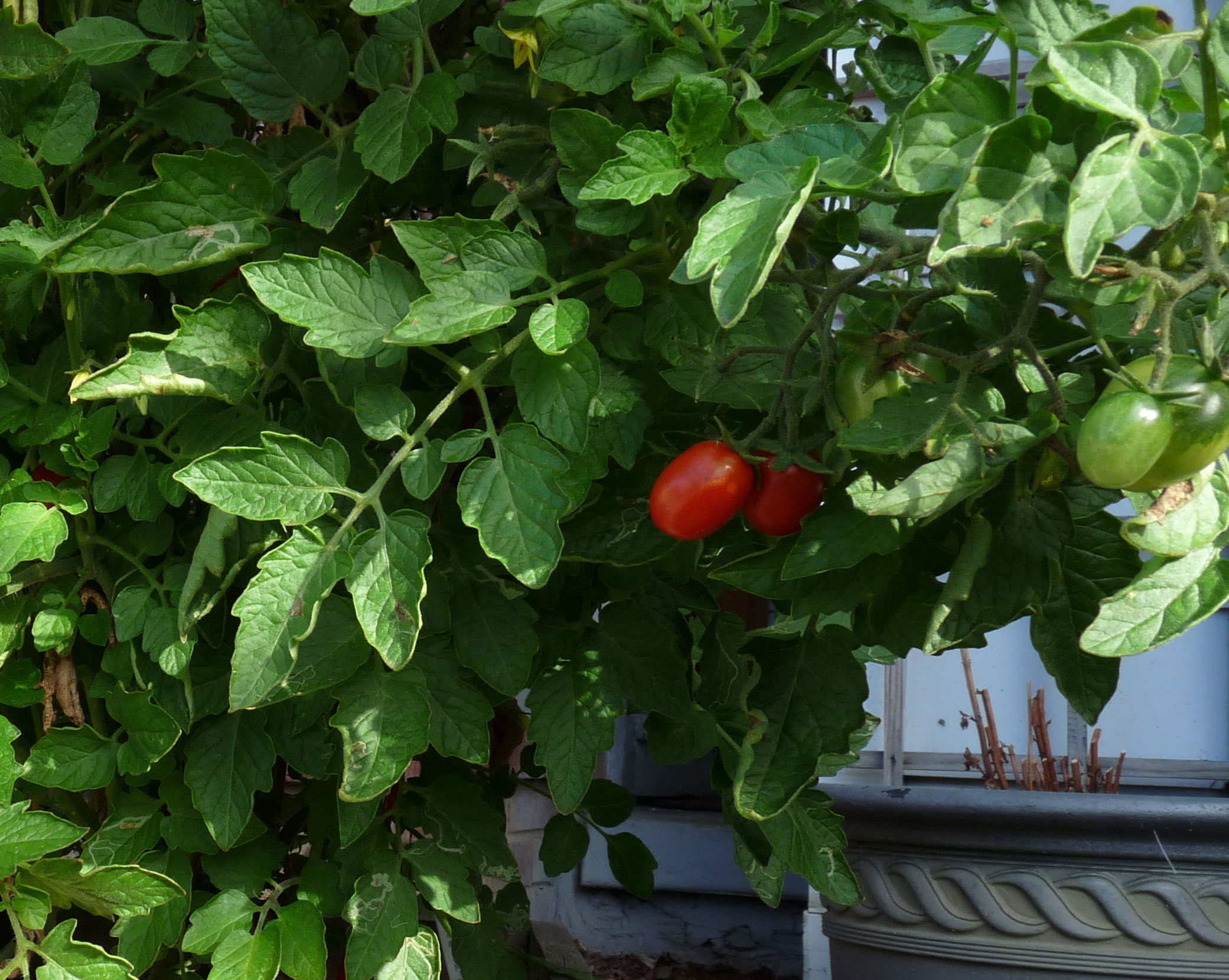
Red and green tomatoes in December

Glacier Tomatoes ripening in December

I brought in the last of the peppers, eggplant and Armenian cucumbers right after Thanksgiving. If you had to eat out of the garden right now in mid-December, you could have spinach, kale, chard, arugula, lettuce, green onions, a couple snap or snow peas, mustard greens, broccoli, cabbage (the loose leaf kinds anyway), rutabagas, turnip greens, chicory, sorrel, radishes, rosemary or thyme, and tomatoes. Seriously. I have tomato plants flowering and setting fruit, in December. I put the ‘Glacier‘ tomatoes my mother-in-law sent over in large pots, uncovered so pollinators could get to them, on the patio set against a south-facing wall. It’s a cozy spot, sure, but we had frost for days running a week or two ago. These tomato plants do not care. And who am I to argue?

Seed flat

Keep 'em coming

This week the plan is to set out transplants we have grown of more arugula, chard, kale, Osaka Purple mustard, Chinese asparagus, winter leeks and mesclun mix. And to seed new flats of rutabagas and spinach. If I get to it before the rains come back, I’m going to try a stand of Alderman shelling peas near where I put in the Green Beauty snow peas. They aren’t in a well protected spot, but last year I had both snow and snap peas grow right through the winter. Frost got some of the pods, but the plants survived and flowered again.

All the weather folks keep telling me to expect an unusually wet and cold winter, which sounds an awful lot like the summer we just had, but I’ll believe it when I see it. Yesterday it was 65 degrees. Those tomatoes were probably sweating. ;-)

Now That’s Dinner!

1 Comment
Picnic Shoulder Roast

Smokin' "Picnic"

My apologies to the vegetarians in the crowd, but I just had to include a shot of the Picnic Shoulder Roast from TLC Ranch my husband smoked for our Father’s Day feast last night. I got a “Versatile Cook” box of their pork through our CSA and was glad to learn that Picnic Roast is a good cut to put into the smoker. Now I can spend my time getting versatile with the other cuts they sent. (I am currently thinking of mixing the ground pork with some grass fed ground beef and mixing up some meatballs, but I digress from last night’s meal…)

The Picnic Roast was treated to a rub the night before it was cooked, then it was injected with my husband’s marinade mix and basted while it smoked for several hours. About ten minutes before the roast was due to come out of the smoker, he also added a finishing sauce. Then I endured a torturous, ravenous ten minutes of ‘resting’ (the meat–not me!) while the delicious and complex aroma of all those carefully blended ingredients filled the house before I was allowed to taste it. And oh, it was worth the wait!

Mixed potato varieties ready for cooking

Grab Bag Potato Salad

I could have slapped any old mayonnaise-y side dish down next to this amazing meat, it’s not like anybody was going to notice the side dishes! But I went with Balsamic Potato and Green Bean Salad out of home grown California White, Red-Skinned, All Blue and Rose Gold potatoes, fresh from the garden. I tossed together the first of our Contender green beans, vinegar, a little sugar, olive oil, green onions, chopped thyme and cracked pepper. Not your average potato salad ingredients where I come from, but it makes a very tasty salad and I’m glad I took the time to root around under our potato plants to steal the new potatoes the recipe called for. We also feasted on Zucchini Bake, frittata and something called “Poke Cake” that I had never heard of but my mother-in-law and stepdaughter made it and everyone enjoyed having it around.

Now I just hope there is something leftover for lunch today!