Bridging the Hungry Gap at Dirt to Dinner

1 Comment
Fresh peas

No Time to Cook These Peas

Historically speaking, this time of year was often referred to as the ‘hungry gap’ when food stored for the winter was running low–or running out–and spring crops had yet to produce. But this year the Dirt to Dinner garden is doing its best to bridge the hungry gap.

Yesterday we picked a big bowl full of ‘Petit Pois‘ shelling peas so sweet we ate every last one of them before we even started cooking. Today we tried the ‘Telephono‘ peas.  And there are four other varieties of peas ready to pick and six coming on soon.

There are lettuces for salad, along with celery, spinach and the last of the wintered-over kale, arugula, scallions and snow peas. There are still some carrots, parsnips, rutabagas, turnips and radishes in the ground. And the potato patch planted on Christmas is just starting to pass its peak of leaf growth. If we reached around under those slightly weathered branches, I’m sure we could find some new potatoes. And we may have to, as the last Dirt to Dinner ‘All Blue’ potato accompanied a pot roast into the slow cooker earlier this week.

Mini Purplette Onions

'Purplette' Onions Before the Dryer

There are plenty of herbs around to flavor whatever we do find to eat. We have chives, sage, thyme, oregano, rosemary and parsley all doing well, and some marjoram trying to fight its way back to full vigor. Some of the herbs are already finding their way into the dehydrator. Today we did three full trays of thyme leaves. Tomorrow I plan to add slices of green onion to the drying list as there are beautiful stems of ‘Purplette Bunching’ onions ready in the middle of the asparagus bed. There are also bulbing onions tucked here and there around the garden that we could pull and eat if we needed to.

But, thankfully, we don’t. We can wait and plot and plan for summer’s tomatoes, basil, beans, cucumbers, squash and melons. And sip fresh lemonade as we count the blossoms on the apricot, cherry, nectarine and apple trees. For this year at least, no one will be hungry in the Dirt to Dinner garden.
Dark Days Dining – Passing the Husband Test

2 Comments

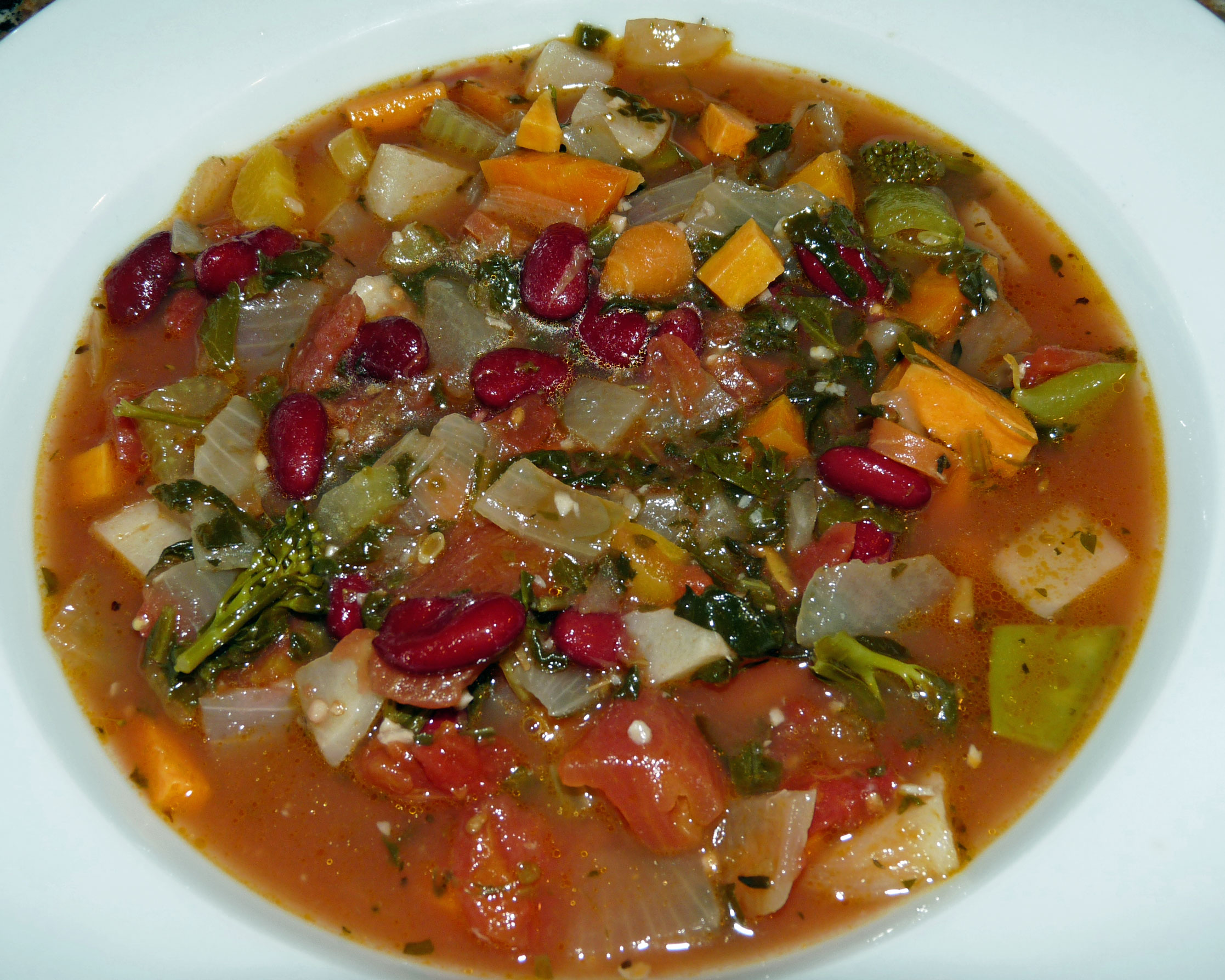
My husband has declared my most recent creation straight out of the garden to be, “The perfect vegetable soup.” (You can see why I keep him around.) But the secret was actually a little trick I borrowed from his mother.

Vegetable Soup

The "Perfect" Vegetable Soup

I took my harvesting basket and a knife into the garden to see what I could find. We have dozens of broccoli shoots on plants I would have pulled out after the first head if the folks at Full Circle Farm hadn’t taught us better during our volunteer work day this winter. There’s also a nice crop of snap peas and snow peas–if you happen to find a time to pick them when the kids aren’t in the garden. ;-) I found beets, rutabagas, turnips and three or four different kinds of carrots. I am especially partial to the yellow ones in my winter cooking. They are a bright spot in the bowl that is surprisingly cheering this time of year. I also found plenty of oregano, thyme, chives, parsley and rosemary. And celery loves the wet weather we’ve been having.

I started with the traditional olive oil, carrots, onions and celery in the big stock pot and added in the rest of the root vegetables as I chopped. I also had some potatoes that needed to be used and I tossed in some sweet potato, trying not to waste that either. When the vegetables started to soften, I added in some chopped garlic. A few minutes later, I added two cups of chopped tomatoes, with the juice, half a cup of cooked kidney beans, the herbs, salt, pepper and four cups of chicken stock.

I let that simmer for half an hour while I cleaned and prepped the peas, broccoli and greens. Some of my broccoli plants are perfectly clean and healthy, but some of the flowerettes I have been picking are over-run with aphids, requiring a good wash and even a quick soak in salt water to clean them. I need to get out there with some soap and then go buy the kids a tub or two of ladybugs. ;-)

After the flavors had settled a bit, I brought the soup to a low boil and added in the rest of the vegetables and covered the pot for two minutes. But it still tasted too tomato-y. It was a bit harsh like Summer Sauce when you haven’t cooked it down yet. This is where my mother-in-law comes in. I consult with her on all culinary mysteries. She told me to slowly add some more herbs and red wine, tasting in between each addition until the soup was more balanced. Well, certainly never noticed *that* on the back of a Campbell’s label. I had a nice Cabernet in the cupboard that served well.  Three pours and some oregano later, I rested the soup overnight in the refrigerator.

And then I fed it to my husband. The same husband who, when presented with my recent homemade creamed chicory, burst out with, “That is truly awful!” Luckily the vegetable soup went over better. He liked it, Hey Mikey!

Dark Days Dinner – A Variation on White Bean and Kale Soup

3 Comments

Carrots, turnips & herbsOK, by the time I was done with it, my version of this soup was quite nearly a stew, but it was still yummy. Four different recipes for a White Bean & Kale Soup were swirling around in my head when I went into the garden to see what I could find. This one looked especially appealing but unfortunately I didn’t have all the ingredients.

The ‘Dinosaur‘ or ‘Covolo Laciniato Nero Di Toscana Precoce‘ kale was easy. It loves this kind of winter weather and puts out dozens of long, dark green fingers from a tall central spike. My ‘Tokyo Market‘ turnips surprised me with fat white globes sitting atop the soil with nothing but their skinny taproots in the ground. And, this year at least, we finally have carrots! Last year by this time they had all been eaten, but we have 12 square-feet of carrots and parsnips still in the ground waiting for a recipe like this. The rosemary bushes are also content to grow straight through the winter here, so I pulled off a tender branch to flavor my vegetable stash.

Inside I had been soaking the ‘Jacob’s Cattle‘ beans we grew over the summer. They were the closest thing to a white been that I had. This year I plan to grow Cannellini and at least one other White Bean and Kale Soupwhite variety, but for now, we’re making do with what’s on hand. Might need to call this one “Pink Bean & Kale.”

I sautéed an onion in olive oil for a few minutes then added the carrots and turnips. While the vegetables were softening, I stemmed the kale and chopped it fairly fine. I also cut up some nice chicken Italian sausage with the perfect amount of fennel in it that just squeaked over the 100 mile Dark Days Challenge line in time to join us for this meal. I tossed the sausage and kale with the softened vegetables and added the chopped rosemary leaves. As soon as the kale started to brighten and wilt, I added in the now cooked beans and simmered the whole concoction on low for about an hour to marry the flavors some.

Before serving, I added fresh ground pepper and my husband insisted on dusting his bowl with Parmesan as he would with Minestrone. The whole family approved, which was a nice surprise as I had been expecting the little one to turn her nose up at the fenneled Italian sausage. Instead, I caught her scooping some out of my bowl when I wasn’t looking!

Dark Days Stir Fry

2 Comments

Roman BroccoliTired of all the rich holiday food and desperately in need of a fresh vegetable, I grabbed an empty dish pan and headed out into the garden this afternoon to see what I could find to turn into dinner. The first thing I pulled were some nice fat rutabagas. I’m hoping to re-purpose they bed they are growing in very soon so I wanted to use them up anyway.
Next to the rutabagas there was a very nice head of ‘Romanesco’ Broccoli growing. I have been watching this plant carefully because I’m not entirely sure how to tell if it’s ready to eat or not, but I was more than happy with the size so I figured it was worth a try.

Next to the ‘Romanesco,’ there were lots of side-shoots on my regular broccoli, so I collected those. I picked through the snow pea vines and found half a dozen pods that were ready to eat. In search of more variety and color, I pulled some bright white ‘Tokyo Market’ turnips and several different kinds of carrots, ‘Yellowstones,’ ‘Romeos’ and ‘Nantes.’

Inside again, I diced and sliced the vegetables, including the turnip greens, and tossed them into a skillet with olive oil and a red onion left over from burgers my husband cooked a few nights ago. I added a few dashes of white wine vinegar and tamari and covered the pan to steam everything. When the vegetables were almost done, I tossed in diced jerk smoked pork chops hubby cooked on New Year’s Day and stirred it all together for a few minutes before calling it done.

Simple. Fresh. Very satisfying.

Pea Trials Year 2

Leave a comment
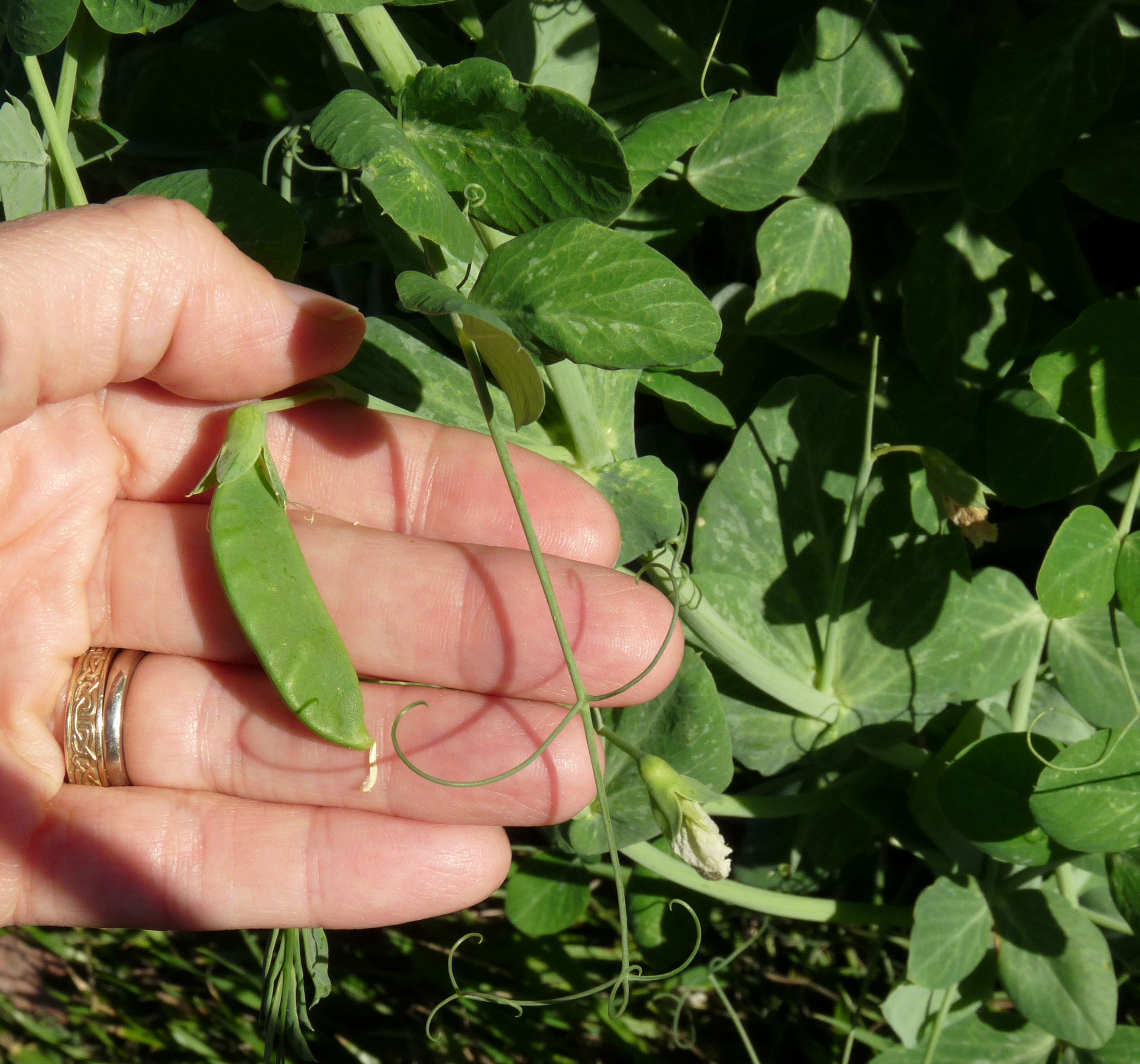
Pea pod in hand

Fall Wando Success

This year, rather than start the Pea Trial in January, I decided it might be worth while to try growing different varieties right through the winter. I started with a shelling pea that I always see mentioned along with it’s resistance to heat, Wando, and planted it on August 13th. I figured it had the best chance with our fall weather. Maybe it was just luck, but we have been eating peas in the garden from this small test patch since October right into December. Frost got some of them, but the plant has put out new flowers and started over.

In mid-September some of the Dirt to Dinner kids and I planted two more test patches of peas. One side is Cascadia snap peas and the other is Oregon Sugar Pod snow peas. Pea plantingThese have also survived the three or four frost days and the winter winds. If it gets too cold though, the pods on the vine are ruined. But we pick them off and toss them into the compost and the plant puts out more flowers. I put in a test patch of Thomas Laxton peas on October 31st but as soon as I thought it was safe to take the burlap off of them (11/15) the patch was decimated by whatever evil critter out there chews the leaves off all the sprouting vines. I have to remember that in the Dirt to Dinner garden peas planted directly in the soil need protection until they are well established.

We also have another small patch of Petit Pois peas put in on November 12th with starts from Yamagami’s in Cupertino.

These diminutive peas are authentic French petit pois and are ever so sweet, ready to use at miniature size, when the slim pods are just 3” to 4” long. Each pod contains six or seven tiny peas, less than half the size of regular shelling peas. Their buttery flavor and tenderness cannot be matched! Plentifully produces petit pois on disease-resistant, 18” to 24” vines. These small, delicate vines need support.

Block planted Petit Pois

Petit Pois Perfect

The plants are still pretty petite right now at the end of December. I haven’t seen any flowers develop but they are shaded by a massive tomato plant I was trying to winter over. Not sure that experiment is going to be worth the space or potential shade cast though. The tomato is a very unhappy grey-green right now that does not bode well. Maybe I will cut it back to whatever looks healthy and green and give the poor peas some more sunlight. I’ll check their color more closely when the rain lets up.

On Christmas, which was a gorgeous gardening day here, I put in about 50 Sugar Daddy snap pea seeds, under covers and started another 30 in the garage as back-up just in case those get destroyed. In January I plan to do some of the Italian pea varieties we liked from the trial last year and I swear there is a packet of Laxton’s Progress peas around here somewhere that are waiting to be planted. If only I could remember what I did with them!