Peas and Potatoes

Leave a comment
Potatoes Looking Done

Potatoes Looking Done

Last weekend at our Open House the kids harvested the last of the All Blue potatoes. The plants were looking pretty sad by the time we got to them. Which is fine. That’s what potato plants do. When the vines die down then you have an easy way to tell that they aren’t doing anything more to grow the potatoes and you can take them out of the ground now. The ones I hadn’t already stolen ‘new’ for potato salads, that is.

This week during our Open Garden time, we pulled the spent vines and tossed them into the compost. Then we added a layer of finished compost and the worm castings we saved when we added a new level to the worm farm and mixed those in well with the existing soil.
Split Bamboo to Keep the Dew and Mold Off the Plants

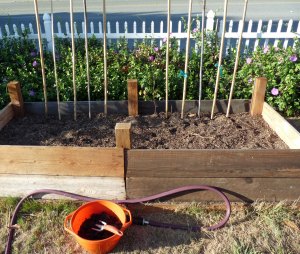
Split Bamboo to Keep the Dew and Mold Off the Plants

Peas like to have something to climb on, even if they aren’t the pole varieties that grow very tall. On one side we put in Cascadia Snap peas and the seed packet says they climb to 32″. Our poles extend well beyond that, but we figured there was no harm and that way the poles stay a good size to use with our determinant tomato plants in the Spring.

The other side of the bin holds Oregon Sugar Pod Snow Peas, the ones that you pick and eat flat. We are only expecting those vines to grow to 28″ or so, but it still helps to keep pea vines off the ground when you are growing them in the Fall. We don’t know if the weather will be wet or the slugs will be hungry so climbing gives the vines a little bit of an edge against both bugs and disease. Peas also don’t like to be touched and having them staked will make it easier for us to harvest the peas without messing too much with the sensitive vines or possibly spreading disease from one plant to another.

Spacing Out the Pea Seeds

Spacing Out the Pea Seeds

The Cascadia peas are planted ~1″ to 1 1/2″ apart and the Oregon Sugar Pod packet insists that they need 2″. The packet actually says “Seed Spacing: 2″ (Yes. 2″)” which made me feel like they knew me and maybe had seen how closely we had packed in the peas last year during the Winter Pea Trial. I think for one of those varieites we calculated almost 100 peas planted in a single square foot. We gave the Oregon Sugar Pods each their 2″. If they don’t all sprout we can always fill in next week when we see what we’ve got coming up.

The middle section of the bed on the Oregon Sugar Pod side we planted some Golden Beets. Next week during Open Garden we can keep filling in the bed. It might be nice to try some greens along the front of the bed where they will get a bit of shade and we have a seed donation package coming from Territorial Seed Company that might have some interesting things in it we’ll want to add. We also still have kale, broccoli, spinach, cauliflower and celery plants we have started that are all getting ready to look for more permanent homes. There’s always plenty to do in the Dirt to Dinner garden!

New Level of Vermiculture

Leave a comment
Worm Relocation

Worm Relocation

Worms have to eat too. As we discovered in Open Garden Thursday at Dirt to Dinner, it’s not hard to make a new lunch level for the worms to call home. First we removed the amazing compost the worms had finished with in the bottom layer of their home. (We saved that for our next project in the garden.) And we carefully placed all the worms that we could into the working bins of the worm house. It’s OK if some of the worms end up in the garden–they’ll survive–but we want to keep as many worms working in the bin as we can.

Worm Lunch

Worm Lunch

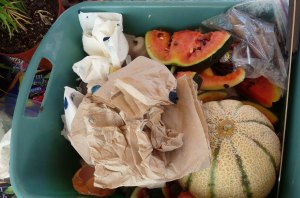
Then we took a collection of kitchen scraps that included several melons we had tried earlier in the day and other bits we knew the worms would enjoy.

Worms Can Work with Small Bits of Food Faster

Worms Can Work with Small Bits of Food Faster

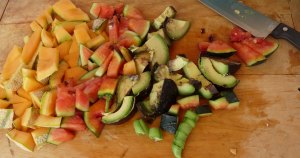
And we chopped the large pieces into more manageable bits to make them easier for the worms to use.

Mix Well with Damp Browns

Mix Well with Damp Browns

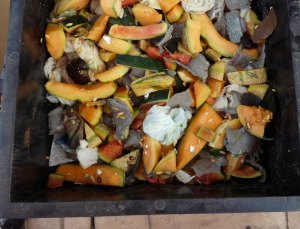
Next we added some “browns” to the compost we had chopped. Worms need a good mix of food scraps and other “greens” and paper towels, napkins, egg cartons and other “browns” just like you would mix in a regular compost heap. Moisten the browns so they don’t drawn moisture out of the foods and cause the layer to be too dry for the worms to move around comfortably.

From Bottom to Top

From Bottom to Top

Next we lay the newly empty layer on the top of the vermiculture stack and empty the compost bucket into it. The worms will work their way up through the stack. As they finish the compost in the bottom layer they will move up into the next bin searching for new food and bedding and leaving behind beautiful fertile “castings.”

Mix Well with Damp Browns to Fill

Mix Well with Damp Browns to Fill

The worms need to have a mix in the layer of about three parts dampened brown material to one part food scraps or green material. We filled in the layer with torn strips of newspaper to give the worms plenty of new material to work with.

Something to Read While They Work

Something to Read While They Work

The whole layer needs to stay moist, so we finished it off with several sections of newspaper on top that we then sprayed with the hose to keep damp.


Voila! Our worms are ready to move into their new home and start making more fertilizer for the garden.

Thanks, worms! Enjoy your lunch!

Inside A Seed

Leave a comment
Broad Bean Seed and Almond Nut

Broad Bean Seed and Almond Nut

Today in Open Garden time we dissected Broad Bean seeds and almonds to examine the structures you can find inside a seed. Here’s a quick rundown of the process for those of you who weren’t able to be with us today.

We used:

  • Several pods of Broad Beans
  • Almonds
  • Magnifers
  • Food dye
  • Towels for blotting dye
  • Tweezers

We first slit open the pods to examine the structures that hold and protect the seeds. You can see a picture of an almond “fruit” that would hold the almond “seed” you are familiar with here.

Inside a Broad Bean

Inside a Broad Bean

We examined the outer casing of the seed and the nut, called the “seed coat,” noting the differences, then carefully slit the seed coat on the long side of the seed or nut. That allowed us to carefully pry apart both the bean and the almond.

Here’s what we found inside the Broad Bean. One side came away clean and the other side has the plant embryo attached to it.

Embryonic Leaves Inside the Broad Bean Seed

Embryonic Leaves Inside the Broad Bean Seed

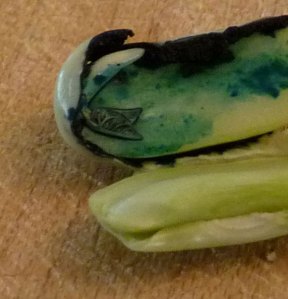
It wasn’t as easy to see things as we had hoped so we added a little bit of food dye to bring out the contrast. (Thanks for the tip, Mary!)

Look carefully. Can you see the tiny “seed leaves” folded up at the tip of the seed?

Embryonic Almond Bits

Embryonic Almond Bits

Here’s what the almond looked like.

Most of what you see is the cotyledon, the food stored inside the seed for the emerging plant to live on. That’s what makes seeds such nutritious food.

Which ones will you compare?

Which ones will you compare?

You can experiment at home with different kinds of seeds and see which ones give you the best view of their internal workings. If you’d like to share your results here on the blog, you can do that too.

Opening the Fall Program

Leave a comment
Squirrel o' Lantern

Squirrel o' Lantern

Today was the Open House for the new Fall 09 Dirt to Dinner program. We focused on three things. Getting to know one another and the garden. A chance to get more familiar with the different responsibilities we’ll each be taking on in the garden this session. And an exploration of some of the seeds that are available in the garden and that we will use this Fall to plant both here and at home.

During today’s Seed Hunt, kids spotted seeds in the garden including onion, celery, edamame, green bean, pumpkin, corn, grass, dandelion, lettuce, potato, lemon, cucumber, watermelon, tuscan melon, tomato, tomatillo, pepper, squash, pea, sunflower and “bird seed.” How many of them could you identify? We’ll be saving seed from many of these varieties to use again next year. I’ve already planted some of the celery seed we saved and hope to see it sprouting this week.

Many of the kids planted seeds to take home with them, made seed jars to watch sprout and tried several varieties of cucumber and melons–while noticing that their seeds all look very much the same. Sometimes it’s easier to tell which plants belong to the same family by looking at their seeds than it is by looking at the finished fruits.

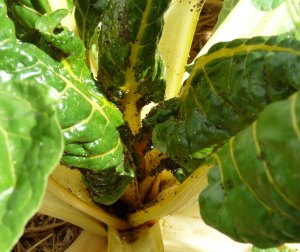
Chard Seeds?

Chard Seeds?

One enterprising student matched up a number of the seeds by plant family and noticed that it’s almost impossible to tell the difference between seeds for chard and seeds for beets. In fact, Harold McGee in On Food and Cooking says “Chard is the name given to varieties of the beet, Beta vulgaris, that have been selected for thick, meaty leaf stalks (subspecies cicla) rather than their roots.”

One of my highlights of the day was hunting through the finished compost pile with one new young gardener intent on checking out the various bugs we found there. I was also impressed with the spontaneous way the kids joined in the potato harvest. We’ll be saving many of the potatoes they planted today through the winter to be used as seed potatoes in the early spring.

A Fresh Start for Fall

Leave a comment

Seeds-from-the-SunIt’s almost time for the Open House for the new and returning Dirt to Dinner families. There’s a lot of work still to do to get ready but I’m excited to be getting the Fall program going. This session we are expecting a dozen families. Half were in the Spring program and half are new. We’ll have a balanced group as far as boys and girls and the ages will range from five to eleven.

SpiderMelonIn between meetings we’ll communicate by email and our Google group again this session since it seemed to work well in the Spring. We’ll pass on the Ning this time but we are keeping the accounts with VoiceThread since I know I will use it and we hope more of the kids will be involved in making VoiceThreads this session.
We’ll be rotating each family through ten different areas of responsibilities to help the kids personally experience the interconnectedness of all the systems working in the garden. I predict Worm Wrangler will be a pretty popular one. I am also looking forward to seeing what the kids do when it’s their turn to be the Journalist.

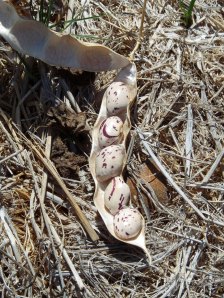
Dried-BeansThe Open House will also include a scavenger hunt to find various kinds of seeds around the garden. I went through earlier today with a camera and came up with twenty different kinds visible on, in or around the plants, if you include the potatoes. It will surprise me if the kids find all the ones that I did, but it won’t surprise me if they come up with something I didn’t. New eyes are forever seeing things in the garden that I seem to miss looking at it every day.

I also have seeds on hand for the kids to plant if they would like. It’s always fun to start some seeds in the dirt at the beginning of the project. And I have a lot of seeds available for them to just explore, compare and add to seed starting jars to take home with them.