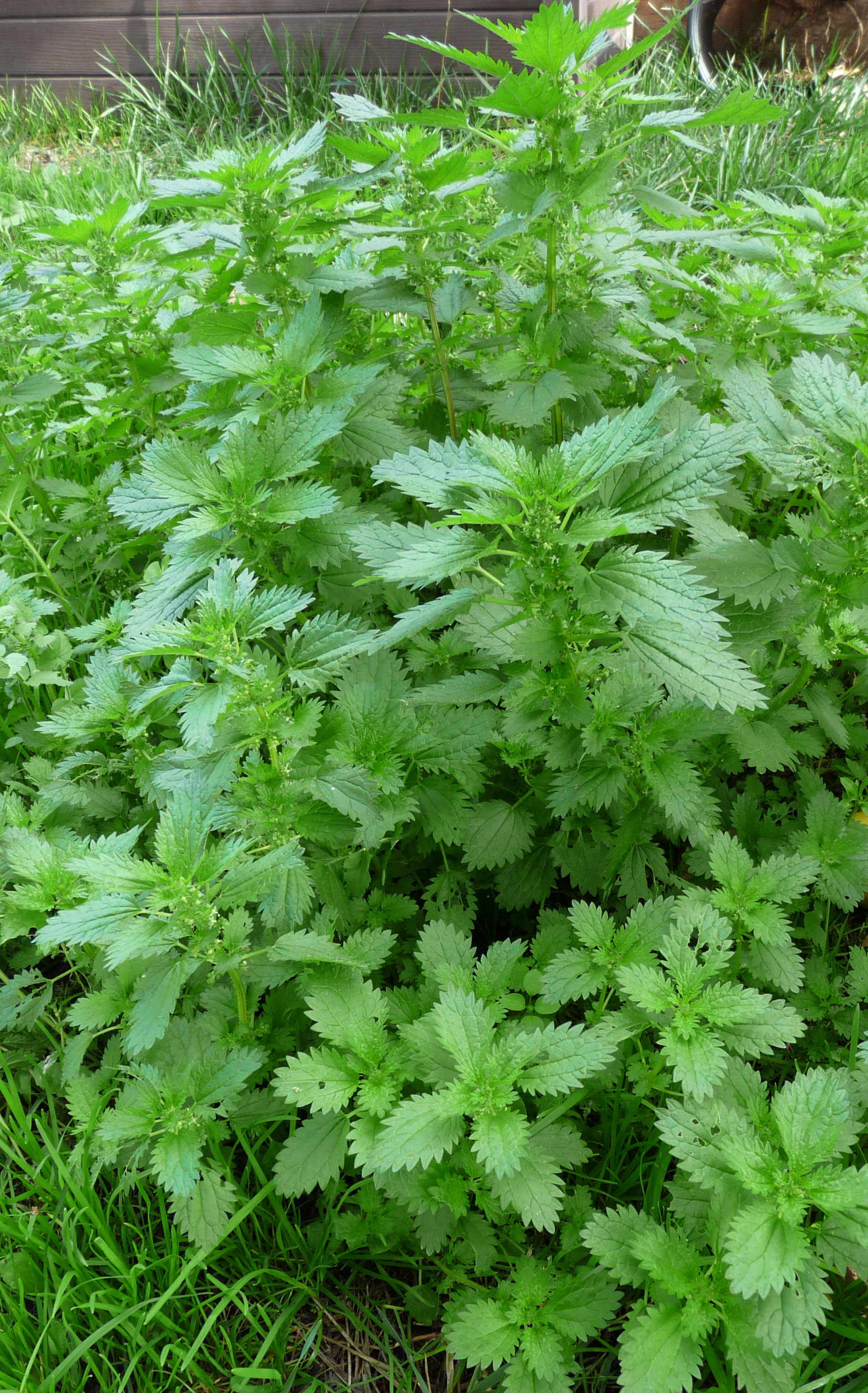
 This ever-expanding patch of nettles is growing in my back garden in the ‘dappled shade’ that it supposedly likes. My husband swears he won’t be eating it because we don’t really know what it is, since it just turned up there, in the middle of what was once a lawn. But they look like nettles, they certainly sting like nettles, and they grow right where nettles are supposed to grow, so I’m making them into a cream soup. Just as soon as I can figure out when the right time to harvest nettles happens to be.
In the front garden, in what I hope is a patch of roughly 75% shade, I fall-planted half a dozen goldenseal rhizomes. I haven’t seen them yet this year, but I hope to. From the description on botanical.com, it sounds like they’ll be hard to miss, “The flowering stem, which is pushed up early in the spring, is from 6 to 12 inches high, erect, cylindrical, hairy, with downward-pointing hairs, especially above, surrounded at the base with a few short, brown scales.” They aren’t strictly edible, but I think they’ll be a fun medicinal addition to the garden if we can get them started. The challenge may be figuring out exactly what “75% shade” is. Does that mean a spot that is in the shade 75% of the day? Or does it mean a spot that receives 8+ hours of sunlight through leaves or lathe or whatever that blocks 75% of that light?
 Over the winter I tried spinach in a spot that only gets the late afternoon sun, and it clearly wasn’t enough. The spinach plants are still there, but they are tiny. Nothing like their relatives planted 15′ away in the sun–which are delicious! They are Catalina spinach, my favorite variety to grow at home. They not only grew, they happily made new leaves as we picked them all winter long. The other green I seeded into a shady patch is Good King Henry. Still waiting for it to come up this year. For the warm months, I’m planning to do a patch of greens in lighter shade. I’m going to include spinach, mixed in with chard, kale, lettuce and sorrel.
I’ve heard a lot of conflicting things about runner beans and shade, though everyone seems to agree that they do not like to flower or produce beans in the heat. I am going to start a few plants early in a container tucked up alongside the house where it will stay warm. That should give them a chance to germinated and get going while the ground is still cool. Then, if they are unhappy, I can move the container to provide more or less light, as long as I am smart about how I trellis.
 This year I am also going to keep the snap peas going with additional plantings where they will get afternoon shade through the summer. I don’t want to go to extreme efforts to eat them out of season, but I’m curious to see how long we can keep them happy with a nice tall crop of something to their northern side.
Other suggestions I’ve had for the sun challenged areas of my garden include chives, radishes, Asian greens, sorrel, nasturtiums and currants. Do you have something that grows well for you in less-than-perfect light conditions? Let us know about it and we’ll consider it for our light trial experiments this year.
 I am that happy kind of exhausted that comes after a good day of actually accomplishing things. I even found time to pull out the weeds, pull back the old mulch and revive the center section of the front garden that serves as our Insectary.
 After the weeds were pulled and the flowers were planted, I covered the whole area with a couple inches of Happy Frog compost as mulch, watered it in, and wished it luck. Do slugs eat flowers? There are red cabbage plants with huge holes chewed in them not far from the Zinnias. The Blue Borage does not look like a plant you want to mess with, but the Zinnias have tender-looking rounded leaves. Maybe I should fill that pie tin with beer again, just to be on the safe side.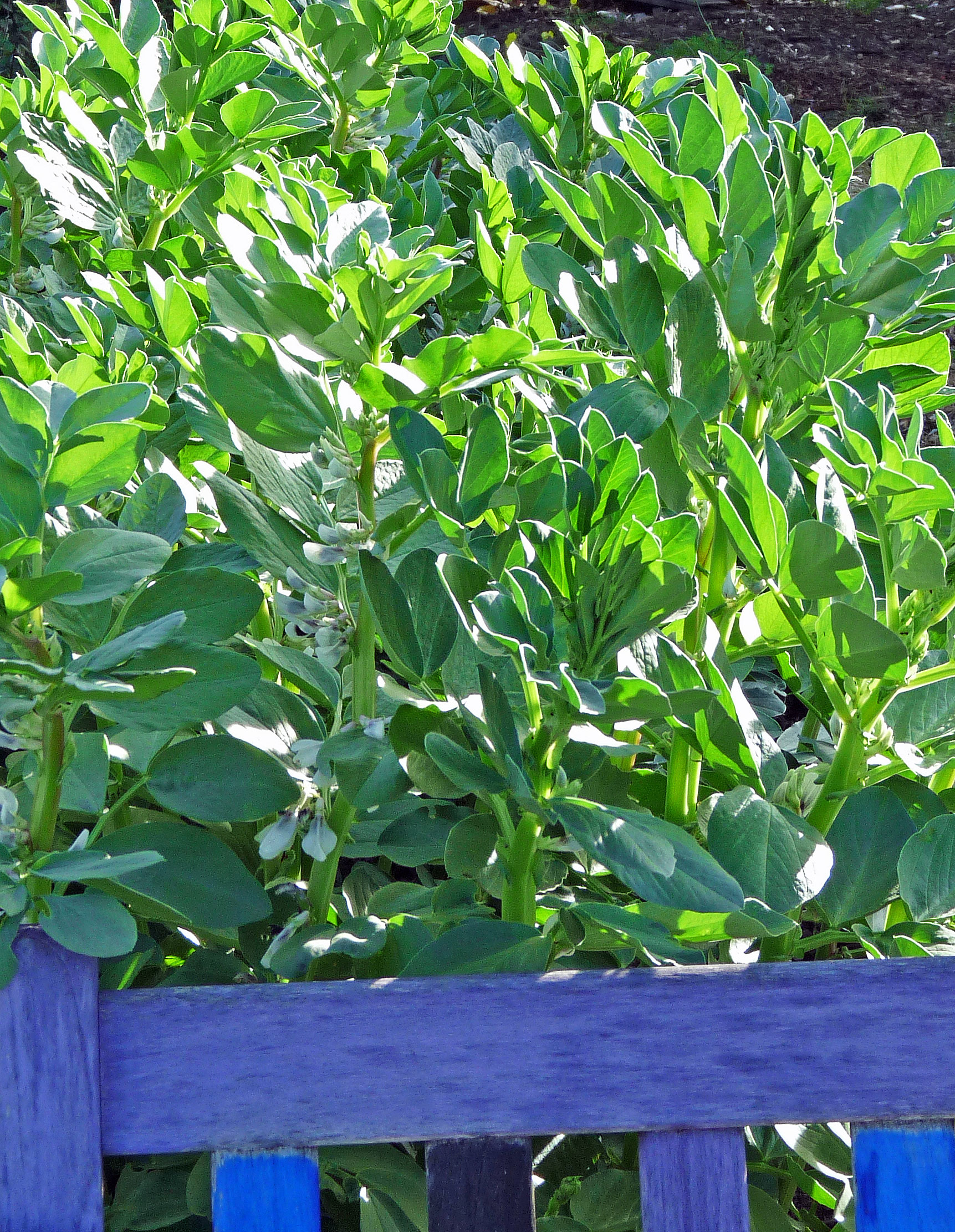


 Yesterday I found a bee on the bright yellow flowers of a Chinese asparagus plant that had gone prematurely senile in it’s pot after our unexpected January heat wave. I whispered to the bee that we have lots more interesting delights coming for it this spring.
 OK, this whole companion thing gets complicated quickly, doesn’t it?
 On December 14th we seeded half a flat of ‘Guntmadingen’ Spinach in
  Back at the spinach transplanting…
 From Dirt to Dinner