Spring Obsessed

1 Comment

Raised and Ready

Raised and Ready

Yesterday I realized that the collards that have wintered over so well have noticed it’s about to be Spring and are getting ready to go to seed. I quickly made them into everything from frittata with onion and bacon to classic Southern-style ‘greens’ to bags to give away to anyone who haplessly stopped by my house while they were still here. Waste not, want not. ;-)

Saying that I am a bit obsessed with gardening at this time of year is polite understatement. The minute the weather breaks, which is four or five times a day this week, I am rushing out to dig compost into soil, turn new planting beds, pot up young tomatoes or check on the peas.

Inside Starts vs. Direct Planting

Inside Starts vs. Direct Planting

I gave up the container I was using as a cold frame and decided to test the wisdom of starting bean seeds early. They sprout well, grow fast and are hard to keep from getting leggy, not to mention carrying them back and forth from the house for hardening off. So, I took a six-packs worth of Roc D’or Yellow Wax Bush Beans (55-60 days) and popped them into this cosy bed along with roughly the same amount of seeds planted today. The left over space I filled in with Jewel-Toned Beets (55 days) because the very next planting bed over, a shallowed raised bed build into the patio, I have other beets grown from early transplants to compare them with. The front and back edges I filled in with King Midas carrots (68-75days.) They will take longer than the beans or beets in this bed, but the soil here is so perfect for them–fluffy down at least a foot–that I couldn’t resist.
Onions Waiting

Onions Waiting

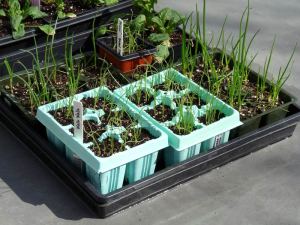
I tucked the first of the onions into their planting bed this afternoon, between rain drops. The soil in my raised beds drains well enough to work even when the weather has been wet for weeks. I planted the Red Long of Tropea (90 -110 days) I grew from seed given to me by the folks at Blue House Farm.


Red Long of Tropea

Red Long of Tropea


These beautiful Italian onions have a unique shape that I think will appeal to the kids and they are meant to be eaten fresh when they bulb in the Summer. They are considered Long Day onions. The Red Onion Festival is held in Tropea during the first week of July, and our lattitude is a bit South of them, so here’s hoping.

I started work on two new raised beds today. My husband actually did most of the work for the first bed, a 4’x4′ built with the remains of a Square Foot Gardening kit. It will be in a sunny spot that was part of our lawn until this morning. Tom cut out the sod 6-8″ deep and I’ll fill that with Lyngso Essential Soil Mix when we fill the kids’ Dirt to Dinner willow beds.

Square Foot 3' x 3'

Square Foot 3' x 3'

The second bed is in a sunny corner that might be slightly shaded by the artichokes. I guess I could always cut them back if they get in the way. Those guys could survive without a leaf or two. This bed is built out of two 3’x3’s from the Square Foot Gardening kit, for the extra soil depth needed in this spot. It’s up against the fence and I have done what I could with the soil under the bed but it still ain’t pretty. This one I dug some compost into and will fill with potting mix made according to the Square Foot Gardening method, for the most part. My measuring is never too exact. I have had very good luck with their soil mix over the last few years even though the vermiculite it calls for is hard to find in “coarse.” I also don’t like the warning label that comes on the vermiculite bag, so if you can suggest good alternatives, let’s hear them!

Broccoli Raab

Broccoli Raab

Here’s a job I really need smaller hands to help with. I think every last Broccoli Raab seed I planted spouted–twice! And now I need to prick out the plants that are too close together and move them to another spot. You’re supposed to do this before the leaves touch the leaves of the plant next to them, so I’m already very late. I know I could snip some of them at soil level to thin the patch, which I may yet muster the courage to do. But I go to a lot of trouble to sprout these little guys! I hate to go out there with scissors and chop half their heads off just like that! Maybe I can move them into flats for the Dirt to Dinner kids to take home. A lot of them like broccoli…I wonder if I have a flashlight bright enough to work by…

Planning Meets Reality

Leave a comment

Scattered Seeds

Scattered Seeds

I am pretty thrilled with our inaugural Dirt to Dinner class. We had twelve kids and twelve adults. And it didn’t rain! Everybody met new people, everybody planted some seeds, everybody cooked part of our lunch and there was plenty of good food to go around.

Here’s what we thought we would do and a little bit about how it actualy went.

Class plan:

a)  Welcome circle and Intros (personal and intro to the program)  

We all got to know one another’s names and talked about our favorite vegetables or fruits.

b)  Safety, boundaries and behavior goals

We spent some time on safety in the garden and in the kitchen but we will probably want to go over Gary Riekes’ thoughts on behavior goals a little bit more when we have a chance. Though the kids seemed to get along very well all day without it.

c)  Ice breakers

We played a game where you form small groups based around the individuals in the larger group who have a particular characteristic or have done a certain thing (“Have you ever eaten a worm?”) You introduce yourself, again, to the members of the small group as they form, so you learn something about one another and get a chance to remember everyone’s name while you play.

d)  Plant parts activity

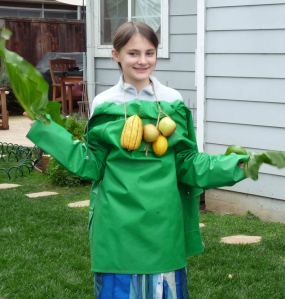
Plants Part Costume Model

Plants Part Costume Model

Seeing the first part of the plant parts “costume” going on reminded me to run for the camera. This was an exercise I’m willing to bet they won’t soon forget!

Then the kids did a Plant Parts Scavenger hunt through what’s already growing in the garden to see if they could find edible roots, stems, leaves and flowers. We found carrots and radishes, celery and onions, kale and collards, lemons, nectarine flowers, rosemary blooms and artichokes.

Many of these were passed around so that whoever wanted to could nibble on them. It’s a good thing celery loves that back garden because the kids got a kick out of picking it and nibbling on it right there.

e)  Group A Plant Parts scavenger hunt and Seed Starting
and Group B Kitchen Intro and Favorite Veggies

Soffrito with onion and garlic

Soffrito with onion and garlic

One group of families started out in the kitchen where they did a wonderfully focused job preparing two pots of Garden Vegetable Soup, one by the recipe, and one with a few additions based on what we had on hand from the garden and families bringing their favorite vegetables to share. The soup started with a nice soffrito (or roux, depending on where you are from) of several kinds of onions and garlic in olive oil.

f)   Group A Kitchen Intro and Favorite Veggies
Group B Plant Parts scavenger hunt and Seed Starting


Flower Starts

Flower Starts

The families who started at the potting station planted a variety of flowers and Spring vegetables. We have seeds for many different kinds of flowers that are favorites of bees, hummingbirds or butterflys. The group is already drawing up plans for special planting areas devoted to pollinators. We also planted peas, spinach, lettuce and early beans and picked out a spot to grow carrots, radishes, and other Spring vegetables that need to be direct seeded into the ground.


Watering In Seeds

Watering In Seeds

The seeds were watered in and the kids took them home to germinate in a warm place.


g)  Lunch

The soup was delicious! It was served with a chopped salad and good bread and lots of the kids actually ate it. :-) The dish washing plan with three different dishpans with soapy water, rinse water with lemon and clear rinse water worked very well. 

h)  Rain Measures/Journal decoration

We didn’t cover rain measures today, but some of the kids worked on decorating the covers of their journals a bit while the finsihing touches were being added to lunch. 

i) Closing circle, intentions, thoughts on the day

We all said something about our favorite part of the day. I heard everything from “Food!” to “Growing community” to “The way everybody put in a little bit of something to make the soup come together.” I also heard one very proud voice sharing that the highlight of the day was climbing to the top of the play structure, which reminded me that we all take different paths to the garden. :-)

Potting Up

1 Comment

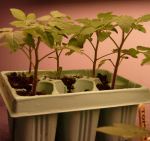
The tomato seeds start out in little pellets, and the irony is not lost on me that I am growing “local” food by starting seeds in a product that has come all the way from Vietnam.

Starting Local Food in Fiber Grow from Vietnam

Starting Local Food in Fiber Grow from Vietnam

Digging up peat bogs to dry them and ship them to gardeners everywhere contributes to global warming, so I thought I was doing a good thing by getting Fiber Grow pellets. But once I got home and turned the package over and read the Made in Vietnam sticker, I wasn’t so sure anymore. It takes a lot of resources to ship not-peat moss around the world too.

Tomato Sprouts

Tomato Sprouts

Anyway, the tomatoes, for better or worse, begin their lives on the top of the refrigerator in their Vietnamese fiber homes. It takes a week or two sometimes at the right temperature for them to germinate. They like to be warm. The first batch I started, only about half of them ever sprouted at all.

Once they have “true” leaves, the tomatoes and their Vietnamese pots go into the regular 6-packs you might see at the garden store.

First Potting

First Potting

They will stay in the 6-packs for several weeks until they begin to fill out, develop stronger stems, make more leaves and start to be recognizable as tomato plants.

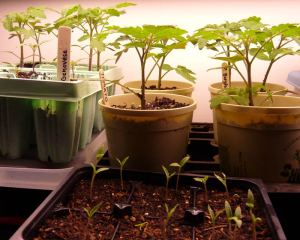
The next time the plants are potted up, they will be set deep into individual containers with potting soil

Tomato Starts in 6-pack

Tomato Starts in 6-pack

and a little mature compost to help them grow strong. This may sound nasty, but you bury them deep enough in the new pots that some of the early leaves will be under the soil, so you carefully tear these leaves off. Where the leaves were on the stems, roots will grow in the soil making the plant sturdier when it finally sees the garden soil.

The tomato seeds that I started in early January are just now moving into their own pots for the first time, so this process has taken about 6 weeks. It takes a long time to grow tomatoes from seed but I am really looking forward to all the pasta sauce and sundried tomatoes, salads, catsup…

Tomatoes in Four Sizes

Tomatoes in Four Sizes

When’s the Last Date of Expected Rain?

Leave a comment

We made it past the last date of expected frost, February 19th, without much fanfare but I am hoping for at least a break in the rain for our first garden session of the project this coming Saturday.

Fresh Produce

Fresh Produce

We have also scheduled our first extra field trip, to the grand opening of the Full Circle Farm produce stand on Wednesday, March 4th from 4:00 to 6:00. This is a great place for us to visit because the kids will have a working day on the farm at Full Circle coming up on the 28th. That ought to make it abundantly clear how the produce gets to the farmstand.  ;-)

The garden is starting to take shape. There is lots to do and to build and some small garden beds ready for planting. We got a very generous donation of seed from the National Gardening Association. We’ll make a Thank You card for that when we’re together.

We’ve created a Ning for the kids to use to share their ideas, photos, videos, blogs and comments as the project progresses. Now all we need is a four or five hour break in the Spring rain, and we’re all set!

Dirt to Dinner Field Trips

Leave a comment

We’re considering adding three or four related field trips to the Dirt to Dinner program. Here are some of the ideas so far: 
Rice Soil Farm in Half Moon Bay
UC Berkeley Urban Bee Gardens
Ceres Project – Consider contacting our Food Precurement Coordinator, Chris Sitting, chris@ceresproject.org to volunteer to harvest produce at several local farms.
Blue House Farm
Sunnyvale Demonstration Garden 
Gamble Garden