In my quest to achieve new heights of garden nerdom, I have begun to compile a database of the seeds I am planning to use for 2011. The first 122 hopefuls are listed by seed source, type, variety, year the seed was packaged for and any comments I have to add from previous years of growing them. Most of the seed is open pollinated, from small operations owned and run by actual people wherever possible. Some of the seed I purchase from a couple different sources so I can compare how each performs in the garden under our growing conditions.
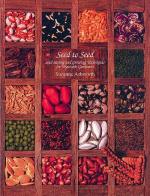
Seed to Seed
I’m growing open-pollinated seeds from Bountiful Gardens and Adaptive Seeds because I like the idea that I could save seed from year to year and eventually end up with a variety that has adapted to perform better in this area in the ways that matter to us. My mother-in-law handed down some of the family fava bean seeds to me this Christmas Eve. They have been adapting to growing in our Zone 9b location for at least 35 years, and to growing in nearby Santa Cruz for several generations before that.
The United Nations Food and Agriculture Organization estimates that 75% of agricultural crop diversity was lost during the 20th century. Think about that for a minute. The climate is changing at the same time the diversity of crops we are going to need to meet the challenge of that changing climate is being lost. Farmers all over the world used to save their own seeds, seeds that adapted to the local conditions, just like my in-laws saved their favas and basil seeds. But now enormous amounts of seed diversity are being lost and huge corporations are controlling, patenting and hybridizing seed resources. 25% of the world’s seed supply is already controlled by just three agro-chemical corporations. I think they can manage without the seeds growing in my yard too.

Hybrid vs. Open-pollinated
 And I’ll be starting those plants in flats. I used to start seeds in old yogurt containers, left-over six-packs from the garden center, old plastic cups…pretty much anything that was handy and could be recycled into something that held dirt. But seed flats hold a *lot* more soil than a six-pack, and hold it deeper than a six-pack. It stays moist and at a more even temperature and your seedlings grow up much healthier. I have no idea why this never occurred to me before, but as soon as Drew talked about it in the first week of our class, it all made sense and my seedlings are certainly thankful for it. Now I just need one of

 The Mary Washington asparagus crowns never did sprout. It’s been a long, wet, cold spring here. Maybe they are still down there thinking about it. Probably the ground was too cold and wet when I put them in and they have succumbed to rot. I will dig them up when the sweet potato slips arrive from
  And speaking of things being devoured. Where are my beautiful Appaloosa beans? I know I planted an entire 4′ x 4′ of them! OK, it was mid-April. And that same wet, cold rainy spring that I mentioned earlier. But still, they are in a raised bed against the house in a nice sunny spot. ONE bean came up–and something ate the top of it off. Ugh. Remind me to reseed that planter bed now that it is finally warming up. Where did I just read not to rush to plant your bean seeds because you will just end up wasting a lot of seeds? Sometimes I think I am just gardening to learn patience.


 The garden is quiet now that the last session of the Spring 09 Dirt to Dinner project is done.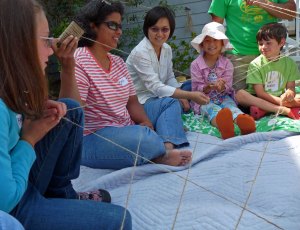

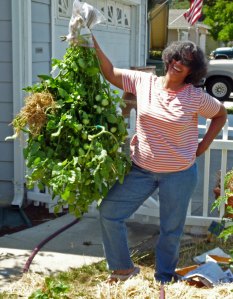
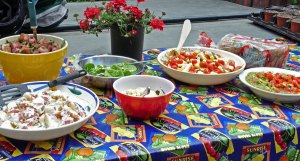
 From Dirt to Dinner