Right now we are pretty happy that we decided to space the in-garden Dirt to Dinner sessions two weeks apart. The kids are going to be able to see an optimal change in their individual garden beds when they arrive tomorrow. Enough that they can see that things have changed and grown, but hopefully not enough that they feel they have ‘missed out’ on any of the fun.
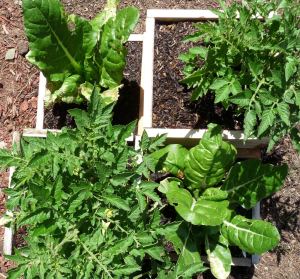
The beds were planted April 11th and have managed to survive unprecedented wind storms and record heat with only a few losses of some leggy starts. Most of the starts and seedlings are intact and doing well. Some of the flowers that were planted take longer than two weeks to sprout but for the most part there are bits of green appearing in all the squares of the planter.

Maximum Use of Eight Square Feet
So much so, in some cases, that we are going to need to review the space needs of various vegetables and maybe do a little transplanting as well tomorrow. ;-)
I learned this the hard way this year. I tend to plant on the intensive side of biointensive practices, and I left the broccol raab in my own seed bed crammed together too close for long enough that it appears to have leaped straight from sprouting to going to seed, without the intervening step of making broccoli! Ugh!
Chalk another one up to lessons learned in the garden and be glad there’s extra space for one of the Summer crops it’s now time to plant.
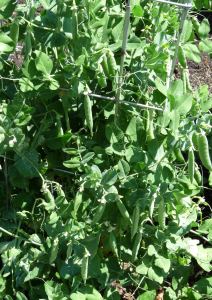 At least we will have peas that the kids can pick and eat while they are in the garden, and some broccoli shoots, baby lettuces, radishes, baby beets and baby green beans if they want them. The peas were a long time coming. They were planted January 3rd, to be precise, and that makes 111 days by my count from seeding to eating. About double what they print on the package, though it is written in Italian so I could easily have missed something where I thought it said 55-60 days.
Still, the January planted pea patch is bearing and the February planted patch is flowering and setting a few peas, but nowhere close to eating at this point, so it feels like we’re ahead of the game by several weeks at least doing it this way. I’m planning to try a December, January and February planting next year so we can compare the results.
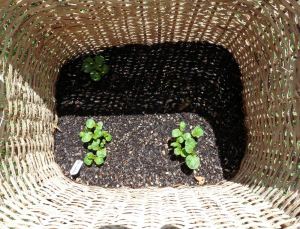
One man's trash is another woman's potato patch
In other exciting garden news, the La Ratte fingerling seed potatoes I planted in a trash basket I found in the neighbors’ Clean-Up Week pile have finally sprouted! I was starting to worry about them. I planted them shortly after our Full Circle Farm field trip March 28th and it seems to me that the seed potatoes we had from Common Ground started showing green tops in more like two weeks than four. Now I’m keeping an eye on the All Blue potato patch watching to see how long they take to sprout. They did not have many well developed eyes when they went into the ground, so if they turn out to be on the four week side, that would make sense.
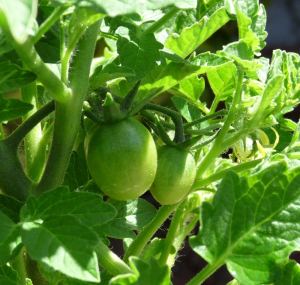


 One of the experiments we are conducting in the Dirt to Dinner garden is a test of our ability to bring more light into a shady section up against one of the fences. It’s after 10:00 am and the sunlight still hasn’t gotten to this patch. It’ll be a little better in June and July, but less than ideal light is a fact of life for that patch of ground.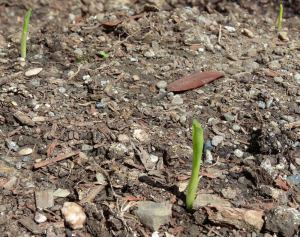
 The piles of seeds for Dirt to Dinner have predictably gotten messy and disorganized. But last night I read a great idea for organizing seeds. When you plant some seeds from a packet, you take the remaining seeds and you store them filed away based on the month when you need to plant them next. If I am planting lettuce each month, I plant my May patch and slip the remaining seeds into the June section so that when June all-too-quickly rolls around, I know what I am trying to find room to plant next.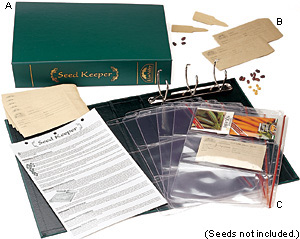


 Here’s the wonderful diagram from Renee’s that demonstrates the process so much better than I could write it out.
 To celebrate the corn planting the kids also made corn pouches which will sprout a sample of the Indian Dent Corn and a sample of the monoculture corn plated across those fields in Ohio and allow us to talk about genetic variation and why it’s important to have plant diversity.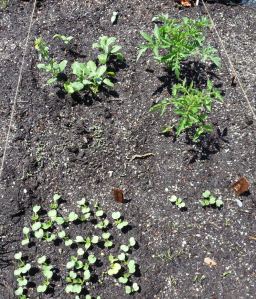

 From Dirt to Dinner