
Ground from Grounds
I’ve been to a lot of Starbucks’ in the last couple weeks. I’m collecting coffe grounds for an experiment in one of the growing beds. Actually, I was going to compost the grounds along with some leftover sod the neighbor shared with us, and then add lots of compost to the growing bed, months from now or even next year when everything was ready. In the mean time, the dry and fragmented growing bed has some tomatoes and lots of winter squash varieites in it and they were going to need mulch and a lot of water to make it through the Summer.
Half-way through setting up the new compost bin, it struck me that maybe we could use the coffee grounds and the sod *as* the mulch while they were composting themselves into a new and improved growing medium for next year. Now, don’t try this at home yet. This may turn out to be like the time I had the great idea to butter the toast before I put it in the toaster oven hoping for a garlic bread kind of effect and the whole thing caught fire and had to be dropped out the second story window into the snow to save the rest of the apartment. But this seems, at the very least, much less likely to burst into flames if unsuccessful.
I gathered seven Starbucks-worth of coffee grounds. Which is an amazingly small amount at some stores. I’m sorry, but how could you possibly be selling coffee all day in a Starbucks and *not* have coffe grounds? I was turned away cold from store 5920 where they said they didn’t have to save their coffee grounds for customers. But most of the stores were happy to oblige and many of them even insisted on carrying heavy bags loaded with grounds out to my trunk. Thank you, Starbucks!
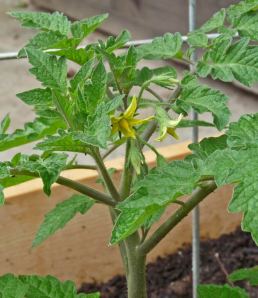
Caffeinated Tomatoes
I had six or seven rolls of unwanted sod to go with the grounds. I spread out the grounds around the already planted tomatoes and squash mounds and raked them across the top of the soil we are hoping to improve. Then we covered the grounds with the unrolled sod, grass-side down, and watered the whole thing in. We plan to cover the area with another layer of coffee grounds and a mulch/compost from Kellogg’s called N’Rich. It will add some much needed variety to the soil with it’s bat guano, kelp, chicken manure and worm castings.
Then we’ll let the thing sit and the squash vines can crawl all over it and hopefully the tomatoes will grow in spite of what my grandmother always said about coffee causing stunting in the young. ;-) The idea is that the coffee layer will seep into the existing soil attracting worms who supposedly love coffee grounds. And maybe all that nitrogen will even warm things up enough that the sod layer will break down right there on the ground under the N’Rich and the squash will shade the whole thing and keep it from drying out while it’s magically converted into good growing soil.
We’ll put a shovel in it in the Fall and let you know what we’ve got. And if this year’s pumpkin pie keeps the kids from sleeping, we’ll all know why.


 One of the experiments we are conducting in the Dirt to Dinner garden is a test of our ability to bring more light into a shady section up against one of the fences. It’s after 10:00 am and the sunlight still hasn’t gotten to this patch. It’ll be a little better in June and July, but less than ideal light is a fact of life for that patch of ground.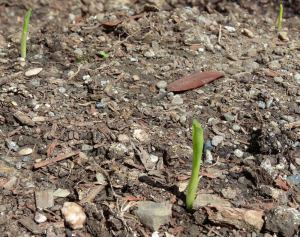
 The piles of seeds for Dirt to Dinner have predictably gotten messy and disorganized. But last night I read a great idea for organizing seeds. When you plant some seeds from a packet, you take the remaining seeds and you store them filed away based on the month when you need to plant them next. If I am planting lettuce each month, I plant my May patch and slip the remaining seeds into the June section so that when June all-too-quickly rolls around, I know what I am trying to find room to plant next.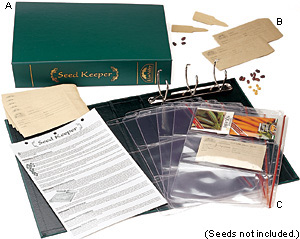


 Here’s the wonderful diagram from Renee’s that demonstrates the process so much better than I could write it out.
 To celebrate the corn planting the kids also made corn pouches which will sprout a sample of the Indian Dent Corn and a sample of the monoculture corn plated across those fields in Ohio and allow us to talk about genetic variation and why it’s important to have plant diversity.
 From Dirt to Dinner